
Aviation
Despite China’s Rejection, Boeing’s 737 MAX Finds New Buyers
In the latest updates, U.S. President Donald Trump has introduced new tariffs targeting other countries—especially China.

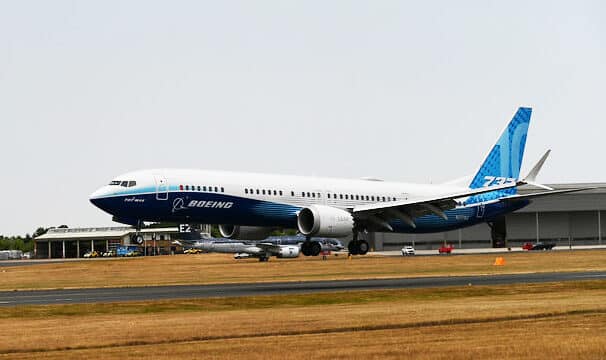
In today’s article, we’re diving into the latest trouble for Boeing, due to a new tariff introduced by Donald Trump. Things aren’t looking great for Boeing right now—especially since they’re already facing issues selling their aircraft due to multiple defects found in their latest models.
Boeing, founded back in 1916, has a long history of building some of the world’s most iconic aircraft. One of their most famous creations is the Boeing 747—the legendary jumbo jet that, for a long time, held the title of the world’s biggest passenger aircraft
In the latest updates, U.S. President Donald Trump has introduced new tariffs targeting other countries—especially China. These tariffs have been raised to a whopping 125%. In response, China has also imposed a 125% tariff on U.S. products.
This trade war is already showing its effects. The demand for U.S.-made products in China is falling, and one of the biggest casualties of this move is Boeing.
Boeing is already in deep trouble due to ongoing issues with its aircraft, especially the Boeing 737 MAX. This model faced major setbacks after two fatal crashes between 2018 and 2019. Those incidents raised serious safety concerns about the aircraft.
On top of that, the COVID-19 pandemic and intense scrutiny from the FAA forced Boeing to halt deliveries and operations of the 737 MAX. Although it eventually regained certification and was cleared to carry passengers again, the damage to its reputation has been significant. And now, with these new tariffs, Boeing’s problems just keep piling up.
With the ongoing tariff tensions, Boeing’s troubles are only getting worse. One aircraft that’s currently caught in this storm is the Boeing 777X—the newest and most advanced jet in Boeing’s lineup. Its delivery has already been delayed, and certification is taking longer than expected.
Meanwhile, the boeing 777x, which is known for its improved fuel efficiency and higher capacity compared to earlier models, is also facing setbacks. The aircraft is still stuck in the certification process, with the FAA yet to give a final green light. Currently, four of these aircraft are undergoing tests, and so far, results are looking promising. Boeing is hopeful that by next year, they’ll finally be able to deliver these planes to airlines and passengers.
But there’s another issue—the 737 MAX jets that were originally built for Chinese airlines. Due to ongoing trade tensions and China’s refusal to accept the aircraft, these planes are being flown back to the U.S. Now, Boeing is looking for new buyers.
Interestingly, Air India has shown interest in these aircraft. The airline has already asked Boeing for more planes to meet rising demand. Air India is rapidly expanding, and with a shortage of available aircraft, it’s struggling to serve its growing passenger base. By acquiring these newer jets, Air India aims to improve service quality and connect to more destinations across its network.
Due to major supply chain shortages across the aerospace industry, many companies—including Boeing and Airbus—are producing fewer aircraft than expected. Boeing, in particular, is under pressure. The company needs more cash flow, and the best way to achieve that is by delivering more aircraft to its customers. But with the FAA still holding back certification for some models, boeing 777 can’t sell those jets yet. And without deliveries, there’s no incoming revenue. That’s how the business works—no delivery, no cash.
On the brighter side, airlines like Air India and others have shown strong interest in purchasing Boeing aircraft. That’s definitely a positive sign for Boeing, especially as it looks to recover from both internal setbacks and external challenges like the ongoing trade tensions with China.
Speaking of China, while the immediate impact of the tariffs may not heavily affect Boeing, the long-term picture is different. Boeing will eventually need to repair its relationship with China if it wants to regain trust and bring its aircraft back into that market.
At the same time, China has been building up its own aerospace industry. Their homegrown aircraft—the COMAC C919—is starting to gain serious traction. It’s positioned as a competitor to Boeing and Airbus in the single-aisle market, although it still has a smaller capacity. comac c919 vs boeing 737 price Still, the C919 has already crossed 20 million passenger flight operations, showing that Chinese airlines trust it and are adopting it quickly.
As time goes on, the C919 is becoming more popular not just in China but across parts of Asia. With rising demand, it could soon see a significant number of orders from domestic airlines—posing a growing challenge to both Boeing and Airbus in the region.



