
Aviation
Why Indian fighter jet has the delta wing?

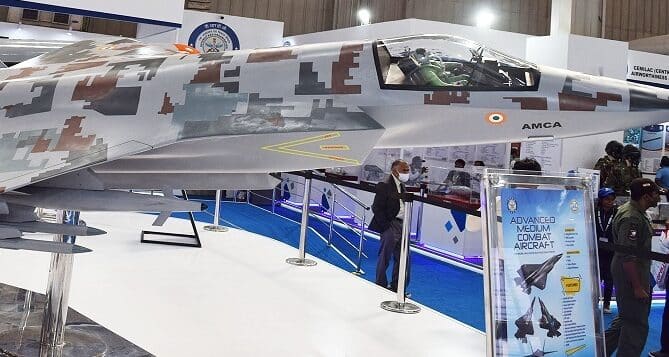
Fighter jets are the backbone of modern air forces, designed for superior performance in both offensive and defensive roles. Indian fighter jets, such as the HAL Tejas and the upcoming AMCA (Advanced Medium Combat Aircraft), are designed with unique and effective features tailored to India’s specific defense requirements.
Russian Innovation: SJ-100 Autopilot and Autothrust Ready for Flight Trials
One of the most prominent aspects of these aircraft designs is the use of delta wings. Delta wings offer several significant advantages, making them a preferred choice for Indian fighter jets, particularly in terms of maneuverability, speed, and operational versatility. Let’s explore why delta wings are favored in India’s air defense strategy.
1. High Maneuverability
One of the main reasons for choosing delta wings in Indian fighter jets is their exceptional maneuverability. The broad surface area of delta wings generates higher lift, which allows aircraft to make tight turns and rapid directional changes, particularly crucial during air-to-air combat. For India’s air force, which needs jets that can excel in close combat situations, maneuverability is a key requirement. The delta wing allows aircraft like the Tejas to engage enemy targets effectively in dogfights.
2. Supersonic Speed and Stability
Delta wings are also well-suited for supersonic flight, offering reduced drag and enhanced stability at high speeds. This makes them ideal for modern multirole fighters, which need to be fast and stable at both subsonic and supersonic speeds. The HAL Tejas, for example, benefits from this design in terms of its supersonic performance, allowing it to quickly respond to emerging threats while maintaining stability during high-speed maneuvers.
Air India Signs Deal for 100 Additional Airbus Aircraft
3. Increased Payload Capacity
Another advantage of the delta wing design is the increased payload capacity it offers. The larger surface area of the wing helps distribute the aircraft weight more efficiently, which allows it to carry more weapons and fuel. This increases the jet’s operational range and combat effectiveness, especially for missions that require extended durations. With India’s strategic need for fighter jets that can carry a substantial payload without compromising speed or maneuverability, delta wings provide a balanced solution.
4. Structural Simplicity and Strength
Delta wings are known for their simpler structure compared to traditional wing designs, which often require more moving parts like horizontal stabilizers. This simplicity makes them more robust and less prone to mechanical failure. The strong, straightforward design is ideal for aircraft that must operate in diverse and often challenging environments, such as those found in India’s rugged and remote regions. Additionally, fewer moving parts translate to easier maintenance, an important factor for the Indian Air Force.
5. Short Takeoff and Landing (STOL) Capability
Delta-wing aircraft are well-regarded for their ability to generate higher lift, which is crucial for Short Takeoff and Landing (STOL) capabilities. This feature is especially valuable in regions where runway space is limited, such as near conflict zones or in mountainous terrains like Ladakh. The Tejas, for example, was designed to take off and land on shorter airstrips, making it a flexible asset for India’s air defense strategy in various geographical locations.
6. Designed for Multirole Capability
India’s air defense strategy requires aircraft that can perform a variety of roles, from air superiority missions to ground-attack operations. The delta wing’s aerodynamic flexibility allows fighter jets to excel in both roles. This versatility makes delta-wing designs a good fit for multirole fighter jets like the Tejas and the upcoming AMCA, which are intended to meet the diverse demands of the Indian Air Force, whether in air combat or precision strikes on ground targets.
Aeroflot Buys Used Planes for Spare Parts Amid Sanctions
The design of the HAL Tejas was influenced by specific operational requirements, including a focus on reducing the aircraft’s vulnerability to bird strikes. Indian airfields have a high rate of bird strikes, and as such, the Tejas was required to have a wing design that minimized the risk of damage. Initially, the aircraft was designed without leading-edge devices, but to meet short-field performance requirements, the delta wing was chosen.
While the Tejas does feature leading-edge flaps for enhanced performance, the decision to go with a delta wing was pivotal in ensuring its versatility and effectiveness for the Indian Air Force.
