
Aviation
Ukraine’s Hidden Drones Launch Devastating Strike Inside Russia — Bombers Destroyed
A year-and-a-half-long Ukrainian operation culminates in a daring drone assault on Russian airbases, crippling strategic aircraft with precision and innovation.

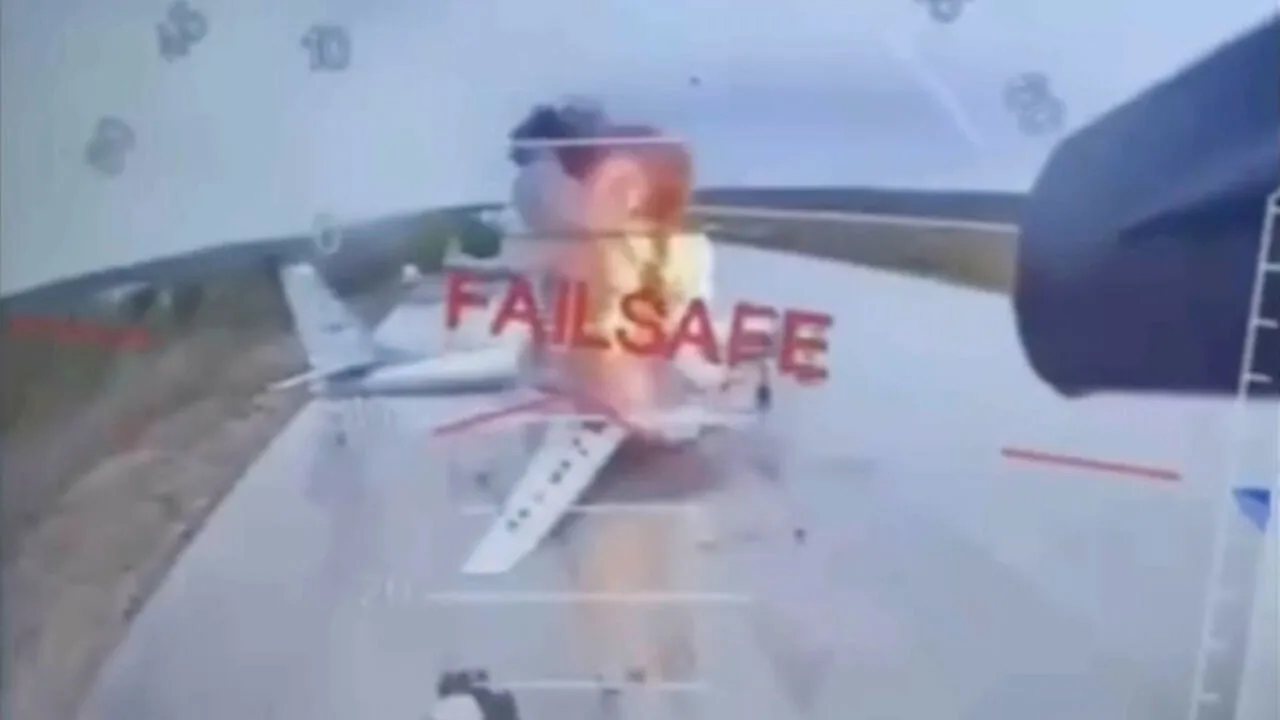
In one of the most ambitious and coordinated operations of the war to date, Ukrainian forces have reportedly executed a massive drone strike deep inside Russian territory, targeting key airbases and damaging or destroying a significant number of strategic aircraft.
The operation, codenamed SpiderWeb, is said to have been over a year and a half in the making and involved extensive planning, logistics, and covert deployment.
Strategic Assets Under Fire
According to Ukrainian sources, the attack resulted in damage to or destruction of up to 41 Russian aircraft, including Tu-95 and Tu-22M3 long-range bombers, and A-50 airborne early warning and control (AEW&C) aircraft.
While independent verification remains limited, satellite images and social media footage appear to confirm that at least three to four Tu-95 bombers were destroyed, with some unofficial estimates—posted by sources on X—claiming as many as 27 Tu-95s were eliminated.
The Ukrainian Security Service (SBU) and open-source reports indicate that airbases as far north as Murmansk and as far east as Siberia were struck. Ukrainian President Volodymyr Zelenskyy is reported to have personally overseen the operation. The BBC and SBU sources describe the effort as involving the covert smuggling of FPV (First Person View) drones and wooden mobile cabins into Russian territory.
Innovative Tactics Behind Enemy Lines
The reported tactic involved hiding drones beneath the roofs of wooden cabins mounted on trucks. At the moment of the attack, the cabin roofs were remotely opened, launching dozens of drones in a coordinated strike on nearby airfields. According to Ukrainian accounts, these drones directly targeted high-value strategic assets that Russia can no longer easily replace.
“This has never been done before,” said one Ukrainian source. “The scale of the damage is unprecedented.”
The Ukrainian estimate of the total financial cost of the damage stands at approximately $2 billion. The operation is being hailed by military analysts as a landmark example of modern asymmetric warfare, where relatively inexpensive technology is used to neutralize much more costly and strategically critical enemy assets.
Russia Confirms Attacks, Minimizes Impact
The Russian Ministry of Defense acknowledged that multiple airbases were attacked on June 1, 2025. Official statements confirmed strikes on facilities in the Moscow, Ivanovo, and Ryazan regions of Central Russia, as well as in Irkutsk (Siberia) and the Amur region in the Far East. However, the Ministry only admitted to “material damage” to certain aircraft and provided no specific details about losses, claiming fires were quickly extinguished and that there were no casualties.
Despite these denials, video footage widely circulated online shows several aircraft engulfed in flames, and satellite imagery suggests damage to critical infrastructure. Ukrainian intelligence sources claim the strikes impacted roughly 34% of Russia’s strategic cruise missile carrier fleet.
Asymmetric Warfare in Action
With limited access to high-end air power compared to Russia, Ukraine has increasingly relied on inexpensive, commercially available drones modified to carry explosives or small munitions. Videos showing Ukrainian drones attacking Russian vehicles, troops, and even aircraft on the ground have become a common sight on social media.
The success of Operation SpiderWeb underscores Ukraine’s growing proficiency in drone warfare and unconventional tactics, enabling them to hit high-value targets far behind enemy lines. It also highlights the vulnerabilities in Russia’s strategic defenses and the shifting dynamics of modern warfare.
