
Aviation
Su-30MKI vs Rivals: Can India’s Workhorse Outclass F-16s, J-20s & JF-17s?

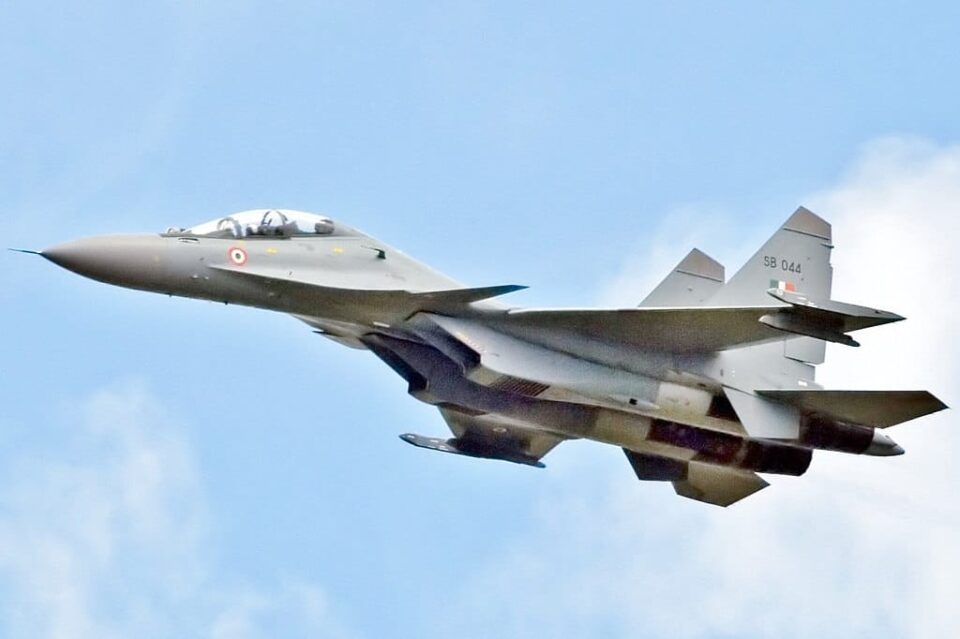
India’s fighter fleet is in a transitional phase. With MiG-21s retiring and the Rafale fleet still growing, the Su-30MKI remains the backbone of the Indian Air Force.
But in a region where China continues to expand its J-20 stealth fighter force, and Pakistan relies heavily on U.S.-supplied F-16s and the China-Pakistan-made JF-17, the Su-30MKI needs more than just size and maneuverability—it needs next-generation sensors, weapons and networking to stay dominant.
Recently, Russia has offered India a major technology transfer deal centered on the Kh-69 stealth cruise missile, showcased prominently at Aero India 2025. This missile can strike targets up to 400 km away, flying low and radar-evading, making it ideal for precision strikes on enemy air bases, infrastructure and command nodes.
Now, the question is: with these upgrades, can the Su-30MKI outclass its regional rivals?
The Su-30MKI is already known for its supermaneuverability, thanks to thrust-vectoring engines and a large aerodynamic frame. But pure maneuvering is not what defines air combat today. Sensors, radar, electronic warfare, beyond-visual-range missiles, and pilot training dictate outcomes.
That is where the new upgrade package comes in—Uttam AESA radar, advanced electronic warfare suites, improved data links and modern cockpit displays. Combined with weapons like the ASRAAM, Astra Mk-2, BrahMos-NG and now the proposed Kh-69, India is pushing the Su-30MKI into a true multirole strike dominance platform.
When we compare:
- Against Pakistan’s F-16s:
F-16s are nimble and network-reliable, but depend heavily on U.S. support, software restrictions and limited weapons integration. With AESA radar and Astra Mk-2 BVR missiles, the Su-30MKI regains long-range engagement advantage—something missing during the Balakot era. - Meanwhile with the JF-17 is a lightweight, cost-effective fighter designed for patrol and interception. It cannot match the Su-30’s range, speed, payload or sensors. With BrahMos-NG and Kh-69, the Su-30MKI can strike deep into hostile territory—something the JF-17 simply cannot counter.
- However, This is where realism matters. The J-20 has stealth advantages and is optimized for BVR first-shot-first-kill engagements. However, air combat is not only about the aircraft—radar networks, AWACS support, pilot experience and tactics decide the outcome. India’s integrated Su-30MKI fleet, backed by Netra and Phalcon AWACS, training intensity and increasing sensor fusion, narrows the gap significantly, especially in contested airspace like the Himalayas where stealth performance itself is reduced due to radar geometry and terrain.
But hardware alone does not decide wars. Pilot proficiency, maintenance quality, sortie generation rates, and real-time coordination define air dominance. And here, the Su-30MKI has one major strength—Indian pilots fly more hours per year than both J-20 and JF-17 pilots, giving them better flight confidence and tactical adaptability.
So can these upgraded Su-30MKI outclass its rivals? Not with just one missile.
Not with just one radar. But through layered upgrades, modern weapons, and consistent pilot excellence, the Su-30MKI is evolving into a networked air-dominance and deep-strike platform—a platform that reshapes air power balance in South Asia.
And the story isn’t over. The next chapter depends on how fast India executes these upgrades, and how effectively it integrates homegrown technologies. Because in the skies, the edge belongs not just to the aircraft— but to the nation that adapts fastest.
For more aerospace news, check out JetlineIntel.
Want to buy aviation merchandise? Visit Jetshop.in.
To read Jetlinemarvel’s updates on Google News, head over to Google News.
