
Aviation
Russia’s Arms Exports Drop 64% as Ukraine Becomes Top Importer

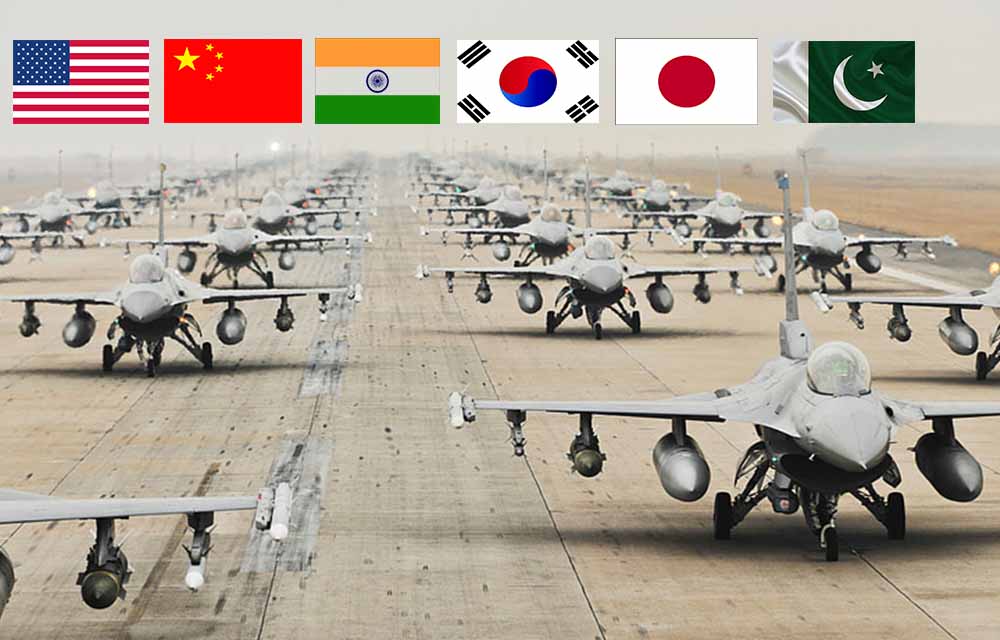
As geopolitical tensions escalate, countries worldwide are prioritizing defense capabilities and national security. Leading arms-producing nations such as the USA, Russia, China, and European countries have significantly increased arms exports and imports over the past four years. A recent survey highlights key statistics shaping the global arms trade and security landscape.
Ukraine War Drives Surge in Arms Imports
According to SIPRI (Stockholm International Peace Research Institute), the ongoing Russia-Ukraine war has led to a massive influx of military aid to Ukraine. Since Russia’s full-scale invasion in 2022, at least 35 countries have supplied weapons to Ukraine, with further shipments in progress.
Between 2020 and 2024, Ukraine accounted for 8.8% of global arms imports, making it a key player in the international defense market. The United States was the largest supplier (45%), followed by Germany (12%) and Poland (11%). Ukraine was the only European country among the top 10 global arms importers, reflecting the growing demand for military equipment in the region.
Meanwhile, Russia has reduced its arms exports to preserve domestic military stockpiles, impacting its position in the global arms market.
Israel’s Arms Imports Amid Gaza Conflict
Despite the ongoing conflict in Gaza, Israel’s arms imports remained stable between 2015–19 and 2020–24. The United States supplied 66% of Israel’s weapons, followed by Germany (33%) and Italy (1%). Israel ranked as the 15th largest arms importer globally in 2020–24, slightly dropping from 14th place in the previous period.
Following the Hamas-led attack on October 7, 2023, the USA increased its military aid to Israel. However, Israel’s recent military operations have primarily relied on previously supplied US-made weapons. Meanwhile, Israel’s adversaries—including Hamas, Hezbollah, and the Houthis—have utilized Iranian arms, missiles, and drones in ongoing hostilities.
Global Arms Trade Trends (2020–24)
- Ukraine became the world’s largest arms importer, with its imports increasing nearly 100 times compared to 2015–19.
- European arms imports grew by 155%, mainly due to Russia’s invasion of Ukraine.
- USA leads in arms exports, increasing its share to 43% of global exports.
- Russia’s arms exports dropped by 64%, falling to third place behind France.
- Italy rose to the 6th largest exporter, moving up from 10th place.
Ukraine’s Arms Imports
- Ukraine received 8.8% of global arms imports (2020–24).
- Top suppliers: USA (45%), Germany (12%), Poland (11%).
- At least 35 countries sent arms to Ukraine after Russia’s 2022 invasion.
European NATO’s Dependence on U.S. Arms
- NATO European members’ arms imports doubled (+105%).
- 64% of these imports came from the USA (up from 52% in 2015–19).
- Other key suppliers: France, South Korea, Germany, and Israel.
U.S. vs. Russia in Arms Exports
- USA’s arms exports increased by 21%, with sales to 107 countries.
- Largest US arms buyers: Europe (35%), Middle East (33%), Saudi Arabia (12%).
- Russia’s arms exports collapsed (-64%), losing key buyers like India and China.
- France became the 2nd largest arms exporter, with India (28%) as its top customer.
Asia & Oceania: Largest Arms Importing Region
- Asia’s arms imports dropped by 21%, mainly due to China’s shift to domestic arms.
- India remained the 2nd largest importer, but its imports fell by 9.3%.
- Pakistan’s imports grew 61%, with China supplying 81% of its weapons.
- Japan’s imports surged by 93%, while China, Taiwan, and South Korea saw declines.
Middle East: Arms Imports Declining
- Imports fell by 20%, but Qatar became the 3rd largest global arms importer.
- Saudi Arabia’s imports dropped 41%.
- 52% of Middle East arms came from the USA, with Italy, France, and Germany as other major suppliers.
- Israel’s imports remained stable, mainly from the USA (66%) and Germany (33%).
