
Aviation
Kingfisher Owner Vijay Mallya Reveals How the Airline Went Bankrupt

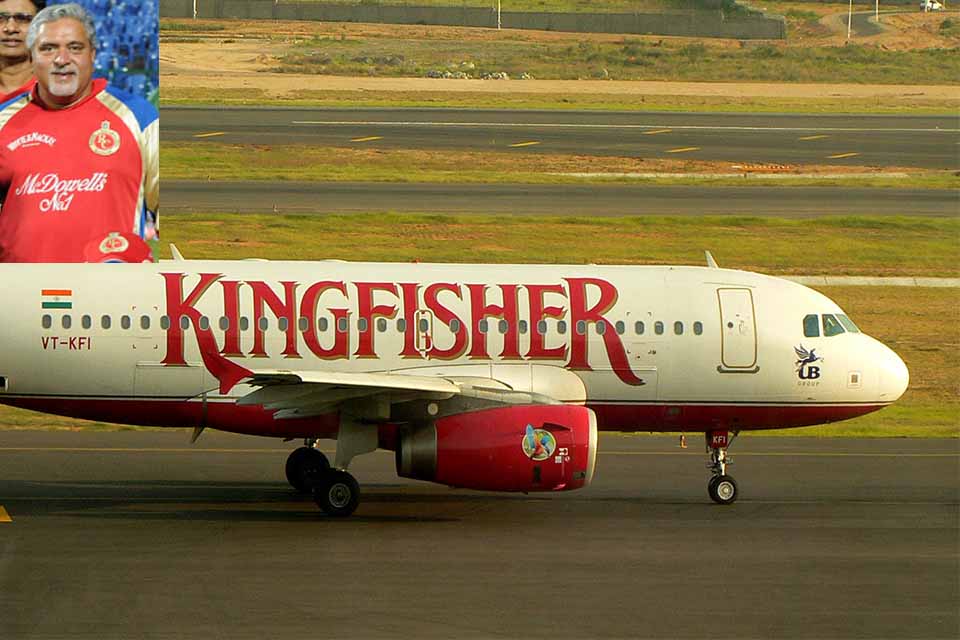
Vijay Mallya, for the first time, opened up on Raj Shamani’s YouTube podcast to share his side of the story after being labelled a defaulter and financial fraudster by Indian banks. In the candid conversation, he addressed the allegations and clarified how he had already settled the matter through international judicial processes.
Mallya also reflected on the rise and fall of Kingfisher Airlines — once a dominant force in Indian aviation in 2008 — and offered valuable insights into the airline’s journey and eventual shutdown.
By 2008, you were the biggest airline in the country, commanding a 27% market share. What went wrong? Everything seemed to be working—the marketing, the brand, the services.
Before we get to that, one topic often discussed is the training of your cabin crew. What was the idea behind it? You selected people based on how they looked or how they presented themselves.
At the end of the day, you might find many cabin crew members who look great, but lack strong communication skills. And communication is absolutely crucial for cabin crew. Looking attractive is one thing, but if you can’t connect well with passengers, it misses the mark entirely. I set very high standards for service at the airline. For instance, in business class, the crew would even clean guests’ reading glasses. We referred to passengers as “guests” — a small but meaningful touch that made a big difference.
What other service innovations did you introduce?
First off, our food quality was unmatched—truly the best in the industry. Second, our seat pitch and recline were ahead of the curve, offering exceptional comfort. These finer details really helped us stand out. Calling passengers “guests” wasn’t just semantics; it reflected the service mindset we wanted to instill—a mindset many airlines have since adopted. Excellence in service was my sole focus.
You clearly paid attention to every detail.
Absolutely. To highlight that, in the first year, I insisted every airport manager in India send me a personal text on my phone with both scheduled and actual departure times for every Kingfisher flight. I personally tracked our punctuality every night. That shows how seriously I took operational precision.
Things were looking up until 2008—what changed?
It was simple: the global financial crisis triggered by Lehman Brothers. The shockwaves hit India hard. Aviation and many other sectors slowed down. The rupee depreciated significantly. I approached then-Finance Minister Pranab Mukherjee asking to downsize the fleet and cut staff. He said no, stressing the importance of connectivity and employment. Airline jobs couldn’t be treated as blue-collar; preserving those positions was essential. He assured me of bank support, shaping how we navigated that period.
What about the bank loans? I heard IDBI led the consortium, but also SBI?
There’s some confusion there. I acquired Air Deccan, a move many now criticize. The price tag was around $137 million, and people say I overpaid. But in business, consolidating an industry and removing disruptive players is key. Air Deccan was known for ultra-low fares—sometimes as low as one rupee—which wasn’t sustainable but influenced market pricing broadly.
Why did you decide to acquire Air Deccan?
Air Deccan was Bangalore-based like Kingfisher and operated a similar Airbus fleet with pilots trained under comparable standards. This made operational integration smoother and gave us scale. Contrary to rumors, the acquisition wasn’t a loophole to bypass international flight regulations—that’s simply false. No one in the UB Group was naive enough for such a gamble just for overseas rights.
But wasn’t Kingfisher a premium airline, and Air Deccan a budget carrier? Weren’t their audiences completely different?
True, but each brand served distinct customer needs. Air Deccan catered to the low-cost, single-class traveler and opened routes that had never existed before—broadening connectivity. This was a significant contribution to India’s aviation growth.
Was rebranding Air Deccan as Kingfisher Red a mistake?
Not at all. Rebranding to create multiple tiers is a common practice. Take Coca-Cola: you have Coke, Diet Coke, and Coke Zero—all different but under the same umbrella. Kingfisher First represented premium service, while Kingfisher Red was designed for budget travelers. It was a clear multi-brand strategy. Media critics often misunderstood this vision.
Some say you offered full-service perks like meals and entertainment on Kingfisher Red, causing financial losses compared to other low-cost airlines. Is that true?
We did provide extras such as food and inflight entertainment, but that doesn’t automatically make it a full-service carrier. We believed Indian passengers appreciate these features. Plus, inflight entertainment systems don’t incur daily operational costs as one might think. It was a deliberate strategic choice, not an error.
So what really went wrong?
The core issues were government policies and macroeconomic challenges. When crude oil prices soared to $140 a barrel, aviation turbine fuel costs in India ballooned. On top of that, states imposed ad valorem sales taxes, further driving fuel expenses.
I urged the government to classify aviation turbine fuel as a “declared good” so only central sales tax would apply—but that plea was ignored. Meanwhile, foreign investment in Indian airlines was restricted. Ironically, just six months after Kingfisher’s closure, Jet Airways was allowed to bring in Etihad as a foreign partner—something I had sought much earlier.
In essence, we faced soaring costs, no capital inflow, and an unsupportive policy environment—a perfect storm that was difficult to survive.
And yet, had things gone differently?
Had circumstances not conspired against us, Kingfisher—with 27% market share in 2008—could have been one of the biggest players in the world’s fastest-growing aviation market. Today, Air India and Indigo have the largest aircraft orders globally. But sadly, not all business ventures succeed. Sometimes you win. Sometimes you lose.
Watch full video : Click
Courtesy : Raj Sharmani youtube



