
Aviation
Indian Kaveri Engine vs GE F404: Can the Kaveri Match GE’s Performance?

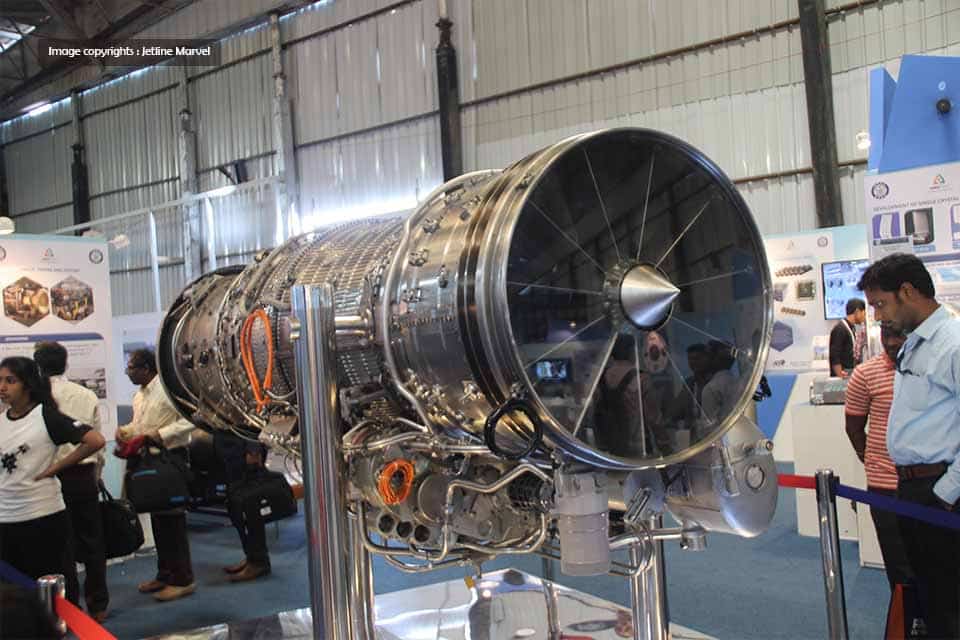
India has eagerly awaited the development of the Kaveri engine for over 30 years, with high hopes for its future role in the country’s aerospace sector.
While India has made significant advancements in the aerospace industry, much of its progress has come through foreign collaborations.
One crucial component missing from India’s aerospace arsenal has been an indigenous jet engine—until now, with the ongoing development of the Kaveri engine.
What is the Kaveri Engine?
The Kaveri engine latest news is being developed by the Gas Turbine Research Establishment (GTRE) under the Defense Research and Development Organisation (DRDO), India.
The engine was designed specifically for India’s Tejas Light Combat Aircraft (LCA), an indigenously developed fighter jet.
However, despite years of development, the Kaveri engine has faced significant delays, testing failures, and challenges, which led to it being considered more of a long-term ambition than an immediate solution.
The GE F404 Engine: A Reliable Alternative
On the other hand, General Electric (GE), a prominent American aerospace company, developed the F404 engine in the late 1970s.
This engine has become a mainstay in modern fighter aircraft, being widely used in jets like the F/A-18 Hornet, HAL Tejas, and JAS 39 Gripen.
The GE F404 engine is well-regarded for its proven technology, exceptional reliability, and broad integration into multiple aircraft platforms. It making it a trusted choice for military forces worldwide.
Challenges in the Kaveri Engine Development
The Kaveri engine was developed to support supersonic speeds and multi-role capabilities, key features necessary for a modern fighter aircraft.
However, it has struggled with engine weight, reliability issues, and difficulties in sourcing advanced materials, such as crystal blades, which are essential for performance at high altitudes and in afterburner operations.
Due to these challenges, the Kaveri engine failed to meet the required thrust levels and was unable to fulfill the specific demands of the HAL Tejas.
This led to the use of the GE F404 engine as a replacement in the Tejas fighter aircraft. further kaveri engine thrust is around 48.1 kN
Despite these setbacks, the Kaveri engine is still a critical milestone for India’s aerospace ambitions. Currently, it is being tested for use in unmanned aerial vehicles (UAVs) and other aircraft that can match its performance specifications.
GE F404: The Reliable Engine for Tejas
The GE F404 engine has a proven track record, having powered the initial operational variants of the HAL Tejas. Known for its superior thrust-to-weight ratio, fuel efficiency, and durability, In comparison of the kaveri engine vs ge f404. The F404 is recognized for its reliability, making it the go-to choice for multiple air forces globally.
In contrast, the Kaveri engine’s development has faced numerous hurdles. Issues such as limited funding, material challenges, and the need for advanced technology in manufacturing high-performance components have slowed its progress.
However, with continued efforts and international collaborations, there is hope that the Kaveri engine will eventually meet its goals and support India’s growing aerospace sector.
Kaveri’s Potential for the Future
Despite its initial struggles, the Kaveri engine continues to evolve. It is currently used in the Ghatak UCAV (Unmanned Combat Aerial Vehicle) program and is undergoing improvements with support from Safran, a French aerospace company.
These collaborations aim to optimize the engine for use in the Advanced Medium Combat Aircraft (AMCA) program, India’s next-generation fighter jet.
The Role of GE F414 in Future Indian Aircraft
In addition to the GE F404, the GE F414 engine—a more advanced derivative of the F404—has been selected to power the Tejas Mark 2 and possibly future AMCA prototypes.
The F414 will enable these aircraft to surpass the performance capabilities of current-generation fighter jets, making them more competitive on the global stage.
Conclusion: India’s Aerospace Journey
The GE F404 and F414 engines represent advanced, reliable, and well-tested technology, offering superior performance for India’s fighter jets. Meanwhile, the Kaveri engine remains a crucial part of India’s aerospace development, marking the country’s first foray into indigenous jet engine technology.
Although the Kaveri engine has a long way to go before reaching full operational capability. Its development is essential for boosting India’s confidence in building homegrown fighter jets.
With ongoing international partnerships and technological advancements. The Kaveri engine has the potential to contribute significantly to India’s future aerospace programs, laying the groundwork for the country’s next-generation fighter aircraft.
2. Technical Specifications
| Feature | Kaveri Engine | GE F404 Engine |
|---|---|---|
| Type | Low-bypass turbofan | Low-bypass turbofan |
| Thrust (Dry) | ~48 kN | ~49.1 kN |
| Thrust (Afterburner) | ~81 kN | ~85.4 kN |
| Weight | ~1,200 kg | ~1,036 kg |
| Bypass Ratio | ~0.16 | ~0.34 |
Now you can shop for our aviation apparel at JetShop.in! For the latest aerospace news, visit Jetlineintl.com. Follow us on Google News.



