
Aviation
China’s Answer to Boeing and Airbus: C909, C919 and C929
COMAC C919 is China’s most prominent narrowbody passenger aircraft and a direct competitor in the market

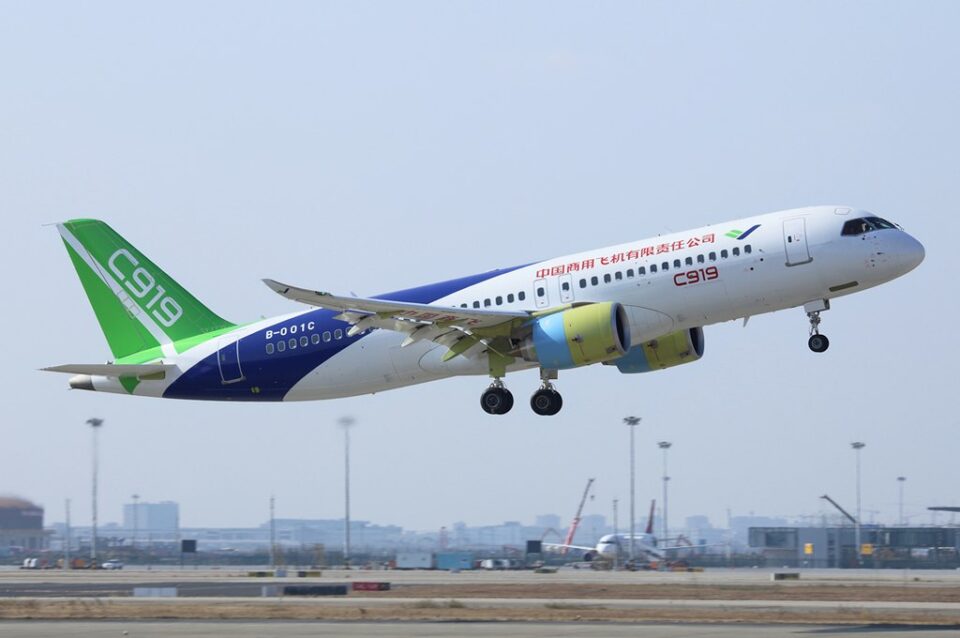
China is making a major push to establish itself as a global commercial aircraft manufacturer. Through the state-owned Commercial Aircraft Corporation of China (COMAC), the country is developing passenger aircraft designed to compete with industry leaders Boeing and Airbus.
The C909, C919 and C929 are central to this ambition, targeting different segments of the aviation market, from regional flights to long-haul international routes. While the C909 and C919 are already carrying passengers, the C929 remains under development.
COMAC C909: China’s Regional Passenger Jet
The COMAC C909, previously known as the ARJ21, is a regional passenger aircraft designed for short-haul operations. It entered commercial service in 2016 and was renamed the C909 in 2024.
The aircraft typically accommodates between 78 and 97 passengers, depending on the configuration, and is designed to connect smaller cities with major aviation hubs. It operates on regional routes and helps Chinese airlines expand their domestic networks.
The C909 represents an important step in China’s efforts to develop its own commercial aviation industry and reduce dependence on imported aircraft.
COMAC C919: A Challenger to the Boeing 737 MAX and Airbus A320neo
The COMAC C919 is China’s most prominent narrowbody passenger aircraft and a direct competitor in the market dominated by the Boeing 737 MAX and Airbus A320neo families.
Designed for short- and medium-haul operations, the C919 can accommodate approximately 158 to 192 passengers, depending on the cabin configuration. Its maximum range varies by variant and configuration, with published figures reaching approximately 5,555 kilometres.
The aircraft entered commercial service with China Eastern Airlines in May 2023. It has since been introduced by other Chinese carriers, including Air China and China Southern Airlines.
Despite its progress, the C919 continues to rely on several international suppliers for critical systems. Its CFM LEAP-1C engines, for example, are jointly developed by GE Aerospace and Safran. China is also working to develop domestic alternatives as part of its broader aviation and industrial strategy.
Expanding production, improving supply-chain independence and obtaining wider international certification will be important if the C919 is to compete more extensively in overseas markets.
COMAC C929: China’s Ambition for Long-Haul Aviation
The C929 is intended to extend China’s aircraft manufacturing ambitions into the widebody, long-haul market. It is being developed for routes that require greater range and passenger capacity than the C919 can offer.
The programme is intended to compete in a segment served by aircraft such as the Airbus A350 and Boeing 787 Dreamliner. The baseline concept has been associated with a capacity of around 280 passengers and a target range of approximately 12,000 kilometres, although final specifications may change as development progresses.
Unlike the C909 and C919, the C929 has not entered commercial service. It remains a development programme, with detailed design, engineering, testing and certification still to be completed before passenger operations can begin.
Developing a widebody #aircraft presents significant technical challenges, particularly in engine performance, aerodynamics, materials, systems integration and long-term operational reliability. Success would give China a greater presence in the international long-haul aircraft market.
Can China Challenge #Boeing and #Airbus?
COMAC’s growing aircraft portfolio demonstrates China’s determination to establish a stronger position in the global aviation industry. However, competing with Boeing and Airbus will require more than developing aircraft capable of carrying passengers.
One of the biggest challenges is engine technology. China remains dependent on foreign suppliers for important components used in its current commercial aircraft programmes. Developing reliable, fuel-efficient domestic engines will be crucial to increasing technological independence.
International certification is another major hurdle. Approval from regulators such as the US Federal Aviation Administration and the European Union Aviation Safety Agency would help COMAC expand its potential customer base beyond China, although certification requirements and timelines depend on the specific aircraft and regulatory process.
Production capacity will also play a decisive role. Boeing and Airbus have established manufacturing systems, global airline relationships and extensive maintenance and spare-parts networks. COMAC will need to build comparable capabilities to support airlines operating its aircraft across different regions.
Airlines will also consider fuel consumption, maintenance costs, aircraft availability, reliability, financing and resale value when deciding whether to purchase COMAC aircraft.
The Road Ahead for China’s Aircraft Industry
The C909, C919 and C929 represent three stages of China’s commercial aviation ambitions. The C909 serves the regional market, the C919 targets the high-volume single-aisle segment, and the C929 is intended to enter the long-haul widebody category.
The #C909 and #C919 have already established a presence in commercial operations, while the C929 represents a longer-term ambition. Their progress will depend on technological development, manufacturing capacity, international certification and the ability to build confidence among airlines worldwide.

You must be logged in to post a comment Login