
Defence
Kaveri Derivative Engine Edges Closer to 2026 Certification Goal
After delivering the first serial production Kaveri Derivative Engine (D1), Godrej Aerospace is set to hand over D2 and D3 to GTRE in 2026

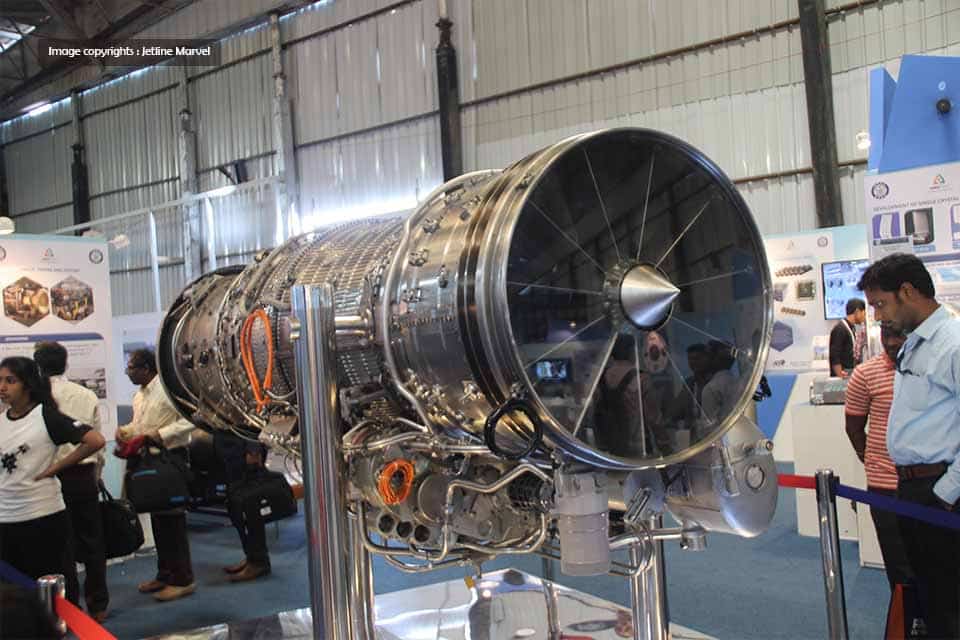
India’s long journey toward building its own jet engine is finally gaining visible momentum. After successfully delivering the first serial production unit — D1 — Godrej Aerospace is now preparing to hand over two more Kaveri Derivative Engines, D2 and D3, to DRDO’s Gas Turbine Research Establishment in the first half of 2026.
The delivery of D1 in September 2025 was more than just another milestone. It marked India’s transition from prototype-level testing to serial production of an indigenous aero-engine platform. Now, with D2 and D3 in the final stages of assembly and validation, the program is entering a crucial certification phase targeted for completion in 2026.
The Kaveri Derivative Engine (KDE) is part of India’s broader Atmanirbhar Bharat push in critical defence technologies. While the original kaveri engine was designed for fighter aircraft, the derivative version has been optimized for unmanned aerial platforms, marine propulsion, and industrial applications. It is also seen as a stepping stone toward future high-thrust engines for advanced combat aircraft like the HAL AMCA.
Recently, Raksha Mantri Rajnath Singh visited GTRE in Bengaluru to review progress on indigenous gas turbine engine development. He witnessed a full afterburner test of the kaveri derivative engine and stressed the urgent need for India to accelerate aero-engine development.
Calling it one of the most complex technological challenges — combining thermodynamics, material science, and advanced engineering — he urged scientists to compress timelines and aim not just for fifth-generation engines, but begin work on sixth-generation technologies as well.
The upcoming D2 and D3 engines will undergo extensive ground trials, endurance testing, and validation under extreme conditions including high-altitude and hot-weather environments. These tests will play a key role in achieving full certification in 2026 — a landmark goal for India’s aerospace ecosystem.
Godrej Aerospace has steadily grown into a critical industrial partner in this mission, moving from supplying components to full engine integration and delivery. With each successful step, India moves closer to reducing its reliance on foreign engine suppliers — an area that has historically limited the country’s defence independence.
If certification is achieved next year, the Kaveri Derivative Engine could become India’s first fully indigenous, production-certified gas turbine engine platform. For a nation that has spent over two decades building this capability, D2 and D3 are not just engines — they represent confidence, capability, and a decisive push toward true self-reliance in aerospace technology.
For more aerospace news, check out JetlineIntel.
Want to buy aviation merchandise? VisitJetshop.in.
To read Jetlinemarvel’s updates on Google News, head over to Google News.



