
Aircraft comparison
HQ-9 vs S-400: A Comparative Analysis of Modern Air Defense Systems
Two notable long-range surface-to-air missile (SAM) systems—China’s HQ-9 and Russia’s S-400 Triumf—have attracted global attention due to their extensive capabilities and strategic implications.

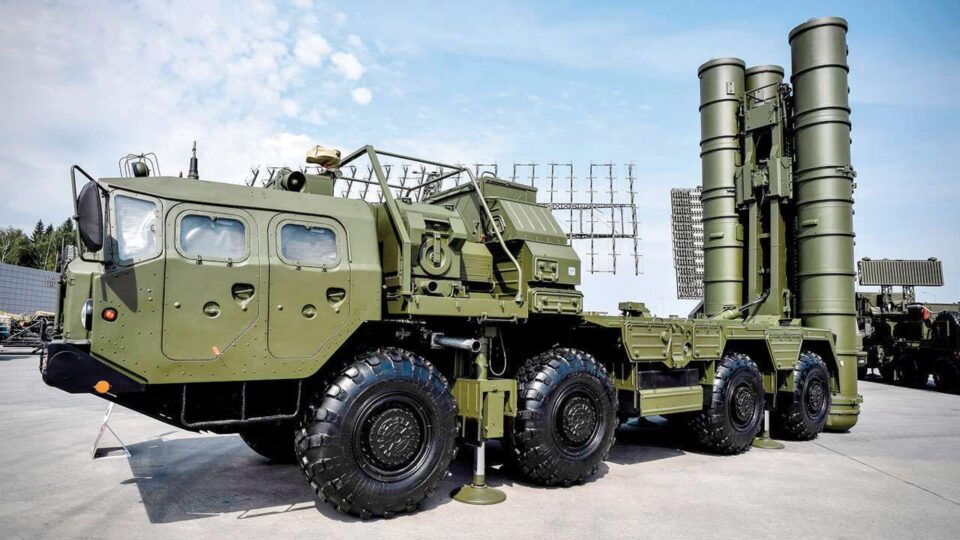
In the evolving landscape of modern warfare, air superiority and robust air defense systems are critical components of national defense strategies. Two notable long-range surface-to-air missile (SAM) systems—China’s HQ-9 and Russia’s S-400 Triumf—have attracted global attention due to their extensive capabilities and strategic implications.
While both systems are designed to intercept a variety of airborne threats including aircraft, drones, cruise missiles, and ballistic missiles, they differ significantly in terms of range, radar capabilities, technology base, combat experience, and export value.
This comparison offers an in-depth analysis of the similarities and differences between the HQ-9 and S-400, providing insight into their operational effectiveness and strategic relevance.
Development and Technological Origin
The HQ-9 was developed by China’s state-owned China Aerospace Science and Industry Corporation (CASIC). It was heavily influenced by earlier Russian S-300 missile systems and elements from the American Patriot system, making it a hybrid of foreign technologies. It entered service in the early 2000s and has since been upgraded into versions such as the HQ-9A, HQ-9B, and the latest HQ-9C.
On the other hand, the S-400 was developed by Russia’s Almaz-Antey and entered service in 2007 as a successor to the S-300. Unlike the HQ-9, the S-400 represents a wholly indigenous Russian design, incorporating advancements in missile technology, radar systems, and electronic warfare resistance.
Missile Range and Engagement Capabilities
In terms of missile range, the S-400 clearly outperforms the HQ-9. The S-400 can engage targets at distances up to 400 kilometers using the long-range 40N6E missile, while also deploying shorter-range missiles like the 48N6 and 9M96 to engage threats at medium and short ranges. This layered defense approach gives the S-400 flexibility and depth.
The HQ-9, by contrast, has a maximum range of about 200 to 300 kilometers depending on the variant (such as HQ-9B). Its shorter range limits its ability to engage threats at stand-off distances, making it less effective in large-scale or multi-layered defense scenarios.
Radar and Tracking Technology
The S-400 is equipped with advanced radar systems such as the 91N6E Big Bird acquisition radar and the 92N6E Grave Stone fire-control radar, which allow it to detect and track stealth aircraft, ballistic missiles, and low-flying targets over a range of up to 600 kilometers. These radars are known for their high resistance to jamming and electronic countermeasures.
In comparison, the HQ-9 uses phased-array radars like the HT-233, which provide decent coverage but are more limited in range and tracking capacity. While the HQ-9 can track multiple targets, it falls behind the S-400 in terms of simultaneous engagement capacity and sensor sophistication.
Combat Experience and Reliability
Combat experience is a crucial factor in evaluating any military system. The S-400 has seen deployment in real combat zones such as Syria and is currently operational in various countries including Russia, India, and Turkey.
Reports suggest it has successfully tracked and deterred enemy aircraft and missile threats in hostile environments. In contrast, the HQ-9 lacks real combat testing. Though deployed in regions like the South China Sea and by countries such as Pakistan, it has yet to prove its effectiveness in a high-intensity conflict. Some reports even suggest its failure to intercept fast and low-flying threats like India’s BrahMos missile.
Mobility and Deployment
Both the HQ-9 and S-400 are mobile systems mounted on transporter erector launchers (TELs), allowing them to be repositioned quickly. However, the S-400 has a significant edge in deployment time and operational readiness. It can be set up and made combat-ready in as little as five to ten minutes, enhancing its survivability against pre-emptive strikes. The HQ-9 requires a longer setup time—up to 30–35 minutes—making it less agile in a rapidly changing battlefield environment.
Export, Cost, and Strategic Impact
When it comes to international sales, the HQ-9 is marketed as a cost-effective alternative, with an estimated battery cost of around $300 million. This makes it attractive to countries looking for a cheaper option without Western or Russian dependencies. Countries like Pakistan, Algeria, and Turkmenistan have imported versions like the HQ-9/P.
Meanwhile, the S-400, though more expensive (estimated at $500 million per battery), is considered a premium defense system. It has been acquired by countries such as India, Turkey, and China despite political consequences like potential U.S. sanctions under CAATSA. Its acquisition is often viewed as a game-changer in regional power balances.
Conclusion
In summary, the S-400 stands out as the more advanced and capable air defense system when compared to the HQ-9. With its superior missile range, advanced radar systems, proven combat performance, and rapid deployment capabilities, it represents a significant technological and strategic edge.
The HQ-9, while respectable in its own right, is better suited to nations with budget constraints or those seeking a politically neutral supplier. In regions like South Asia, where India fields the S-400 and Pakistan relies on the HQ-9/P, this disparity reflects a considerable difference in air defense capabilities and strategic deterrence.
For more aerospace news, check out JetlineIntel.
Want to buy aviation merchandise? Visit Jetshop.in.
To read Jetlinemarvel’s updates on Google News, head over to Google News.
