
Airlines
U.S. Blocks Key Tech Sales to China’s COMAC, Threatening C919 Jet Ambitions
The U.S. halts some tech exports to China’s COMAC, potentially hindering the C919 jet program as the company pushes for international expansion.

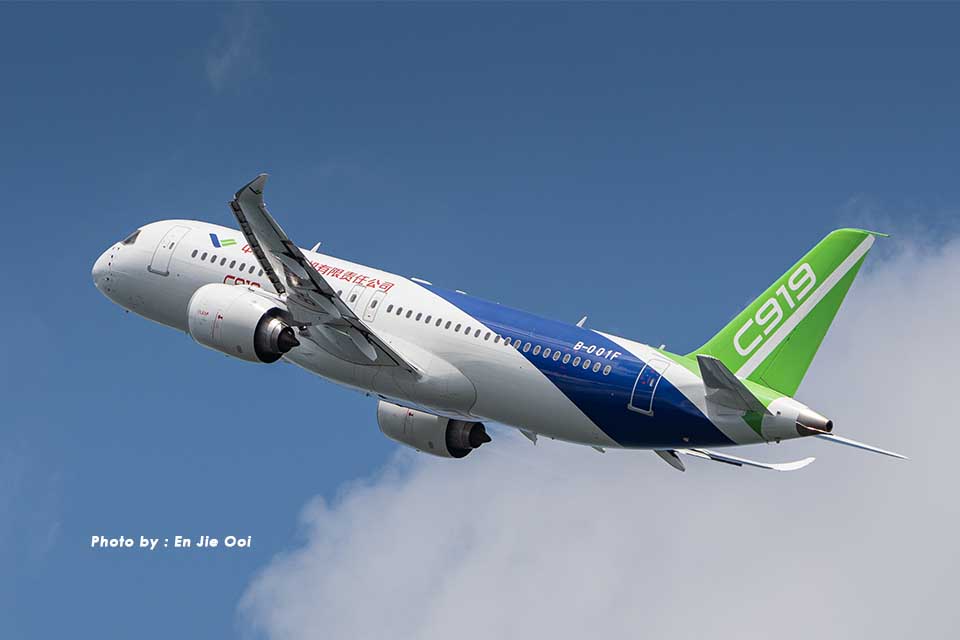
In a significant move that could rattle the global aviation landscape, the United States has reportedly curtailed the flow of critical technology to one of China’s most ambitious aerospace ventures.
According to The New York Times, the U.S. government has suspended certain export licenses allowing American firms to sell parts and technology to Commercial Aircraft Corporation of China (COMAC)—the state-owned company behind China’s flagship passenger jet, the C919.
Citing two sources familiar with the matter, the report highlights rising concerns in Washington over the strategic implications of supporting China’s commercial aviation aspirations. While COMAC aims to challenge the long-standing dominance of Boeing and Airbus, it remains heavily reliant on foreign—particularly American—technology, including aircraft engines and avionics.
The U.S. Commerce Department confirmed to Reuters that it is actively reviewing exports deemed to hold strategic significance for China. “In some cases, Commerce has suspended existing export licenses or imposed additional license requirements while the review is pending,” the department said.
The suspension is a potential blow to COMAC’s C919 project, which has been positioned as China’s answer to Boeing’s 737 and Airbus’s A320. Although the jet is currently certified for domestic use, COMAC is pushing hard for international recognition, particularly from Europe’s EASA, in a bid to expand its market share globally. Test flights and rigorous safety audits are reportedly ongoing to secure these certifications.
Despite its momentum, COMAC faces mounting challenges. The company reported a sharp 70% year-over-year increase in procurement costs, pushing its annual production expenses to an estimated $4.7 billion. Much of this increase is tied to sourcing critical components from abroad—an area now further complicated by the U.S. policy shift.
Nevertheless, demand for the C919 remains robust. Domestically, COMAC has secured significant orders, including 100 aircraft each from Air China and China Southern Airlines. International interest is also growing, with The New York Times reporting that Cathay Pacific is evaluating the C919 for potential fleet expansion.
To meet this surging demand, COMAC is ramping up its production capacity, aiming to deliver 30 C919 jets in 2025 and scaling up to an annual output of 50 aircraft. However, with the U.S. tightening its grip on key aerospace exports, the road ahead for COMAC may be steeper than anticipated.



