
Aviation
Here’s Why the Airbus Beluga Business Failed So Quickly
Once a logistics marvel, the Airbus Beluga ST’s commercial journey was cut short. We dive into the reasons behind its failure and what the future holds.

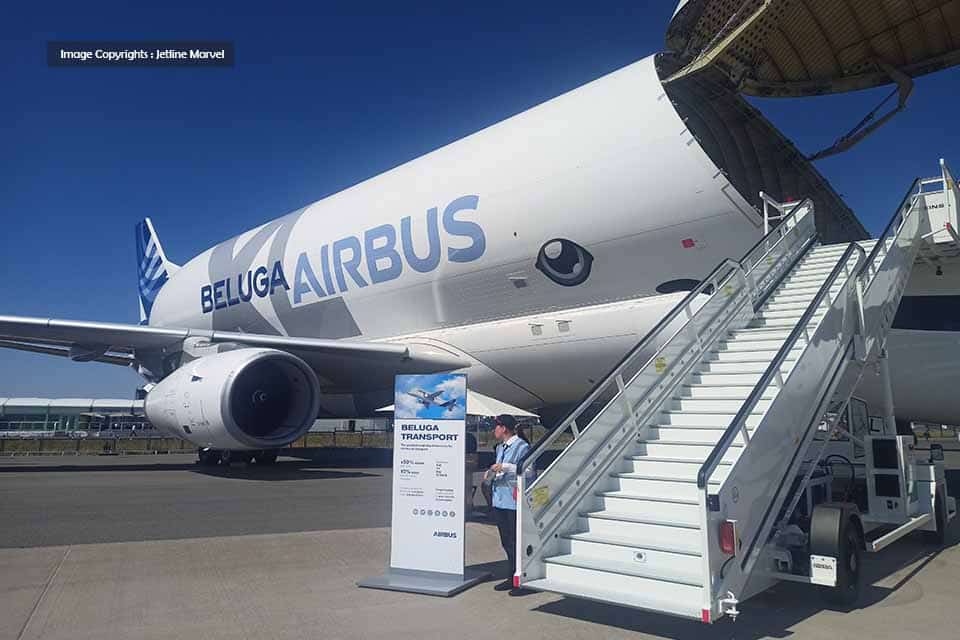
Every aircraft is designed with a purpose—some carry passengers, others haul freight. But a few are built to solve unique problems in aviation logistics. One such marvel is the Airbus Beluga ST, a specialized aircraft created by Airbus in the 1990s to transport oversized aircraft parts such as fuselages, wings, and landing gear between manufacturing plants across Europe.
Based on the Airbus A300-600ST, the Beluga quickly became a cornerstone of Airbus’s internal supply chain. Its massive cargo hold and high-volume capacity helped speed up production by airlifting components that would otherwise take weeks to move by road or sea. Airbus used the Beluga extensively to transport helicopters and other large modules, making it an indispensable part of its operations for decades.
However, despite the aircraft’s incredible utility within Airbus, things changed when the company tried to commercialize the Beluga ST fleet under the newly formed Airbus Beluga Transport (AIPT) division. The idea was to offer the Beluga’s outsize cargo capabilities to external customers in aerospace, defense, and humanitarian sectors—especially after the destruction of the AN-225 and the reduced availability of Antonov AN-124s.
Why Did the Beluga ST Commercial Venture Fail?
Airbus cited operational difficulties, not a lack of demand, as the primary reason for suspending commercial operations. The Beluga ST’s high main cargo deck required specialized ground handling equipment—like custom-built lifts—which had to be transported separately to each airport. This made the operation complex and expensive, particularly at destinations that didn’t have the necessary infrastructure.
Additionally, the Beluga was designed to carry large but lightweight cargo, with a maximum payload of around 35–40 tons. In contrast, the Antonov AN-124 can carry 150 tons, and the now-destroyed AN-225 could haul up to 250 tons. This payload limitation made it difficult for the Beluga ST to compete in the heavy cargo market, often resulting in underutilized space and lower revenue per flight.
Moreover, the Beluga ST lacked the ability to transport pressurized or sensitive cargo, such as live animals or certain industrial equipment. Combined with the aging A300 platform, high maintenance costs, and the complexities of operating a new airline, the business case for the Beluga’s commercial use became increasingly weak.
The Arrival of BelugaXL and Airbus’s Shift in Focus
As Airbus shifted its attention to newer aircraft, the original Beluga ST fleet gradually became obsolete. The BelugaXL, based on the more efficient A330-700L, offers greater payload, range, and improved operating economics. It has now fully replaced the ST fleet for Airbus’s internal logistics needs.
As a result, the Beluga STs were repurposed for commercial use only as a short-term solution. In November 2023, Airbus received its Air Operator Certificate for Beluga Transport, but within just over a year, by January 2025, the company suspended all commercial operations. Today, all five Beluga ST aircraft are stored in Bordeaux and Toulouse, with no clear plan for their future.
Final Thoughts: A Missed Opportunity or Strategic Decision?
So, was Airbus right to shut down the commercial Beluga operations? While the aircraft certainly had niche potential, the combination of high operating costs, limited cargo compatibility, and logistical challenges made it an uphill battle in a competitive and cost-sensitive market.
Still, some believe these unique aircraft could serve a valuable role in outsize cargo transport—especially in emergencies or sectors where speed is critical. But unless there’s a shift in global demand or logistical infrastructure, the Beluga ST may remain a retired legend, remembered more for its role in Airbus’s internal logistics empire than for any lasting impact on the wider cargo industry.
For more aerospace news, check out JetlineIntel.
Want to buy aviation merchandise? Visit Jetshop.in.
To read Jetlinemarvel’s updates on Google News, head over to Google News.
