
Aviation
Turkey Secures Initial KAAN Engines, US Decision Pending on 80 More
Ankara confirms delivery of initial KAAN fighter engines as negotiations with Washington continue over approval for 80 additional powerplants amid production timeline concerns.

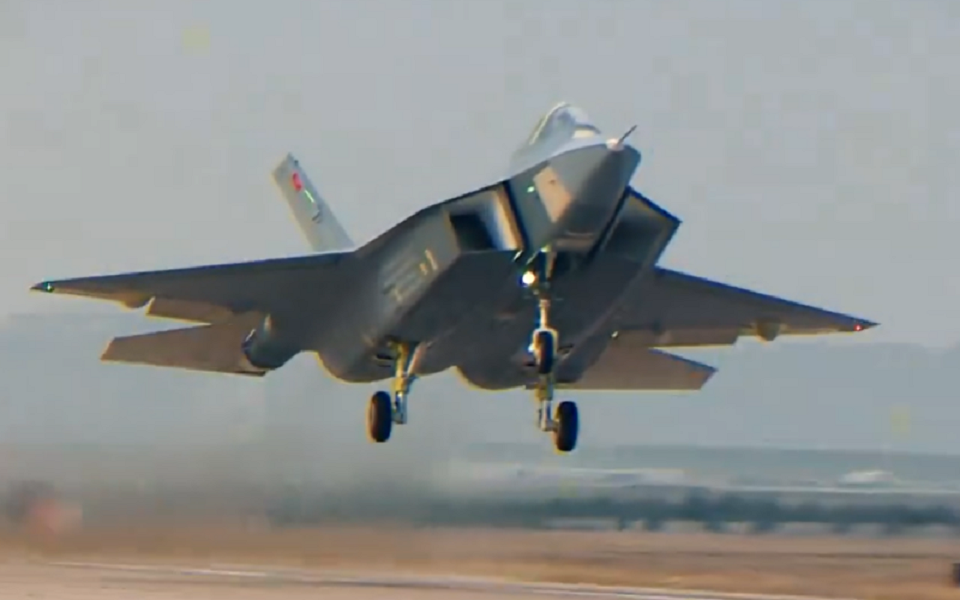
Turkey’s ambition to emerge as a global aerospace power is entering a decisive phase, as new details surface about the propulsion backbone of its fifth-generation fighter jet, KAAN.
While early progress has been secured with engine deliveries already completed, Ankara’s long-term production timeline now hinges on ongoing negotiations with the United States.
Turkey has officially received the first batch of jet engines for its indigenous KAAN fighter program, while negotiations continue with Washington for approval of a much larger follow-on order.
Turkish Defense Minister Yaşar Güler confirmed that engines procured under the initial subcontract with General Electric (GE) Aerospace were fully delivered as of September 2025, according to reports in Turkish media.
The KAAN program currently relies on the F110-GE-129E afterburning turbofan, produced by GE Aerospace in the United States. These engines are being used for early KAAN blocks, ground testing, and flight test activities, ensuring that the program’s prototype and initial development phase proceeds without interruption.
According to the Ministry of National Defense (MSB), two separate subcontracts exist between Turkish Aerospace Industries (TAI / TUSAŞ) and GE Aerospace.
- The first subcontract, covering the initial batch of engines, has been completed, with all units delivered by September 2025.
- The second subcontract, which involves 80 additional engines, remains under discussion and requires approval from U.S. authorities. Talks are continuing at the government-to-government level.
This clarification follows earlier remarks by Foreign Minister Hakan Fidan, who stated that KAAN engines were effectively “waiting in the U.S. Congress,” warning that licensing delays contradict the spirit of alliance and strategic partnership between the two NATO members.
Opposition CHP lawmaker İlhami Özcan Aygun criticized the situation, arguing that the fate of the 80 engines depends entirely on political decisions in Washington. He also questioned how turkish kaan plans to maintain its production schedule when the domestic jet engine project is still at the preliminary design stage, with no flight-ready indigenous powerplant available in the near term.
Despite these challenges, Ankara remains confident. Turkey has reiterated its goal of delivering the first KAAN aircraft to the Turkish Air Force by the end of 2028, with foreign interest and export discussions already quietly underway.
KAAN Fighter Jet: Key Features at a Glance
While engine negotiations continue, the KAAN itself represents a major technological leap for Turkey’s defense industry:
- Role: Fifth-generation, multirole stealth fighter
- Maximum Speed: Approximately Mach 1.8+
- Combat Radius: Estimated 1,100–1,200 km, depending on mission profile
- Maximum Take-Off Weight (MTOW): Around 35–40 tons
- Stealth Design: Low observable airframe, internal weapons bays
- Avionics: AESA radar, sensor fusion, network-centric warfare capability
- Future Growth: Planned integration of a domestically developed Turkish engine in later blocks
As Turkey pushes forward with KAAN, the program stands at a crossroads—progressing steadily on the technical front, while strategically navigating international politics.
The outcome of the 80-engine approval will play a crucial role in determining how quickly KAAN transitions from prototypes to full-scale production and operational service.
For more aerospace news, check out JetlineIntel.
Want to buy aviation merchandise? VisitJetshop.in.
To read Jetlinemarvel’s updates on Google News, head over to Google News.
