
Aviation
AirAsia Signs $12.25 Billion Deal for A321XLRs, Eyes One-Stop Flights to Europe & US
AirAsia signs landmark deal for 70 A321XLRs, fueling global expansion with long-range low-cost flights, including potential routes to Europe and North America.

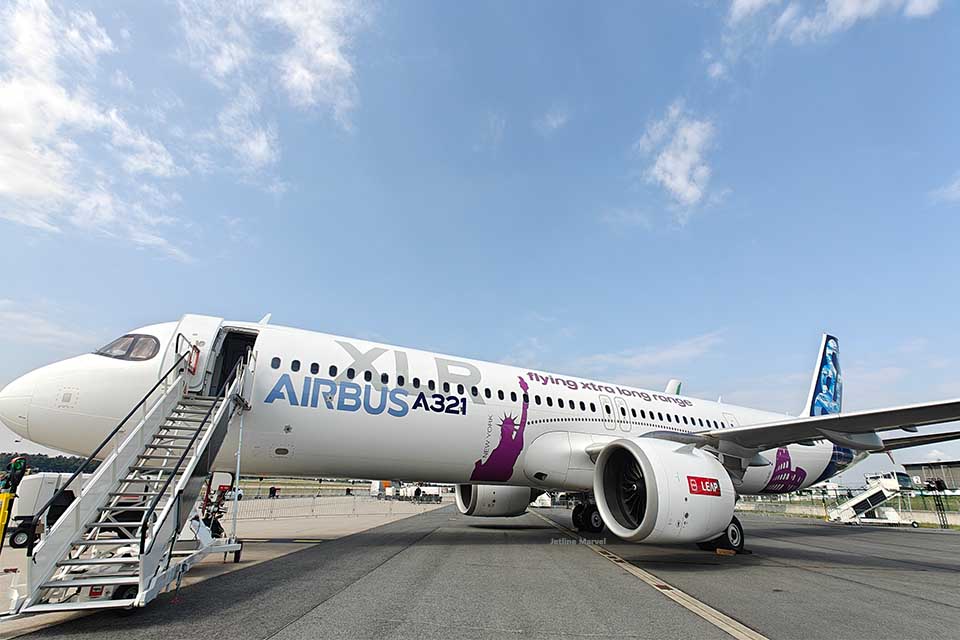
In a bold move that signals its global ambitions, AirAsia Berhad has signed a landmark agreement with Airbus worth USD 12.25 billion, placing firm orders for 50 A321XLR aircraft and securing rights for 20 more.
With this deal, AirAsia is positioning itself to become the world’s first low-cost narrow-body network carrier, with the capability to connect Asia to the Middle East, Europe — and potentially even North America — with just a single stop.
The deal, signed in Paris and witnessed by Malaysian Prime Minister YAB Dato’ Seri Anwar Ibrahim, marks a major milestone for the airline. The agreement was formalized between Tony Fernandes, CEO of Capital A Berhad (AirAsia’s parent company), and Christian Scherer, CEO of Airbus Commercial Aircraft. Deliveries are set to begin in 2028 and continue through 2032.
In addition, Malaysia Aviation Group (MAG), the parent company of Malaysia Airlines, has announced an order for 20 more Airbus A330-900 aircraft, effectively doubling its future A330neo fleet to a total of 40 jets.
The announcement came during the official visit of Prime Minister Datuk Seri Anwar Ibrahim to France.
A Game-Changer for Long-Range Low-Cost Travel
The next-generation Airbus A321XLR (Extra Long Range) is designed to fly further than any previous narrow-body aircraft. For AirAsia, this opens up new route possibilities to previously underserved or unreachable destinations — including Central Asia, the Middle East, and potentially Europe and North America — all while maintaining its signature low-cost model.
This aircraft offers up to 20% lower fuel burn per seat than the already efficient A321neo, which translates into major operational savings and a reduced environmental footprint. This is crucial for a carrier aiming to balance growth with sustainability.
Multi-Hub Strategy & Unified Brand Vision
The new fleet will serve as the backbone of AirAsia’s multi-hub strategy. By integrating both short-haul and long-haul operations under a unified brand, the airline plans to create a seamless, flexible network that connects secondary and major cities across continents.
This unified fleet will include the new A321XLRs alongside existing A320 Family and A330neo aircraft. The combination gives AirAsia the flexibility to match aircraft size to route demand while maximizing fuel and operational efficiency.
Targeting 150 Million Annual Passengers by 2030
With these aircraft additions, AirAsia is aggressively expanding its growth trajectory. The Group aims to carry 150 million passengers annually by 2030, reaching a cumulative total of 1.5 billion guests since its inception — a staggering number for a low-cost carrier that began as a regional airline.
2025 Fleet Growth & Recovery Momentum
Looking ahead, AirAsia plans to induct 14 new aircraft in 2025 — four directly from Airbus and ten via leasing partners — to support its post-pandemic recovery and regional expansion. The A321XLR, with its longer range and superior economics, is expected to become a vital part of this fleet evolution, driving new market entries and more profitable long-haul operations.
For more aerospace news, check out JetlineIntel.
Want to buy aviation merchandise? Visit Jetshop.in.
To read Jetlinemarvel’s updates on Google News, head over to Google News.



