
Aviation
Will India’s Kaveri engine replace the GE F404 in the future?

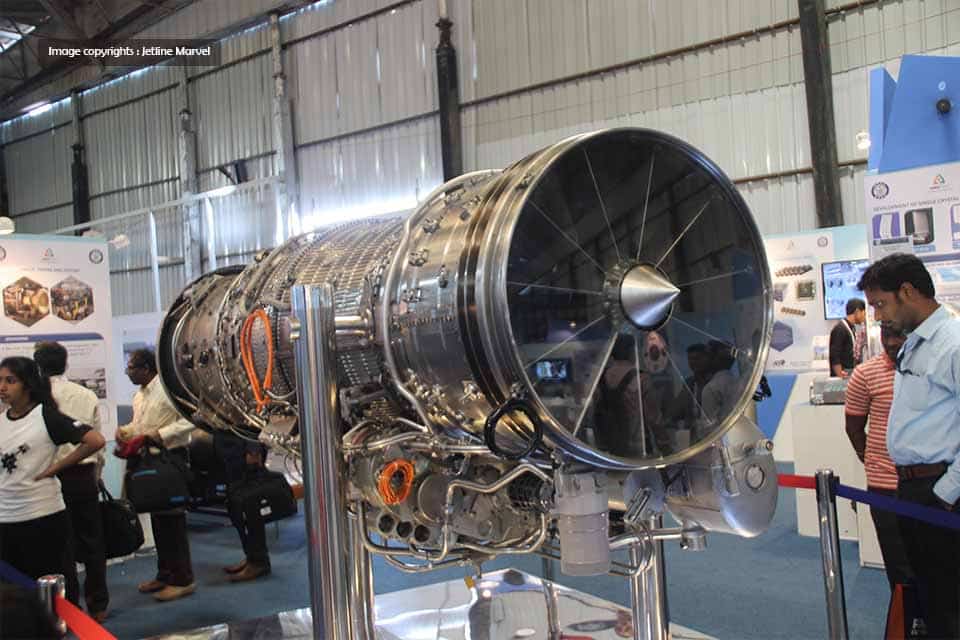
In a significant step towards achieving self-reliance in aerospace technology, the Gas Turbine Research Establishment (GTRE) has recently completed kaveri engine inflight testing , a key milestone in India’s journey to develop its own advanced jet engine.
This accomplishment brings India one step closer to replacing foreign-made engines, such as the F-404 currently powering the Tejas Mk1A fighter jets, with its own enhanced Kaveri engine.
Air India Announces New Routes to Dallas, Los Angeles, and More for 2025
The development of India’s indigenous engine has been a significant challenge, taking nearly 30 years to reach its current stage. The country also received assistance from Russian cooperation during the engine’s development. However, it’s still too early to definitively assess whether it can replace the F404 engine in the future.
The GE F404 has undergone extensive development over the years, with continuous improvements. While it remains uncertain, there is hope that the Indian Tejas may eventually have its own engine, reducing reliance on support from other countries.
This enhanced Kaveri engine aims to deliver 20-25% more thrust compared to the existing Dry Kaveri engine, making it a capable replacement for the F-404s as the Tejas fleet enters its mid-life.
Will the TEJAS MK-2 Fighter Jet GE-414 Engine Deal See a Price Increase?
The Tejas Mk1A is set to enter service in 2025, and by 2035, the Indian Air Force (IAF) plans to induct over 220 of these jets. As these aircraft reach their mid-life, they will need new engines to maintain their operational efficiency. The kaveri engine thrust with its improved and flat-rated design, will be capable of handling the extreme heat and high-altitude conditions typical of India’s operational environment.
Unlike the F-404 engines, which suffer from a 7-8% power degradation in hot conditions, the Kaveri engine will maintain its thrust, ensuring better performance under challenging conditions.
In addition to the engine development, GTRE is also nearing completion of its 130kN Twin Engine Test Bed Facility in Bengaluru. This state-of-the-art facility is designed to accommodate engines with thrust levels up to 130kN, allowing for rigorous testing and validation of high-performance jet engines.
Embraer Proposes Armed Variant of C 390M India’s IAF
The facility will play a pivotal role in the development of the kaveri jet engine and the engine for India’s ambitious Advanced Medium Combat Aircraft (AMCA), which is expected to deliver around 110kN of thrust.
The test bed will support a variety of testing, from endurance tests to performance evaluations, ensuring that these engines meet the stringent requirements for m ilitary use. With its capabilities, the test bed will significantly speed up the development process, reducing both time and costs associated with engine testing.
The facility not only supports the indian kaveri engine and AMCA programs but also lays the groundwork for future engine developments, further strengthening India’s defense capabilities. This move toward self-reliance is in line with India’s broader strategy of reducing dependency on foreign technology, while enhancing national security and innovation.
GTRE is focused on developing a new generation of Kaveri engines capable of delivering more power and better performance under extreme conditions. Once the Dry Kaveri+ kaveri afterburner section is tested successfully, the research body plans to propose government funding for the development of a 90 kN engine, which will replace the F-404 engines in the Tejas Mk1A within the next decade.
Aircraft Encyclopedia: Discover the World of Aerospace: A Vibrant Guide to Airplane Parts and Functions : Click here

Now you can shop for our aviation apparel at JetShop.in! For the latest aerospace news, visit Jetlineintl.com. Follow us on Google News.
