
Aviation
Who invented the black box?

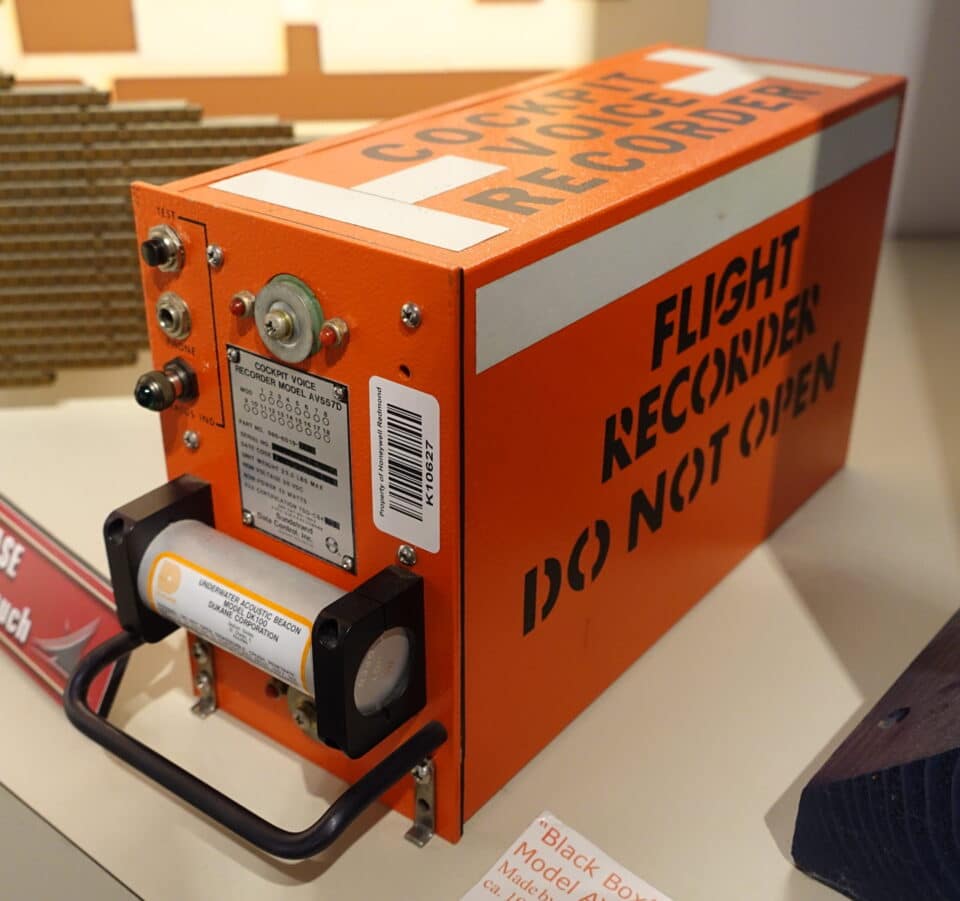
Terminology of black box
The term “black box” is almost never used within the flight safety industry or aviation, which prefers the term “flight recorder”. The recorders are not permitted to be black in color, and must be bright orange, as they are intended to be spotted and recovered after incidents.The term black box has been popularized by the media in general.
As well as One explanation for popularization of the term “black box” comes from the early film-based design of flight data recorders, which required the inside of the recorder to be perfectly dark to prevent light leaks from corrupting the record, as in a photographer’s ‘darkroom’
WHO INVENTED THE BLACK BOX?
The Black Box was first invented by a young Australian scientist named Dr. David Warren. While Warren was working at the Aeronautical Research Laboratory in Melbourne in the mid-1950s he was involved in the accident investigation surrounding the mysterious crash of the world’s first jet-powered commercial aircraft, the Comet. Realising that it would have been useful for investigators if there had been a recording of what had happened on the plane just before the crash, he got to work on a basic flight data recorder

The “black box” is made up of two separate pieces of equipment: the flight data recorder (FDR) and a cockpit voice recorder (CVR). They are compulsory on any commercial flight or corporate jet, and are usually kept in the tail of an aircraft, where they are more likely to survive a crash. FDRs record things like airspeed, altitude, vertical acceleration and fuel flow and recording all flight data such as altitude, position and speed as well as all pilot conversations.
It is common for many civil airliners to have multiple devices to carry out these tasks so that information can be gathered more easily in the event of a failure.. Early versions used wire string to encode the data; these days they use solid-state memory boards. Solid-state recorders in large aircraft can track more than 700 parameters.
A beacon is typically supplied with electrical power by a lithium battery, which needs to be replaced after several (DK120/six) years.
Once the beacon becomes immersed into water, a built-in “water switch” activates it (water closing an electric circuit), and the beacon starts emitting its “pings”; the battery power should be sufficient for at least 30 days after the activation.ULBs are triggered by water immersion; most emit an ultrasonic 10ms pulse once per second at 37.5 kHz ± 1kHz. . There is asubmergence sensor on the side of the beacon that looks like a bull’s-eye. When water touches this sensor, the beacon is activated.
