
Defence
US Approves F-16 Upgrade Deal for Pakistan and Allied Nations
The United States has approved a major long-term support contract for F-16 fighter jet radar systems, with Pakistan among the countries included under the Foreign Military Sales programme.

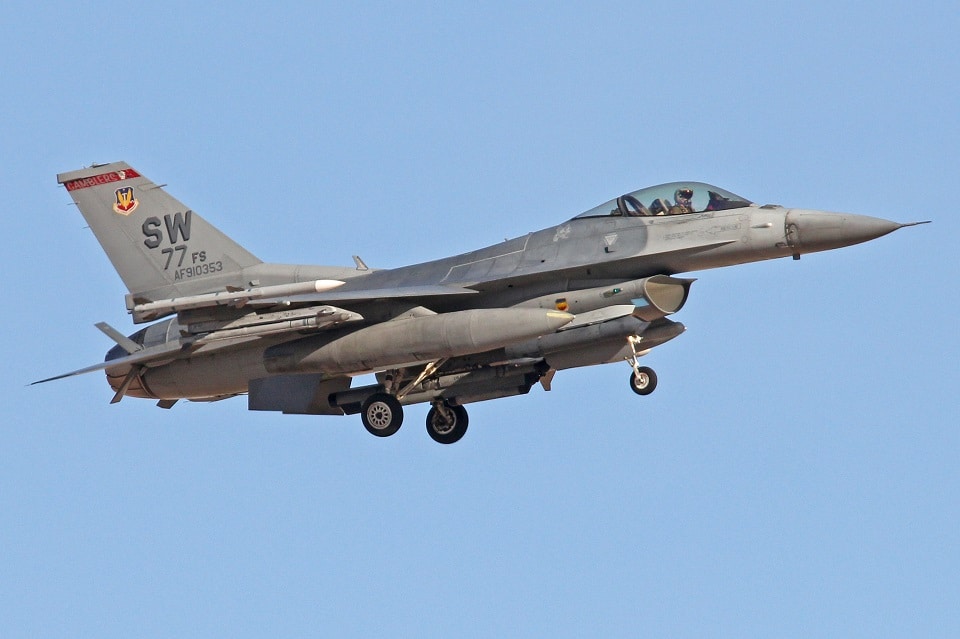
The defense relationship between the U.S. and Pakistan has always been a bit of a rollercoaster—regional rivalries, counterterror operations, changing priorities—it’s been through it all.
But if there’s one thread that’s kept them tied together, it’s the F-16 Fighting Falcon. No matter how tense things get, that connection stays solid. Even now, the U.S. is making it clear it wants to keep supporting every country flying F-16s, and Pakistan’s right in that mix.
Lately, the U.S. Air Force signed off on a massive $488 million contract with Northrop Grumman. Their job? Long-term engineering and technical support for F-16 radar systems, specifically the APG-66 and APG-68 radars used in F-16s all over the world. More than 20 allied countries benefit, thanks to the Foreign Military Sales program.
This arrangement runs through March 2036. It covers a pretty broad group: Pakistan, Israel, Egypt, Jordan, South Korea, Turkiye, Morocco, Bahrain, plus plenty of NATO allies. Most of the work will happen in Maryland, while the Air Force Lifecycle Management Center in Utah oversees the whole thing.
For Pakistan, this contract’s a big deal. The F-16 remains one of the Pakistan Air Force’s core combat jets, central to everything from air defense to precision strikes and counterterrorism work. With this deal in place, Pakistan’s F-16s get steady radar upgrades, regular maintenance, and reliable technical help—basically, they’ll stay sharp for years to come.
Say what you will about older jets, the F-16 still earns its place. It’s quick, flexible, tough in a dogfight, and way less expensive to operate than the latest stealth fighters.
Lockheed Martin built it for speed—over Mach 2. On internal fuel, it can fly 550 kilometers from base, and throw on some drop tanks and it pushes past 4,000 kilometers. At full load—about 19,000 kilograms—it’s ready to haul a wide mix of missiles, bombs, electronics, or recon pods.
But what really makes the F-16 shine? Its radar and avionics. The APG-68 radar can track multiple targets up in the air while still handling ground attack duties. On top of that, Link-16 data links and secure comms mean the F-16 slots right into modern, networked military operations.
And this contract isn’t the only upgrade on the table. In December 2025, the U.S. also offered Pakistan a $686 million upgrade package for its F-16s.
That deal covers advanced communications, precision navigation, new friend-or-foe ID systems, updated software, training simulators, spare parts, and engineering support. The point? Make sure Pakistan’s jets can work seamlessly with U.S. and allied forces, especially for joint ops or crisis response.
Sure, you never quite know where U.S.-Pakistan politics will go next. But the F-16 partnership stands out—it’s a real sign that military cooperation is alive and ongoing. For Pakistan, keeping those F-16s in top form matters now more than ever, especially as neighbors ramp up on newer planes and modern systems.



