
Defence
Turkey Rolls Out Second KAAN Prototype for Flight Testing
Turkey’s Kaan fighter program hits a key milestone with multiple prototypes in testing, domestic engine development plans

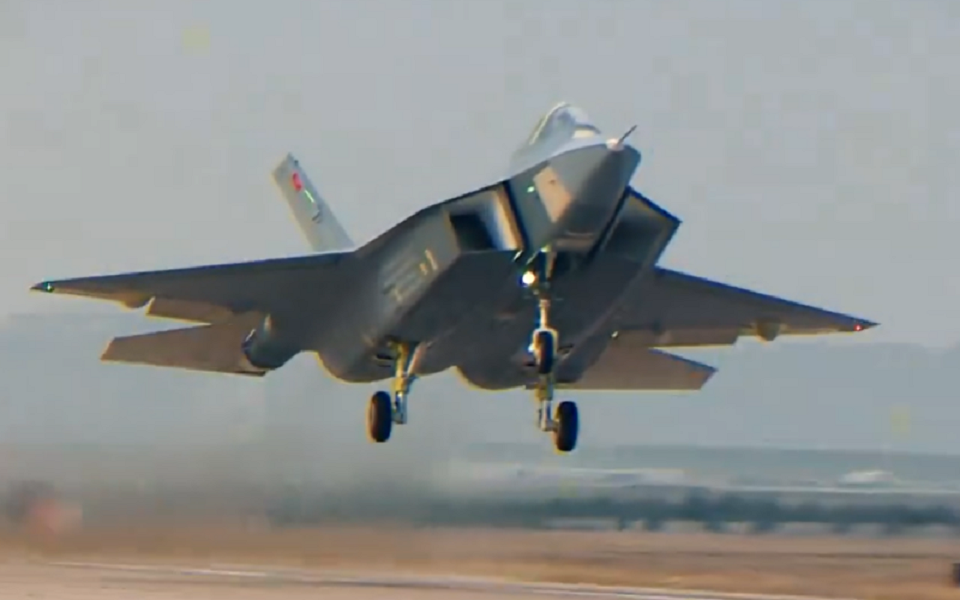
The Kaan — formerly known as the TF-X / MMU — has reached another major milestone, as confirmed by Haluk Görgün, head of Turkey’s defense industry authority. A second prototype of the aircraft has now been revealed. While the first prototype appeared in grey, the newly unveiled aircraft features a white paint scheme, clearly distinguishing it as the next stage in development.
Developed by Turkish Aerospace Industries (TAI), the Kaan is Turkey’s indigenous fifth-generation stealth fighter program aimed at reducing reliance on foreign suppliers and strengthening long-term airpower capability.
Multiple Prototypes in Parallel Testing
As of February 13, 2026, Turkish defense officials showcased:
- The original flying prototype P0, which made its maiden flight in February 2024
- The second flying prototype P1, nearing completion
- A full-scale static ground test airframe for structural validation
This means three separate prototypes are now progressing in parallel — a significant technical milestone for the program.
The second prototype is expected to make its first flight around May 2026 or later in the year. By the end of 2026, at least three Kaan aircraft are anticipated to be flying simultaneously, accelerating data collection and pushing the program into a more rigorous testing phase.
The Engine Challenge
Like many fifth-generation programs, the biggest question mark remains the engine.
Currently, Kaan prototypes are powered by the General Electric F110 engine — the same powerplant used in the F-16 Fighting Falcon. Turkey remains optimistic about continued engine supply following recent diplomatic discussions, though geopolitical considerations, including CAATSA-related tensions, remain a factor.
At the same time, Turkey is aggressively developing its own indigenous engine — the TF35000 — designed to produce approximately 35,000 pounds of thrust. Testing of the domestic engine is expected around 2028–2029, with integration into a prototype projected by 2029–2030. The long-term plan envisions:
- One prototype powered by the indigenous engine
- Another powered by the F110
- Full fifth-generation performance capability within the next 3–5 years
Developing a domestic engine would place Turkey among a very limited group of nations capable of independently producing advanced fighter aircraft powerplants.
Production Plans and Export Ambitions
Turkey’s defense procurement authority has initiated contractual processes for delivery to the Turkish Air Force. Current projections include:
- 20 Block 10 aircraft targeted by 2028
- Production ramping up to two aircraft per month by 2029
- A long-term goal of 100+ aircraft for Turkey
- Potential total production of 250–300 units, including exports
- Estimated program value of $25–30 billion
At the World Defense Show 2026, Turkey actively promoted Kaan to Saudi Arabia, exploring potential partnership and co-production opportunities. While no official agreement has been confirmed, discussions appear ongoing.
Indonesia has also expressed strong interest in the aircraft, though formal commitments are yet to be announced.
Joint production partnerships could offer participating countries:
- Discounted acquisition costs
- Technology transfer and industrial benefits
- Long-term strategic collaboration
Regional Comparison
Turkey’s progress comes as South Korea’s KF-21 Boramae moves into production after completing extensive testing. The regional competition for advanced fighter development is intensifying, with nations aiming for greater aerospace independence.
The Road Ahead
The Kaan program is advancing rapidly — with flight testing, structural validation, engine development, and production planning all moving forward in parallel. However, engine supply remains the critical variable.
If Turkey successfully develops and integrates its domestic engine, Kaan could achieve full fifth-generation independence. If not, reliance on foreign suppliers may continue to shape the program’s trajectory.
The coming years will determine whether Kaan emerges as a fully sovereign fifth-generation platform — or remains partially dependent on external engine providers.
What’s your view on Turkey’s Kaan program and its engine strategy?
