
Aviation
South Korea Moves Ahead with Limited KF-21 Technology Transfer to Indonesia

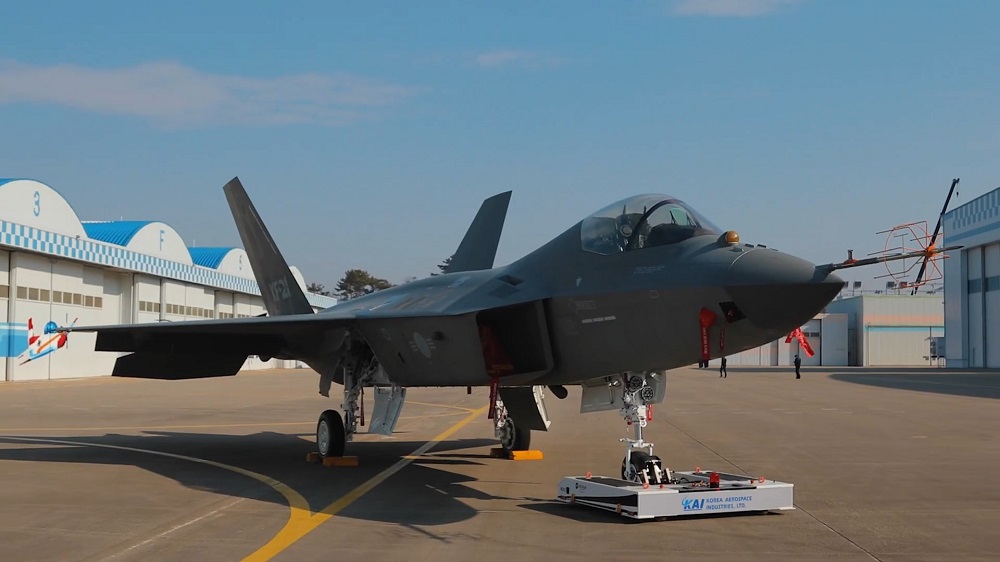
South Korea is preparing to proceed with a scaled-down technology transfer and cooperation package for the KF-21 Boramae fighter program with Indonesia, marking a pragmatic continuation of the long-running joint development partnership. However, the scope of cooperation has been significantly reduced compared to the original agreement due to financial disputes, security concerns, and past tensions between the two countries.
Background of the KF-21 / IF-X Joint Program
The KF-21 program—originally known as the KFX/IF-X project—was launched in 2015 as a joint fighter development initiative between South Korea and Indonesia. Under the initial agreement, Indonesia committed to funding 20% of development costs, equivalent to about 1.6 trillion won ($1.2 billion).
In return, Indonesia was expected to receive:
- Extensive technology transfer (ToT)
- Access to development data
- Rights to locally produce up to 48 IF-X fighter jets
- Industrial benefits including assembly, maintenance, and long-term aerospace cooperation
However, the program encountered repeated delays after Indonesia struggled to meet its financial commitments. Relations were further strained in 2024 following allegations of data theft involving Indonesian engineers—although those individuals were later cleared of wrongdoing.
A renegotiation in 2025 fundamentally reshaped the partnership:
- Indonesia’s contribution reduced to 600 billion won ($400–440 million)
- Project stake lowered from 20% to about 7.5%
- Technology transfer scope significantly scaled back
Despite these challenges, overall development remains on schedule, with completion targeted for June 2026.
Current Status (April 2026)
Prototype Transfer Agreement
Recent working-level negotiations indicate that South Korea has effectively agreed to transfer KF-21 Prototype No. 5, a single-seat aircraft, to Indonesia as part of a “value transfer” arrangement within the revised financial framework.
According to South Korea’s Defense Acquisition Program Administration (DAPA), the agreed compensation package includes:
- KF-21 Prototype No. 5 valued at 350 billion won
- Development participation and technology transfer worth 174.2 billion won
- Technical data and development materials valued at 75.8 billion won
This agreement reflects a practical settlement reached in February 2026 to resolve Indonesia’s revised financial contribution.
Export Deal Progress
Indonesia is expected to become the first export customer of the KF-21 fighter jet.
Key developments include:
- Planned purchase of 16 aircraft, reduced from the earlier goal of 48
- Preliminary discussions held during Indonesian President Prabowo Subianto’s visit to Seoul (March 31–April 2, 2026)
- A binding contract anticipated in the first half of 2026
- The first mass-production KF-21 aircraft rolled out in March 2026
Scope of Technology Sharing
The revised technology transfer package focuses primarily on operational and industrial cooperation rather than deep technology access. It includes:
- Fighter aircraft production support
- Assembly and manufacturing cooperation
- Maintenance, Repair, and Overhaul (MRO) capabilities
- Selected development data and technical know-how
However, sensitive core technologies remain restricted, particularly:
- Certain AESA radar technologies
- Engine-related systems
- Components subject to U.S. export control regulations
Indonesia continues technical consultations, and an Indonesian test pilot has already flown a KF-21 prototype, demonstrating ongoing operational collaboration.
Why the Technology Transfer Was Reduced
Several factors led to the scaled-down agreement:
- Payment Shortfalls — Indonesia’s reduced financial contribution limited its entitlement to full technology access.
- Security Concerns — Risks of technology leakage increased caution within South Korea’s defense establishment.
- Export Control Restrictions — U.S.-origin technologies integrated into the aircraft impose legal transfer limitations.
- Strategic Compromise — Seoul prioritized maintaining the partnership while protecting sensitive technologies.
South Korea has shown flexibility by restructuring the deal rather than terminating cooperation, ensuring program stability and future export prospects.
Overall Assessment
South Korea and Indonesia are now pursuing a practical reset of their KF-21 partnership. The revised agreement includes prototype transfer, limited technology sharing, and Indonesia’s planned purchase of 16 aircraft—far less ambitious than the original vision but sufficient to sustain bilateral defense cooperation.
While negotiations remain active and final contract details are still pending, the arrangement signals a transition from an ambitious co-development model to a more controlled industrial partnership focused on export and operational collaboration.
