
Aviation
Russian-Made Jets Get Pricier, But the Challenge to Boeing and Airbus Grows
Amid sanctions and isolation, Russia’s aviation push hits turbulence as aircraft prices soar—even though no one’s buying.

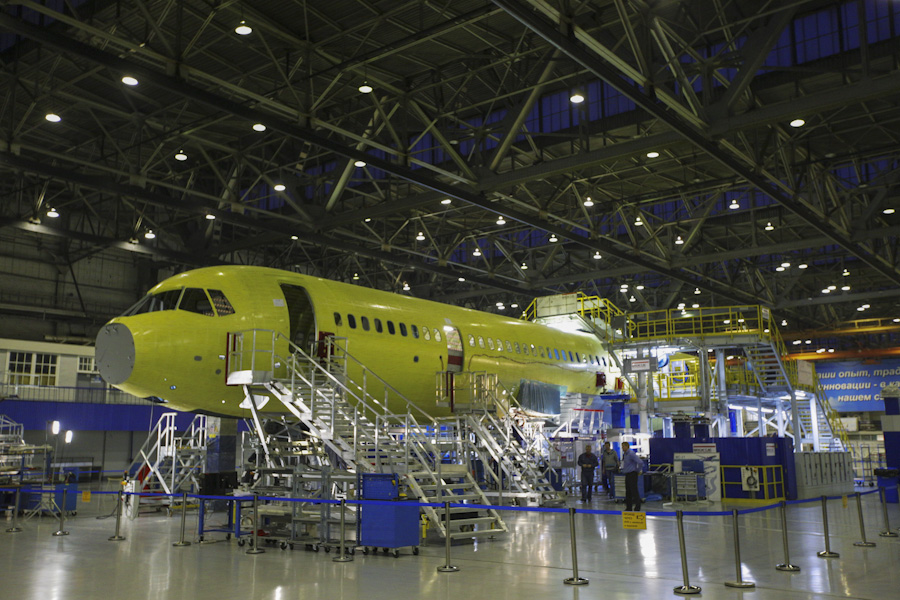
In a bold attempt to break free from Western dependence, Russia has been racing to build a self-reliant aviation industry.
But even as the country unveils indigenous aircraft and celebrates milestones like the maiden flight of a fully domestically-built MC-21, a major challenge has emerged: price. While the Kremlin pushes forward with aviation independence, the price tags on these new jets are skyrocketing—despite a lack of actual buyers.
Russia’s Jet Prices Soar – Even Though No One’s Buying
Amid heavy international sanctions and deepening global isolation, Russia’s aviation industry is at a critical crossroads. A recent report by The Moscow Times reveals that the prices of Russian-made passenger jets, which were supposed to replace Boeing and Airbus aircraft, have surged dramatically—even as demand remains limited.
According to documents from a Transportation Ministry meeting, obtained by the pro-Kremlin daily Izvestia, prices for domestically manufactured planes have jumped by 45 to 70 percent in just the past two years. The surge is primarily driven by rising production costs and Russia’s continued dependence on imported components—despite its push for technological self-sufficiency.
The MC-21, Russia’s flagship narrow-body jet and competitor to the Boeing 737 and Airbus A320, now costs 7.6 billion rubles ($96 million)—a sharp increase from 4.3 to 4.6 billion rubles ($55–58 million) just a year ago. This comes even as the fully domestically-produced version of the MC-21 recently completed its maiden flight, a moment hailed in Russian media as a significant achievement in aviation independence.
Regional aircraft have also seen steep hikes. The Il-114-300 turboprop, built for short-distance routes, has almost doubled in cost, rising to 2.6 billion rubles ($33 million). Meanwhile, the LMS-901 Baikal, a light aircraft for remote areas, saw its price jump from 178 million rubles ($2.3 million) to around 315–320 million rubles ($4–4.1 million).
State-owned conglomerate Rostec, responsible for much of Russia’s defense and aviation production, admitted that the original pricing estimates were overly optimistic and failed to account for the current economic realities.
Rising costs of materials, electronics, and limited production scale were cited as the main contributors. A Rostec spokesperson added that while early production units are more expensive, the prices are expected to fall once mass production ramps up.
Still, Izvestia highlighted that the Russian Transport Ministry is urging manufacturers to bring aircraft prices closer in line with international standards.
The ministry emphasized that the financial model for these jets must show returns comparable to foreign-built alternatives in order to attract interest and investment, including support from the National Wealth Fund (NWF).
These rising costs are a stark reminder of the uphill battle Russia faces in reviving its civil aviation industry. Following its invasion of Ukraine, sweeping Western sanctions cut the country off from imported aircraft, spare parts, and maintenance services—forcing it to urgently pivot to self-reliance. But the transition is proving costly.
