
Aviation
MC-21: Fully Russified to Challenge Boeing and Airbus Amid Sanctions

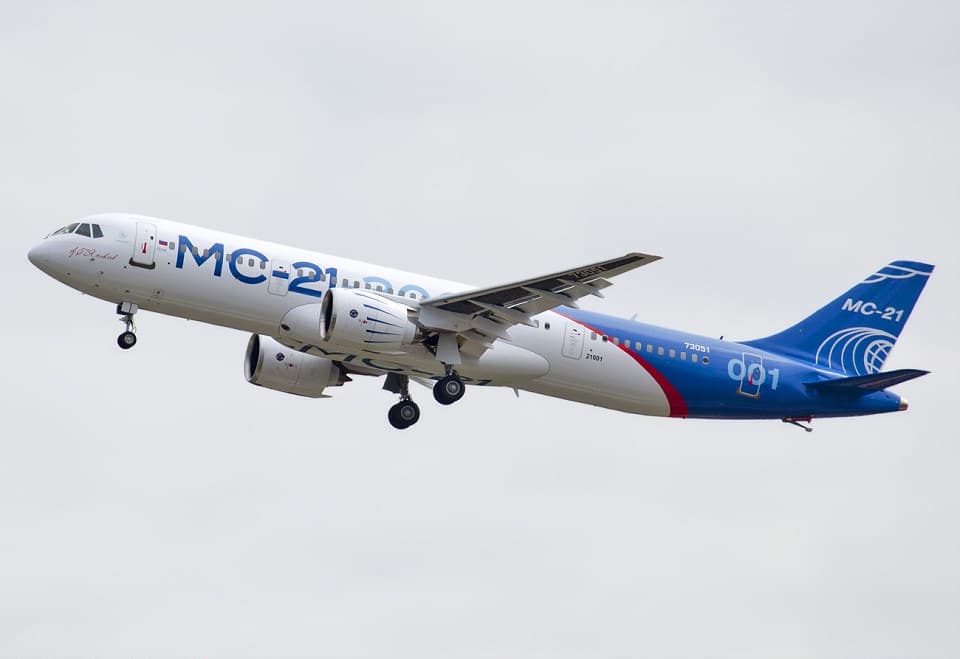
Russia’s MC-21 program marks a pivotal moment in its quest for aviation independence amid mounting Western sanctions. Initially reliant on Western manufacturers like Boeing and Airbus, Russia has now positioned itself to become a major player in the civil aviation market through its domestically developed MC-21 aircraft.
Production Timeline and Targets
Russia plans to begin serial production of the MC-21 by 2026, with the first 18 aircraft scheduled for delivery and a goal of producing up to 210 units by 2030. Despite ambitious targets, the program has experienced repeated delays due to sanctions stemming from the Ukraine conflict, which cut off access to key foreign components such as the Pratt & Whitney PW1000G engines.
Russification and Technical Challenges
To overcome these sanctions, Russia initiated a comprehensive “Russification” process to replace 40–50% of the MC-21’s Western components with domestically produced alternatives. This has resulted in a roughly 6-ton increase in the aircraft’s weight, reducing its range from 6,000 km to approximately 2,800 km. One major factor behind the weight gain is the reduced use of lightweight composite materials, previously sourced from Western suppliers. Originally, over 30% of the aircraft was made from composites, including advanced carbon fiber-reinforced polymer wings.
Certification and Engine Development
The MC-21-310, equipped with Russian-made PD-14 engines, received initial Russian certification in December 2021. However, a fully import-substituted version is still undergoing testing, with a critical production milestone set for April 2025. The PD-14 engines are now in mass production and are being integrated into early production models, addressing prior concerns about the reliability of domestically developed systems.
Market Prospects and Pricing
The MC-21 has received around 290 firm orders, mainly from Russian carriers such as Aeroflot and airlines within the former Soviet sphere, including Azerbaijan. Notably, 99 aircraft remain without assigned operators. The aircraft is competitively priced at approximately 3 billion rubles (US$37 million), nearly half the cost of a Boeing 737 MAX 8. State subsidies further enhance its attractiveness to Russian and allied markets, although the lack of international certification limits global appeal.
Competitive Landscape: MC-21 vs COMAC C919
Russia’s push for aviation self-sufficiency mirrors similar efforts by China. The COMAC C919, although domestically produced, still relies on Western components. It has gained popularity in China, surpassing 2 million passengers and accumulating over 1,200 orders. COMAC is also planning the C939, a wide-body, twin-aisle aircraft designed for long-haul travel, highlighting China’s ambitions in global aviation.
In contrast, the MC-21 is built entirely with Russian-made systems, making it the first commercial aircraft to achieve such a feat under heavy sanctions. While the MC-21 currently has a shorter range and heavier frame, its complete independence from Western supply chains is a noteworthy achievement.
Strategic Implications and Export Potential
The MC-21 could become a vital asset for other sanctioned nations, particularly Iran, which faces similar restrictions on importing aircraft and parts. Iran currently maintains its fleet using substitute components and outdated aircraft. The MC-21, free of Western technology and sanctions restrictions, presents a modern solution for Iran’s aging aviation infrastructure.
Russia and Iran have strengthened their strategic partnership, evidenced by a 20-year agreement ratified in April 2025. The MC-21 could be sold to, or even co-produced in, Iran, bypassing Western sanctions entirely. Meanwhile, Saudi Arabia has shown interest in partnering with China to produce the C919 locally, but geopolitical constraints have made such cooperation difficult. This opens a window for Russia to expand its aviation footprint in the Middle East, should the MC-21 prove successful.
Symbol of Sovereignty and Future Outlook
The maiden flight of the Russified MC-21-310 on April 25, 2025, represents more than just a technical achievement—it symbolizes Russia’s push for technological sovereignty. This fully domestically built aircraft, from engines to avionics to airframe, sets a world record for aerospace independence, unlike the C919, which still depends on foreign systems.
Despite the reduced range and increased weight, the MC-21’s successful development under extreme international pressure is a remarkable milestone. The program targets the production of up to 600 aircraft by 2030. With growing interest from sanctioned and non-Western-aligned countries, the MC-21 has the potential to challenge the dominance of Airbus and Boeing in select markets.
In conclusion, the MC-21 represents a significant step forward for Russia’s aviation industry. Its success could reshape the geopolitical landscape of commercial aviation, providing a viable alternative for nations seeking independence from Western aerospace giants.
What are your thoughts on the MC-21? Can it truly compete with the Airbus A320neo and Boeing 737 MAX in the long run? Let us know in the comments below.
For more aerospace news, check out JetlineIntel.
Want to buy aviation merchandise? Visit Jetshop.in.
To read Jetlinemarvel’s updates on Google News, head over to Google News.
