
Aviation
Inside the Flying Kremlin: Features of Putin’s Powerful Presidential Aircraft
The Ilyushin Il-96-300PU, better known as the “Flying Kremlin,” is no ordinary jet—it is Vladimir Putin’s airborne command post. Packed with secure communications, nuclear command systems, and lavish interiors inspired by Russian culture, the aircraft symbolizes Russia’s power and independence from Western aerospace.

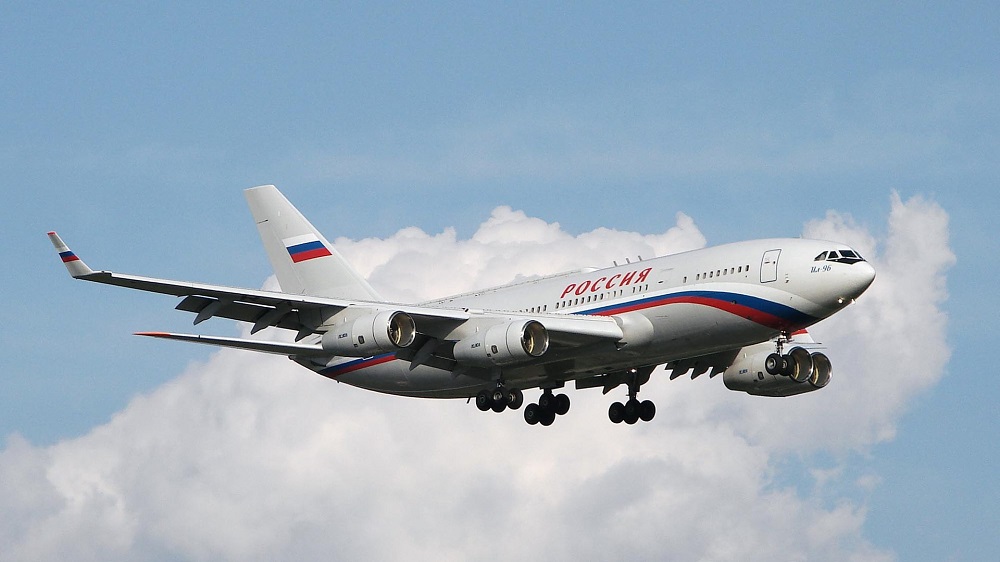
On the world stage, a President’s aircraft is far more than transportation. It is a moving fortress, a symbol of national pride, and a demonstration of technological power.
For nations like the United States and Russia, these planes reflect prestige, luxury, and state strength, while doubling as airborne command centers capable of directing military operations in times of crisis.
The U.S. President is famously flown aboard Air Force One, a heavily modified Boeing 747. But Russia too has its own counterpart: the Ilyushin Il-96-300PU, the aircraft that carries President Vladimir Putin.
Design and Specifications
The Il-96-300PU—PU meaning Punkt Upravleniya, or Command Post—is a long-range, wide-body, four-engine airliner developed by the Ilyushin Design Bureau.
- Length: 55.35 meters (181 feet)
- Wingspan: 60.12 meters (197.3 feet)
- Engines: Four Aviadvigatel PS-90A turbofans, each producing 35,000 pounds of thrust
- Passenger Capacity: Standard models carry 262 passengers, but the presidential variant is reconfigured for space, security, and luxury
- Operation: Managed by Russia’s Special Flight Squadron, part of Rossiya Airlines
Luxury and Interiors
Inside, the Il-96-300PU resembles a floating palace. The interiors feature gold-plated fittings, intricate woodwork, and handcrafted embroidery, with design themes inspired by Russian folk culture. Private offices, executive suites, rest areas, and full conference rooms allow the President to work, rest, or hold meetings mid-flight.
The aircraft is designed more like a luxury yacht in the sky than a conventional jet.
Security and Command Systems
Security is at the heart of this aircraft’s design. It is equipped with:
- A secure communication system linking the President to government and military branches
- The ability to control Russia’s nuclear arsenal if necessary
- Advanced electronic countermeasures and self-defense systems
- Capability for aerial refueling, greatly extending operational range
This makes the Il-96-300PU not just transport, but a flying command center—a Kremlin in the skies.
Maintenance and Security Protocols
The aircraft is maintained solely by the Special Flight Detachment, and only authorized Russian technicians are permitted to work on it—even abroad. Each flight includes a reserve aircraft, a dedicated technical team, and onboard security staff.
Access is strictly limited: only individuals above 15 years of age with special clearance are allowed entry.
Comparison with Air Force One
When compared to America’s Air Force One (the Boeing VC-25), Russia’s Il-96-300PU is smaller and less powerful:
- Length: 181 ft (Russia) vs. 231 ft (USA)
- Engines: 35,300 lbs thrust (Russia) vs. 56,700 lbs (USA)
- Range: Both have aerial refueling capability, but Air Force One enjoys longer endurance
- Catering: The Il-96 serves pre-packed meals, while Air Force One employs chefs for freshly prepared dining—a point of personal criticism even by President Putin
History and Reliability
The Il-96-300PU has been in service since 1996, first used by President Boris Yeltsin, and later by Putin and Dmitry Medvedev. Newer aircraft were added to the fleet in 2012, 2014, and 2016.
Reliability, however, has not always been flawless. In 2005, during a visit to Finland, Putin’s Il-96 experienced a braking system failure, forcing a backup aircraft into service.
Symbolism and Independence
Despite these concerns, the Il-96-300PU remains a symbol of Russian sovereignty and pride. Known as the “Flying Kremlin”, it embodies Russia’s determination to avoid reliance on Western aerospace giants like Boeing or Airbus—especially crucial under Western sanctions.
Unlike many nations that import aircraft, Russia continues to rely on its domestic aerospace industry, ensuring independence in one of the most strategic sectors.
Final Thoughts
While smaller and less powerful than the American Air Force One, Putin’s Il-96-300PU serves its purpose as both a luxurious presidential aircraft and a secure airborne command center. For Russia, it represents not just transportation, but national strength, self-reliance, and leadership in the skies.
For more aerospace news, check out JetlineIntel.
Want to buy aviation merchandise? Visit Jetshop.in.
To read Jetlinemarvel’s updates on Google News, head over to Google News.
