
Aircraft comparison
Comparing the JF-17 Thunder and Dassault Rafale: A Detailed Analysis
A comprehensive analysis of the JF-17 vs Rafale highlights key differences in technology, combat capability, and operational value.

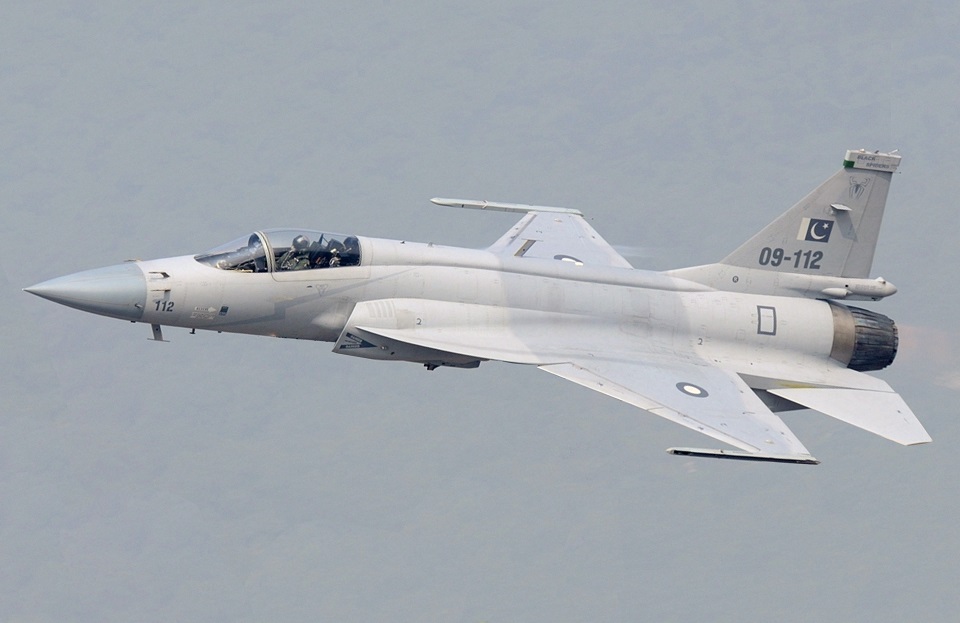
The Chengdu JF-17 Thunder and Dassault Rafale are fundamentally different fighters in terms of design philosophy, technological sophistication, and operational use.
While the JF-17 is a cost-effective, single-engine, fourth-generation multirole fighter co-developed by China and Pakistan, the Rafale is a more advanced, twin-engine 4.5-generation fighter from France, designed for high-end combat missions. Below is a comprehensive comparison across key parameters:
1. Design & Technology
JF-17 Thunder
- Generation: 4th generation (Block III is the most advanced variant).
- Design: Lightweight, single-engine, delta wing with a conventional layout (Empty: ~6,411 kg; MTOW: ~12,474 kg).
- Avionics: KLJ-7A AESA radar (Block III), IRST, digital fly-by-wire, and helmet-mounted display.
- Electronic Warfare: EW suite with basic jamming features, possibly similar to Chinese KG300G/KG600.
- Stealth: No major stealth features; RCS not optimized.
Dassault Rafale
- Generation: 4.5-generation with near-5th-gen capabilities.
- Design: Twin-engine, canard-delta configuration (Empty: ~10,000 kg; MTOW: ~24,500 kg).
- Avionics: Thales RBE2 AESA radar, integrated sensor fusion, and IRST.
- Electronic Warfare: SPECTRA EW suite—among the most advanced globally, providing jamming, decoying, and threat analysis.
- Stealth: Reduced RCS and IR signature, though not fully stealth; capable of detecting stealth aircraft in exercises.
➤ Edge: Rafale clearly leads with more integrated, mature, and combat-tested avionics and EW systems.
2. Performance
JF-17 Thunder
- Engine: RD-93 or WS-13, ~8,500 kgf with afterburner.
- Top Speed: Mach 1.6 (~1,975 km/h).
- Range: ~2,940 km (with tanks); endurance ~3.5 hours.
- Service Ceiling: ~54,000 ft.
- Maneuverability: Decent, but limited by engine power; thrust-to-weight ratio ~0.95.
Dassault Rafale
- Engine: Two M88 turbofans (~15,000 kgf combined).
- Top Speed: Mach 1.8 (~2,223 km/h); Supercruise capable.
- Range: ~3,700 km; endurance up to 9 hours with refueling.
- Service Ceiling: ~50,000 ft.
- Maneuverability: Excellent agility, 9G-capable, high thrust-to-weight ratio (~1.1), STOBAR capable.
➤ Edge: Rafale outperforms in almost all metrics—speed, range, endurance, and agility.
3. Weapons & Payload
JF-17 Thunder
- Cannon: 23 mm GSh-23-2.
- Hardpoints: 7; max payload ~3,600 kg.
- Key Missiles:
- Air-to-Air: PL-15 (BVR, 200–300 km), PL-10 (WVR).
- Air-to-Ground: Precision bombs, anti-ship missiles.
- Strength: PL-15 offers long BVR reach but effectiveness depends on radar quality.
Dassault Rafale
- Cannon: 30 mm GIAT 30/M791.
- Hardpoints: 14; max payload ~9,500 kg.
- Key Missiles:
- Air-to-Air: Meteor (BVR, 150+ km), MICA (BVR/WVR).
- Air-to-Ground: SCALP cruise missile, Exocet, HAMMER.
- Strength: Meteor’s large no-escape zone and SCALP’s range make Rafale formidable in multiple domains.
➤ Edge: Rafale has superior payload, more hardpoints, and a wider, proven weapons suite.
4. Combat Experience
JF-17 Thunder
- Limited operational use; some involvement during the 2019 Balakot crisis.
- No significant combat record under high-intensity conditions.
Dassault Rafale
- Extensive combat record: Afghanistan, Libya, Iraq, Syria, Mali.
- Proven across air superiority, strike, and reconnaissance missions.
➤ Edge: Rafale’s battlefield experience significantly enhances its credibility and effectiveness.
5. Cost & Operational Viability
JF-17 Thunder
- Cost: ~$25–30 million per unit.
- Role: Budget multirole fighter; ideal for replacing aging fleets.
- Support: Simpler logistics, but dependent on Chinese/Russian supply chains.
Dassault Rafale
- Cost: ~$100–120 million per unit.
- Role: High-performance, omnirole platform for strategic missions.
- Support: Supported by France’s established military-industrial infrastructure.
➤ Edge: JF-17 wins on affordability, Rafale justifies its cost with high-end capabilities.
6. Strategic & Geopolitical Relevance
JF-17 Thunder
- Expands Chinese influence via exports (e.g., to Myanmar, Nigeria).
- Systems tightly integrated with Chinese tech, limiting Western interoperability.
- Recent unverified claims of jamming Rafales in April 2025 (Kashmir region).
Dassault Rafale
- Strengthens alliances (India, Egypt, UAE, Qatar).
- Fully NATO-compatible; ideal for multilateral operations.
- India deploys Rafales at Ambala and Hasimara to deter threats from both Pakistan and China.
➤ Edge: Rafale offers broader strategic impact and greater international interoperability.
Conclusion: Which Is Better?
The Dassault Rafale is superior overall, offering:
- Advanced 4.5-gen systems and proven SPECTRA EW suite.
- Superior flight performance, range, and supercruise.
- Battle-tested weapons like Meteor and SCALP.
- Real-world combat experience and strategic flexibility.
The JF-17 Thunder, however, provides key advantages for specific needs:
- Affordable acquisition and maintenance.
- Reasonable multirole capabilities for smaller or budget-constrained air forces.
- Modern BVR capabilities with PL-15 (though limited by radar integration).
Final Verdict: For high-intensity and strategic missions, Rafale is clearly the superior platform. The JF-17 is a pragmatic solution for nations prioritizing cost and regional defense over top-tier capabilities.



