
Aviation
Air India vs IndiGo: Who Rules India’s Non-Metro Skies?
Despite fleet expansion, Air India Express and Air India have a modest non-metro presence, focusing on metro hubs while IndiGo leads in Tier-2 to Tier-2/3 connectivity.

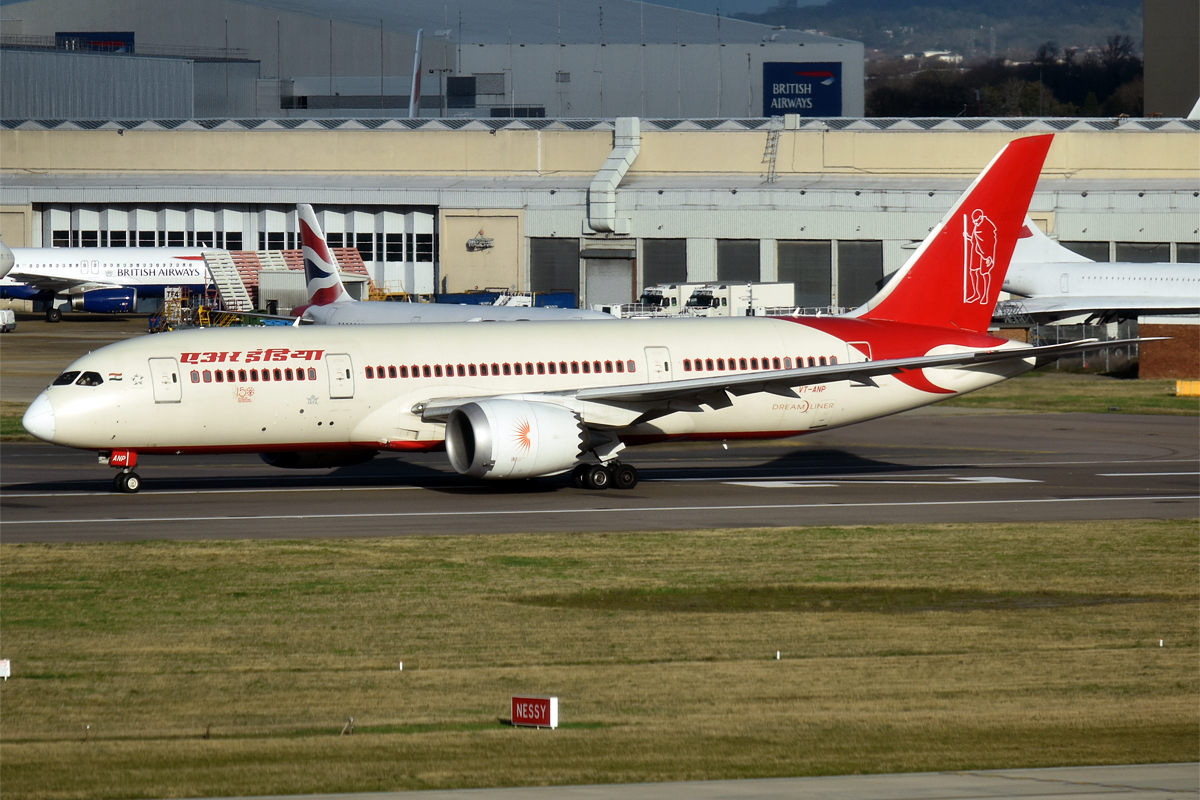
Air India has been rapidly expanding its network, adding new destinations and strengthening connectivity for travelers across India.
With seamless efforts to improve passenger access beyond the metros, the Air India Group has been reshaping its domestic footprint. According to the linked post by Ravereet Singh, here’s a detailed analysis of the Group’s non-metro routes in 2025.
Air India Express Leads the Push
Air India Express (IX), the low-cost arm of the Group, has seen the fastest expansion thanks to its growing 737 and A320 fleet. However, its strategy still revolves around developing hubs in metro cities—particularly Hyderabad and Bengaluru—while its reach on Tier-2 to Tier-2/3 routes remains limited.
For the week of 11–18 August 2025, IX operated just 42 non-metro routes (21 city-pairs), accounting for around 302 weekly departures and offering approximately 54,961 seats.
Comparing with IndiGo
The scale difference with IndiGo remains striking. In the week of 14–21 July 2025, IndiGo operated about 157 non-metro routes (78 city-pairs) with 1,091 weekly departures and nearly 212,400 weekly seats. This underlines IndiGo’s dominance in connecting smaller cities.
Despite the scale gap, IX’s average stage length stood at 768 km, compared to IndiGo’s 893 km on similar fleets. Both, however, reported an average block time of 1 hour 39 minutes, reflecting comparable operational patterns.
Route Frequencies
Air India Express’s non-metro routes are still thinly spread:
- Only one city-pair exceeded 14x weekly frequency.
- Two city-pairs were operated 8–13x weekly.
- A majority (14 city-pairs) saw exactly 7x weekly flights.
- Four city-pairs had less-than-daily services.
Interestingly, over half of these routes (10 city-pairs) were tied to CAT-II/IIA obligations, and IX enjoyed monopoly status on 11 city-pairs, showing both opportunity and risk.
Key Non-Metro Markets
- Guwahati emerged as IX’s largest non-metro hub with six routes and 54 weekly departures.
- Pune followed with four routes and 29 weekly services.
- Bhubaneshwar came third with five routes and 28 weekly departures.
Full-Service Air India’s Footprint
Air India’s mainline full-service operation was even smaller. The airline ran just 8 routes (4 city-pairs) with 28 weekly departures, offering about 4,600 seats. Among these, only Ahmedabad–Goa (AMD–GOX) was served daily, while the rest were primarily tied to CAT-II/IIA compliance.
Strategic Contrast
- Air India (full-service) is concentrating on Delhi and Mumbai as true hub-and-spoke centers.
- Air India Express is consolidating Hyderabad and Bengaluru as secondary hubs, primarily linking South India to the rest of the country.
This approach leaves Tier-2 to Tier-2/3 connectivity underdeveloped, even as demand is gradually emerging. Notably, even 38% of IndiGo’s non-metro network operates at less than daily frequency, highlighting the slow but steady growth in these market.
For more aerospace news, check out JetlineIntel.
Want to buy aviation merchandise? Visit Jetshop.in.
To read Jetlinemarvel’s updates on Google News, head over to Google News.
