
Defence
Which engine is most suitable for the AMCA fighter jet — Japan’s XF9 or France’s M88?
A detailed comparison of Japan’s high-thrust XF-9 and France’s combat-proven Safran M88-based upgrade reveals India’s critical choice for powering the AMCA stealth fighter

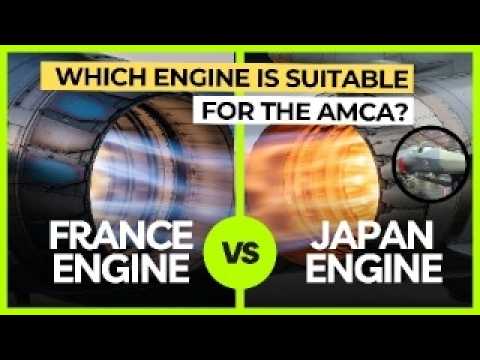
India is aggressively searching for a powerful and reliable engine for its Advanced Medium Combat Aircraft (AMCA) — a 5th-generation stealth fighter jet designed to meet the nation’s future air combat needs.
Several global aerospace companies have approached India with proposals, ranging from joint development offers to ready-made designs.
Among the most prominent offers are:
- Japan’s IHI XF-9
- France’s Safran M88-based upgraded engine
Other players like Rolls-Royce and GE have also shown interest, but the Japanese and French proposals are currently the frontrunners.
Japan’s IHI XF-9 – Technical Overview
- Type: Low-bypass afterburning turbofan
- Thrust:
- 107 kN (dry)
- 147 kN (afterburner)
- Potential scalability up to 196 kN in future variants
- Turbine Capability: Advanced materials withstand 1,800°C inlet temperature
- Design Features: Stealth-optimized inlet vanes, thrust vectoring, modular architecture, low observability, supercruise capability
- Testing History:
- Prototype tested: 2018
- Flight-tested in Mitsubishi X-2 Shinshin demonstrator (2016–2018)
- Future Role: Proposed for Global Combat Air Programme (GCAP) – a UK–Japan–Italy 6th-generation fighter initiative
Advantages
- High thrust output exceeding AMCA’s baseline requirement (73–75 kN dry, 110–120 kN afterburner)
- Scalability for AMCA Mark 2 and future 6th-gen platforms
- Advanced stealth, thermal management, and fuel efficiency optimization
- Modular design allows easier upgrades and maintenance
Challenges
- Limited Japanese track record in mass-producing fighter jet engines compared to France or the UK
- Possible timeline delays due to GCAP commitments, which may misalign with AMCA’s shadow prototype target (2028–29) and production schedule (~2039)
France’s Safran M88-based Engine – Technical Overview
- Current Thrust: 50 kN (dry) / 75 kN (afterburner)
- Required Upgrade for AMCA: 75–80 kN (dry) / 110–120 kN (afterburner)
- Technology Base: Proven M88 design from Rafale, with planned upgrades:
- Improved compressor and afterburner
- Single-crystal turbine blades
- Enhanced materials for sustained supercruise capability
- Development Timeline:
- Prototypes by 2026–27
- First flight by 2028 — aligning with AMCA’s development phase
- Current Status: Already operational in fighters, reducing technical risk
Advantages
- Proven and combat-tested platform, lowering development and integration risk
- Timeline matches AMCA’s schedule
- Full technology transfer, including critical single-crystal blade and thermal barrier coating tech
- Strong industrial base in India, with Safran already co-producing the Shakti helicopter engine
- Proposal includes a Centre of Excellence in gas turbine technology
- $7 billion (₹61,000 crore) deal with full IPR rights, enabling India to upgrade, modify, and export engines independently
Challenges
- Requires upgrades to meet AMCA’s thrust requirements
- Past delays in technology transfer (e.g., Shakti engine) raise concerns over delivery timelines
- Thrust ceiling (110–120 kN) could limit scalability for future AMCA variants or 6th-gen fighters
Side-by-Side Comparison
| Feature | IHI XF-9 (Japan) | M88-based Upgrade (France) |
|---|---|---|
| Dry Thrust | 107 kN | 75–80 kN (after upgrade) |
| With Afterburner | 147 kN (up to 196 kN future) | 110–120 kN (max) |
| Stealth Features | Advanced stealth inlet, low observability | Stealth tech from Rafale |
| Scalability | High – ready for 6th-gen | Moderate – meets AMCA baseline only |
| Operational Track Record | Limited in production use | Decades of combat-proven reliability |
| Timeline Fit | Risk of GCAP delays | Fully aligned with AMCA milestones |
| Technology Transfer | Full, co-development | Full with IPR rights |
| Strategic Impact | Strengthens Indo–Japan–UK GCAP ties | Builds on strong Indo–France defense ties |
Strategic & Geopolitical Factors
- Japan: Offers high performance and future-proof scalability, plus closer Indo-Pacific defense cooperation to counter China. However, GCAP-linked dependencies and lack of large-scale production experience add uncertainty.
- France: Established, trusted defense partner with a proven industrial base in India. Its IPR-heavy deal supports Atmanirbhar Bharat, but lower thrust ceiling could limit long-term speed and performance goals.
Other Offers
- Rolls-Royce: Proposed co-development with IPR rights, enabling India to build and export engines independently.
- GE: Interested, but U.S. export controls and long-term political dependency raise concerns for India’s strategic autonomy.
Conclusion
Both the IHI XF-9 and Safran M88-based upgraded engine meet AMCA’s minimum thrust needs, but they cater to different priorities:
- XF-9: More thrust, future scalability, but higher integration risk
- M88-based: Proven, low-risk, and timeline-friendly, but less future-proof for 6th-gen applications
The decision will reveal whether India values cutting-edge performance with some strategic risk or proven reliability with smoother integration for its AMCA program.
For more aerospace news, check out JetlineIntel.
Want to buy aviation merchandise? Visit Jetshop.in.
To read Jetlinemarvel’s updates on Google News, head over to Google News.
