
Aviation
Pakistan’s Shift in Air Defense Strategy: Exploring Turkey’s SIPER System Amid China’s Setbacks
Pakistan eyes Turkish air defense solutions like SIPER amid doubts over Chinese tech, aiming to boost capabilities against India’s advanced missile systems.

The ongoing conflict between India and Pakistan has increasingly become a live testing ground for modern missile systems and fighter jets.
During India’s Operation Sindhur on May 7, 2025, Indian Rafale jets armed with SCALP cruise missiles successfully bypassed Pakistan’s Chinese-supplied air defense systems, exposing significant vulnerabilities.
This success was largely attributed to India’s advanced electronic warfare (EW) tactics, including radar jamming and signal suppression, which left Pakistan’s air defense hesitant to engage incoming threats.
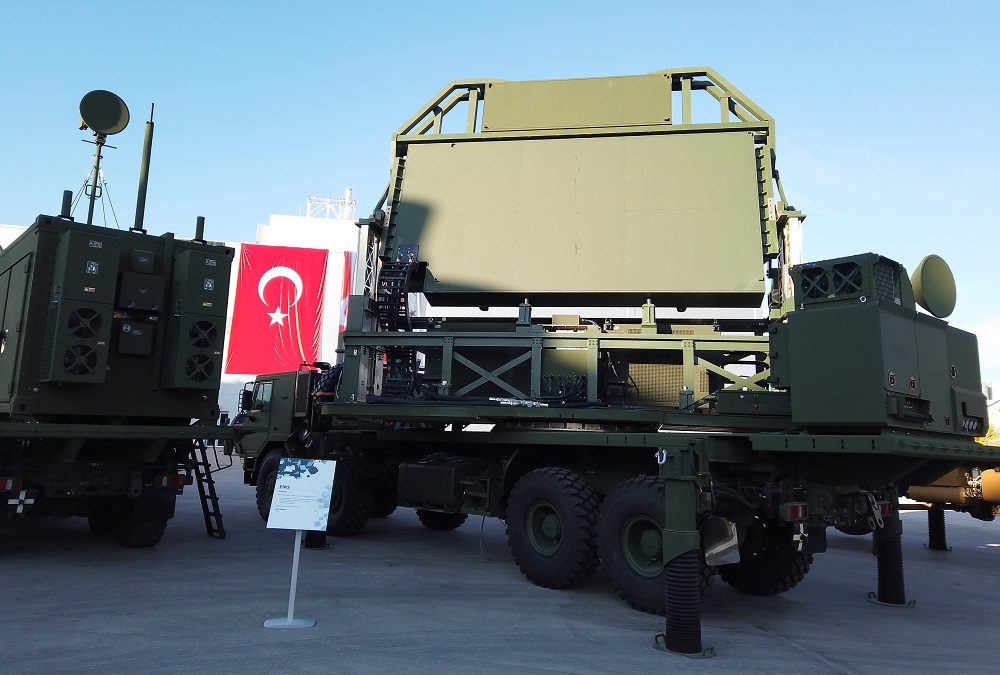
These shortcomings have triggered serious introspection within Pakistan’s defense establishment. With its Chinese-origin HQ-9 and HQ-16 systems underperforming in actual combat, Islamabad is now actively exploring alternative air defense solutions. Among the top contenders is Turkey’s SIPER long-range air defense system, developed by ASELSAN, ROKETSAN, and TÜBİTAK SAGE.
Overview of the SIPER Missile Family
The SIPER system features a family of missiles designed to counter a wide range of aerial threats:
- SIPER Block 1: Offers a range of 100 km, an altitude ceiling of over 20 km, and utilizes a dual-pulse solid-fuel rocket engine with an RF seeker warhead based on Hisar RF technologies.
- SIPER Block 2: Extends range to 150 km and incorporates a single-stage rocket motor with planned booster support for greater reach.
- SIPER Block 3: Currently under development, this variant aims for a range of 180+ km and is being engineered to intercept ballistic missile threats, expanding the system’s strategic scope.
Though promising, the SIPER system’s real-world performance is yet to be validated on the scale of India’s Russian-made S-400, which has a longer operational history and global credibility. Nonetheless, SIPER represents a modern, indigenous alternative that could reshape regional air defense dynamics if proven effective.
The C4 Air Defense System: A Regional Collaboration
In parallel, another advanced defense initiative—the C4 air defense system—has emerged through collaboration between Turkey, Azerbaijan, Roketsan, and TÜBİTAK SAGE. This long-range, high-altitude surface-to-air missile system is engineered to safeguard critical assets from diverse threats, including fighter jets, cruise missiles, precision-guided munitions, and drones.
Key features of the C4 system include:
- Search Radar: Provides 360-degree surveillance, tracking targets up to 200 km away and at altitudes from 0.1 km to 30 km.
- Fire Control Radar: Capable of engaging up to 10 targets simultaneously with high precision.
- Vertical Launch Systems: Equipped with four launch modules, each capable of firing multiple interceptors.
- Command & Control Center: Handles real-time threat assessment, weapon allocation, and engagement strategies.
Pakistan’s Strategic Pivot Toward Turkey
Turkey’s fast-growing defense industry—highlighted by battlefield successes such as the Bayraktar TB2 drone—has made it an increasingly attractive partner for Pakistan. By exploring Turkish platforms like SIPER and C4, Pakistan aims to modernize its armed forces and reduce its dependence on Chinese defense systems.
However, this transition may not be seamless. Pakistan’s current air defense infrastructure is heavily based on Chinese technology, and integrating Turkish systems could introduce interoperability and compatibility challenges.
The Road Ahead
While Turkey’s SIPER and C4 systems offer promising alternatives, much depends on Pakistan’s budgetary capacity, operational integration, and long-term strategic planning. If successful, this shift could signal a major realignment in Pakistan’s defense partnerships, potentially diminishing China’s influence in favor of a more diversified and performance-driven procurement approach.
Whether Pakistan can effectively transition to Turkish air defense platforms—and how these will perform compared to India’s battle-hardened systems like the S-400—remains to be seen.
For more aerospace news, check out JetlineIntel.
Want to buy aviation merchandise? Visit Jetshop.in.
To read Jetlinemarvel’s updates on Google News, head over to Google News.
