
Aviation
Boeing invited B777X airline customers’ mechanics and engineers for a technical briefing
As Boeing’s Triple 7X nears certification, global airlines and engineers gear up for its entry into service with extensive testing and hands-on preparation.

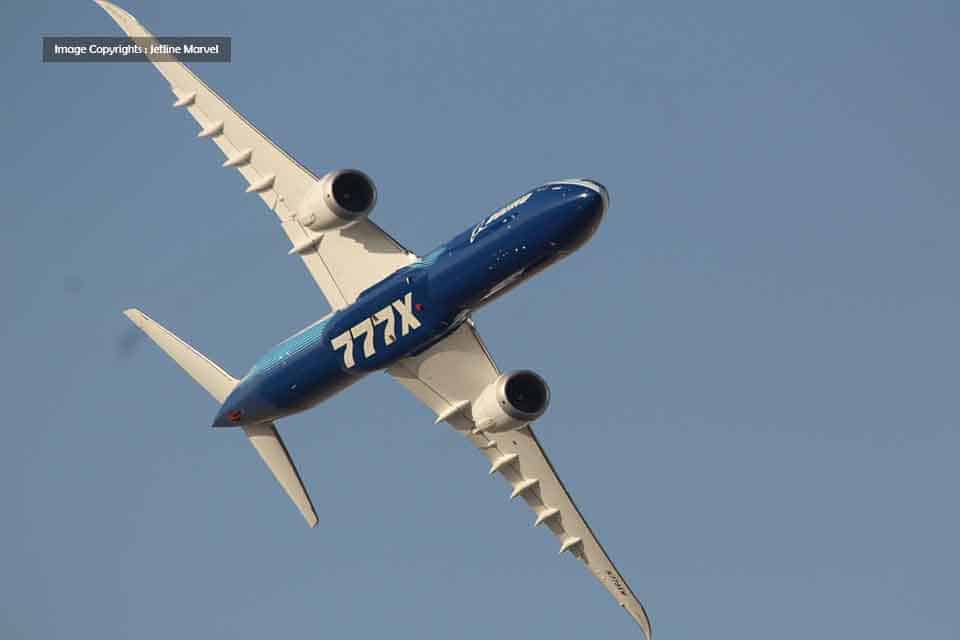
As the Boeing 777X nears FAA certification, Boeing has invited airline customers for an exclusive up-close look at the aircraft. Recently, dozens of mechanics and engineers from leading carriers—including British Airways, Qatar Airways, Cathay Pacific, Emirates, and Lufthansa—visited Boeing’s Everett, Washington facility to participate in hands-on sessions with the 777-9.
This event was part of the preparation to maintain the world’s largest twin-engine passenger jet, featuring advanced technologies like folding wingtips and next-generation engines.
Mechanics and engineers are at the forefront of any airline’s operations when a new aircraft enters the fleet. Recognizing their critical role, Boeing has engaged these teams early through events such as “Maintain Like an Airline,” where airline technicians observe maintenance procedures, ask questions, and offer feedback ahead of the 777-9’s expected first delivery in 2026. This collaboration helps ensure a smooth transition into service by addressing operational challenges before the aircraft arrives.
This proactive approach is vital because integrating a new aircraft poses unique challenges. According to a senior director of Boeing’s Customer Support Services, working closely with customers to gather input early allows improvements to airport and maintenance procedures well before the aircraft enters the fleet.
Such preparation is invaluable for airlines, as it reduces the learning curve during initial operations. For Boeing, direct, face-to-face feedback from airline crews is equally important—it helps improve not only the 777X program but also the company’s entire product lineup.
The Boeing 777x is the most advanced aircraft in Boeing’s lineup since the 787 Dreamliner and is now the largest twin-engine jet in the family. Because of its scale and technological sophistication, it is crucial for airline maintenance teams to fully understand the aircraft’s systems—like the powerful new GE9X engines and innovative folding wingtips—before it enters service.
Boeing has involved mechanics from the early stages of the boeing777x program to ensure any necessary adjustments are made prior to delivery, allowing airlines to hit the ground running. Just as pilots train extensively before flying a new model, maintenance crews also undergo rigorous preparation to stay up to date and capable of supporting the aircraft.
Boeing has already secured over 520 orders for the 777x boeing family—including the 777-9, 777-8, freighter, and passenger variants—making it one of the strongest widebody programs in recent years.
The 777X has undergone extensive testing across multiple systems. On June 1, one test aircraft fitted with a full passenger cabin evaluated key interior systems such as air conditioning, pressurization, onboard noise levels, and exterior acoustics. Flight performance data is also being gathered as part of the certification process. So far, Boeing has built and deployed four dedicated 777-9 test aircraft.
Each of these test jets has a specific focus: one handles avionics, brakes, flutter, icing, stability, low-speed aerodynamics, autoland, ground effects, and control stability; another concentrates on avionics, propulsion, flight loads, and auxiliary power; a third supports a broad range of flight performance evaluations; and the fourth is dedicated to cabin system assessments, including environmental controls, extended noise operation, and reliability.
Boeing is now in the final stages of the FAA’s Type Inspection Authorization (TIA) process, which involves incremental approvals for each testing phase. The company has completed key internal tests such as weather trials, airworthiness evaluations, avionics checks, and structural and wing testing. The ongoing FAA-supervised flight tests are the last major hurdle before certification, expected by late 2025 or early 2026. The first delivery is planned for Lufthansa in 2026.
The boeing 777x test flight schedule program has faced delays since 2013, primarily due to issues with the GE9X engines and other technical challenges, including a cabin door failure during static testing in 2020. Despite these setbacks, airlines have remained patient and committed, recognizing the aircraft’s importance in meeting future fleet requirements and maintaining competitive operations.
With certification approaching and testing largely complete, airlines are eagerly awaiting the arrival of the 777X to enhance their long-haul, high-capacity fleets.
For more aerospace news, check out JetlineIntel.
Want to buy aviation merchandise? Visit Jetshop.in.
To read Jetlinemarvel’s updates on Google News, head over to Google News.
