
Defence
India May Co-Produce S-500 with Russia in G2G deal
India eyes the next-generation S-500 missile defense system with Russia, aiming to boost its strategic shield through joint production and cutting-edge technology.

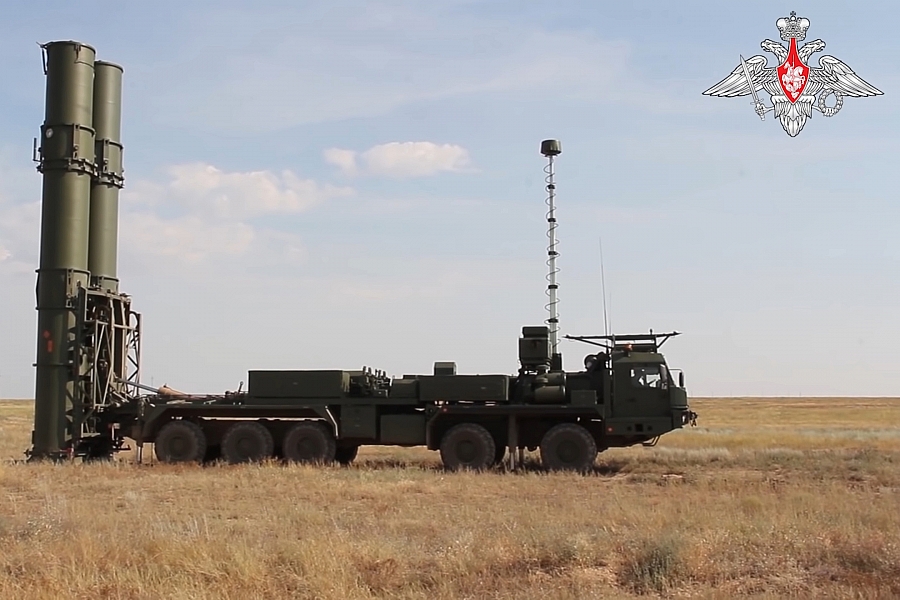
India and Russia’s defense ties have been the backbone of strategic cooperation for decades, producing some of the most advanced military platforms in service today.
From the BrahMos supersonic cruise missile to the S-400 air defense system, this partnership has consistently reshaped India’s military capabilities. Now, in a major development, India is exploring the acquisition of the S-500 Prometheus — one of the world’s most advanced air defense systems — through a government-to-government (G2G) deal with Moscow.
India-Russia Defense Talks Begin
According to sources, New Delhi has formally initiated discussions with Russia for the procurement of the S-500 system, with an offer that goes beyond a simple sale. Russia has included provisions for co-production and full transfer of technology (ToT), aligning perfectly with India’s “Make in India” initiative and long-term goal of self-reliance in defense manufacturing.
The S-500: A New Generation of Air Defense
Developed by Almaz-Antey, the S-500 is designed to counter an extensive spectrum of aerial and space threats — from stealth fighters like the F-22 and F-35, to hypersonic missiles, UAVs, ICBMs, and even low-Earth orbit satellites. With an interception range of up to 600 km and altitude coverage reaching 200 km, it significantly outperforms the S-400 currently operated by India.
- Range & Altitude: Capable of engaging targets at 600 km and altitudes up to 200 km.
- Target Engagement: Can track and neutralize up to 10 hypersonic or ballistic targets moving at speeds up to Mach 20 (7 km/s).
- Missile Capabilities: Employs both blast-fragmentation warheads (up to 400 km) and hit-to-kill interceptors (500–600 km) for maximum versatility, including anti-satellite missions.
- Radar Systems: Features advanced S-band acquisition radars, space-fed phased arrays, and multi-mode ABM engagement radars optimized for detecting stealth targets.
- Response & Mobility: With a reaction time of just 4 seconds, far quicker than the S-400’s 10 seconds, the system is mounted on mobile trucks and vehicles for rapid deployment across varied terrains.
Strategic Value for India
India currently operates five S-400 batteries, which proved critical during Operation Sindoor (2025) in countering aerial threats from Pakistan and China. The addition of the S-500 would mark a quantum leap in India’s air defense shield, providing coverage against emerging hypersonic and space-based threats.
Russia’s S-500 also complements and will eventually replace the older A-135 system within its own arsenal, making it the most modern air defense solution in active deployment today.
Cost & Co-Production Prospects
The cost of an S-500 battery — comprising launchers, radar, command units, and missiles — is estimated at $700–800 million, while a full system could reach up to $2.5 billion (as of 2023). However, if India moves forward with local production under the G2G deal, costs could be significantly reduced.
The potential collaboration would involve Indian defense organizations such as BEL and DRDO, fostering indigenous research, technology access, job creation, and a stronger domestic defense ecosystem.
Looking Ahead
The next few years will be decisive in shaping India’s long-term air defense strategy. Should the G2G negotiations succeed, India would not only gain one of the most advanced missile defense systems in the world but also strengthen its role as a defense manufacturing hub.
The S-500 Prometheus could become the cornerstone of India’s future multi-layered air defense architecture, ensuring protection against next-generation aerial threats and solidifying its position as a global power in aerospace defense.
For more aerospace news, check out JetlineIntel.
Want to buy aviation merchandise? Visit Jetshop.in.
To read Jetlinemarvel’s updates on Google News, head over to Google News.
