
Defence
Why Europe Chose to Upgrade the Typhoon Instead of Replacing It
Europe is extending the life of the Eurofighter Typhoon with advanced upgrades, ensuring strong airpower while waiting for sixth-generation fighters like FCAS and GCAP to enter service.

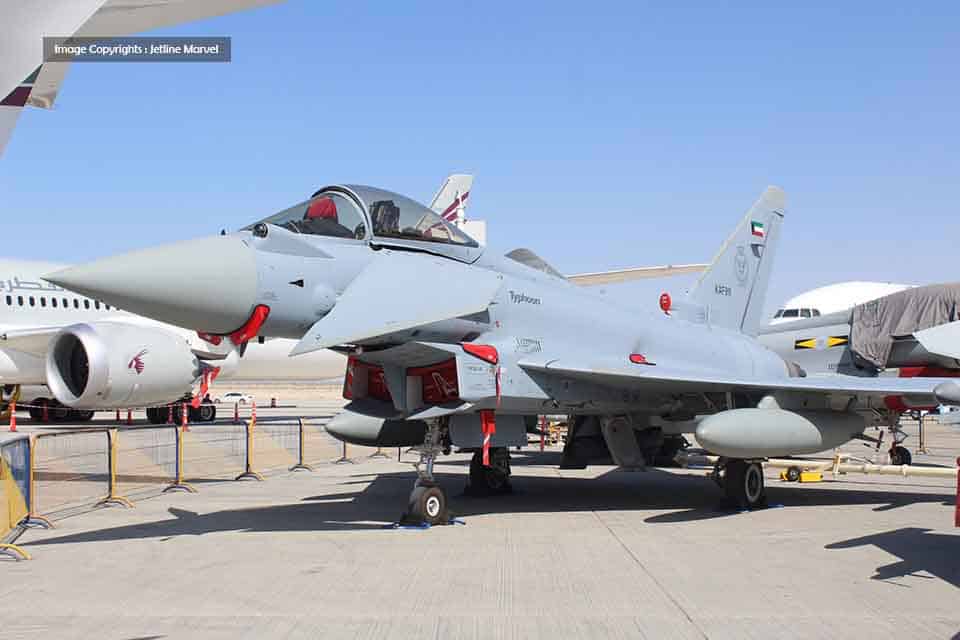
For many observers, Europe’s continued investment in the Eurofighter Typhoon raises an obvious question. Why spend billions upgrading a fighter that first flew in the 1990s when several countries are already working on sixth-generation combat aircraft?
The answer lies in a combination of military necessity, economic reality, and long-term strategic planning.
While Europe is developing next-generation fighter programs such as the Future Combat Air System (FCAS) and the Global Combat Air Programme (GCAP), these ambitious projects are still years away from entering operational service. Rather than waiting until the late 2030s or even 2040, European nations have chosen to modernize the Eurofighter Typhoon, ensuring they maintain a highly capable combat fleet during the transition.
Sixth-Generation Fighters Are Still Years Away
Europe’s future air combat plans are centered around two major programs.
The FCAS, led by France, Germany, and Spain, aims to develop a sixth-generation fighter integrated with advanced drones and artificial intelligence. Meanwhile, the GCAP, involving the United Kingdom, Italy, and Japan, is pursuing a similar vision with a target entry into service in the mid-2030s.
However, both projects face enormous technical challenges, rising development costs, and political complexities. As a result, many analysts believe these aircraft may not be fully operational until around 2040.
That creates an important challenge for European air forces. Without upgrading their existing fleets, they risk facing a capability gap at a time when regional security concerns continue to grow.
A Practical and Cost-Effective Solution
Instead of replacing the Eurofighter immediately, Europe is extending and enhancing the aircraft’s capabilities through a comprehensive modernization program.
This approach delivers advanced combat capabilities years before sixth-generation fighters become available while requiring significantly less investment than developing an entirely new fleet.
It also allows air forces to continue operating aircraft with proven reliability and established maintenance infrastructure.
The Long Term Evolution Program
At the center of the modernization effort is the Long Term Evolution (LTE) program. Rather than a simple mid-life refresh, LTE represents one of the most extensive upgrades ever planned for the Eurofighter.
The aircraft is receiving more powerful mission computers, upgraded avionics, improved cockpit displays, enhanced communications, and faster data links. The Praetorian Defensive Aids Subsystem is also being significantly improved, providing stronger electronic warfare and self-protection capabilities against modern threats.
The upgraded Typhoon will also feature AI-assisted sensor fusion, allowing information from multiple sensors to be processed into a single tactical picture. This gives pilots greater situational awareness while reducing workload during complex combat missions.
In addition, the aircraft is being prepared to operate alongside autonomous “loyal wingman” drones, enabling future manned-unmanned teaming missions.
New Aircraft and Fleet Upgrades
Europe is not only upgrading existing aircraft but also continuing production of new Eurofighters.
Germany’s Quadriga program includes 38 new Tranche 4 aircraft, while Spain’s Halcón program is also adding new fighters equipped with the latest technology.
At the same time, many older Typhoons across Europe are receiving similar upgrades, ensuring a common high-performance standard throughout the fleet.
These improvements are expected to keep the Eurofighter operational well into the 2050s, with some aircraft potentially remaining in service into the 2060s.
Maintaining Combat Readiness
The Eurofighter remains the backbone of the air forces of Germany, the United Kingdom, Italy, and Spain.
Hundreds of aircraft are already in operational service, performing NATO air policing missions, quick reaction alerts, homeland defense, and overseas combat operations.
Retiring these aircraft before sixth-generation fighters are available would leave Europe with fewer combat aircraft during a period of increasing geopolitical uncertainty.
Modernizing the Typhoon allows European nations to maintain both fleet size and operational capability while future programs continue development.
Protecting Europe’s Aerospace Industry
The modernization program also provides significant economic benefits.
The Eurofighter program supports approximately 100,000 highly skilled jobs across more than 400 companies throughout Europe. Continued production and upgrade work help preserve engineering expertise, maintain supply chains, and keep manufacturing facilities active.
Without these programs, Europe could face a lengthy production gap before FCAS or GCAP enters full-scale manufacturing, potentially leading to the loss of critical industrial capabilities.
Still One of the World’s Most Capable Fighters
Although the Eurofighter entered service decades ago, it remains one of the world’s leading air superiority fighters.
Its twin-engine design offers outstanding speed, acceleration, supercruise capability, and exceptional maneuverability.
The addition of ECRS AESA radar, improved electronic warfare systems, enhanced networking, and integration of new precision-guided weapons ensures the aircraft remains highly competitive against modern threats.
Working Alongside the F-35
Several European nations are also introducing the F-35 Lightning II into their air forces.
Rather than replacing the Eurofighter, the F-35 complements it.
The F-35’s stealth capabilities make it ideal for penetrating heavily defended airspace and gathering intelligence, while the Eurofighter continues to excel in air superiority, homeland defense, long-range missile engagements, and multi-role combat missions.
Operating both aircraft together provides European air forces with greater flexibility across a wide range of military operations.
Bridging the Gap to the Future
Europe’s decision to upgrade the Eurofighter Typhoon is ultimately a practical response to today’s security challenges.
Instead of waiting another decade or more for sixth-generation fighters, European nations are ensuring they maintain a modern, capable, and combat-ready air force throughout the 2030s.
This strategy also mirrors the approach taken by other major military powers. The United States, for example, continues to modernize aircraft such as the F-15EX and upgraded F-16 while operating the F-35, recognizing that proven platforms can remain highly effective when equipped with advanced technology.
The Eurofighter Typhoon is no longer simply a legacy aircraft. Through continuous modernization, it has become a critical bridge between today’s fourth-and-a-half-generation fighters and the sixth-generation combat aircraft that will shape the future of air warfare.
