
Defence
India Bets on Dual-Path Su-30MKI Upgrade to Counter China and Pakistan
Facing rapid regional airpower advances, India plans a dual-path modernization of its Su-30MKI fleet—short-term Russian support alongside a deep indigenous Super-30 upgrade.

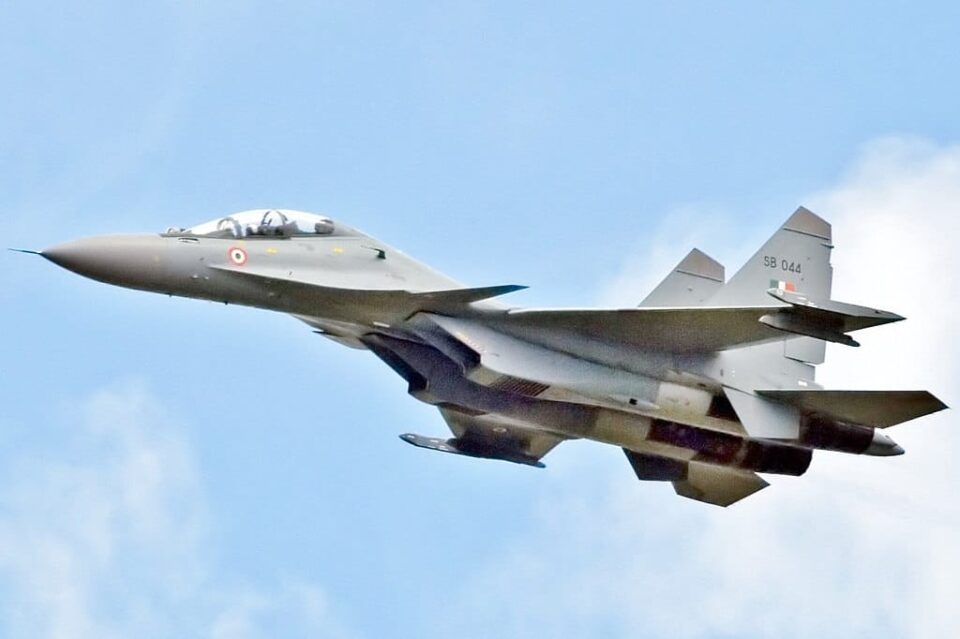
For more than two decades, the Sukhoi Su-30MKI has been the spine of India’s air power. With around 260 aircraft in service, the twin-engine heavyweight accounts for nearly half of the Indian Air Force’s frontline fighter strength.
It has delivered range, payload, agility, and versatility unmatched by any other platform in the IAF inventory. But the regional air combat environment has changed dramatically.
Rapid advances in fighter technology in China and Pakistan, including AESA radars, long-range missiles, network-centric warfare, and electronic attack capabilities, are steadily eroding the dominance the su 30mki once. In its current configuration, the aircraft faces growing survivability and relevance challenges.
This is why India is now pursuing a dual-track modernization strategy—combining limited Russian-assisted upgrades for near-term capability with a far more ambitious, deeply indigenous “Super-30” transformation to secure air power well into the mid-21st century.
The Dual-Track Upgrade Strategy Explained
India’s approach reflects a careful balance between urgency and self-reliance.
Track One: Russian-Assisted Interim Upgrades
Discussions are underway on Russian-supported upgrades for a limited number of Su-30MKI squadrons. These are intended as stop-gap enhancements, ensuring operational relevance while the indigenous upgrade matures. As per the sources.
However, the scope of this package remains unclear. Officials familiar with the talks suggest that while mission systems, avionics refreshes, and select sensors may be included, major changes such as the integration of the indigenous Virupaksha GaN-based AESA radar are not yet finalised.
This uncertainty highlights the broader dilemma: how to quickly boost combat capability without compromising India’s long-term goal of technological independence.
Track Two: Indigenous Super-30 (Super Sukhoi) Programme
Running in parallel is the far more consequential plan—the Super-30 upgrade of 84 Su-30MKI aircraft, pending approval from the Cabinet Committee on Security (CCS).
Once cleared, this programme will be executed entirely in India by HAL, representing the most comprehensive modernisation ever attempted on the Su-30MKI fleet. Unlike the interim Russian package, Super-30 is designed around indigenous sensors, avionics, electronic warfare systems, and weapons.
Flying Test Beds and Indigenous Validation
As part of the Super-30 effort:
- Two Su-30MKIs operated by the Aircraft and Systems Testing Establishment (ASTE) will be converted into flying test beds
- These aircraft will validate next-generation avionics developed by DRDO and Indian industry
- Systems under evaluation include:
- Advanced mission computers
- Indigenous sensors
- Electronic warfare suites
To manage the vastly increased data flow, the aircraft will receive a new, more powerful mission computer, capable of real-time sensor fusion and AI-assisted decision-making. If CCS approval comes in 2026, HAL aims to complete development and flight trials by around 2031, after which serial upgrades would begin.
Until then, limited Russian-assisted upgrades could provide the IAF with a crucial operational buffer.
Why the Su-30MKI Still Matters
Each Su-30MKI is a twin-engine, twin-seat multirole fighter capable of:
- Air superiority
- Deep-strike missions
- Maritime strike operations
Its size, endurance, payload capacity, and adaptability make it uniquely suited for India’s strategic geography—from the Himalayas to the Indian Ocean.
The Super Sukhoi upgrade ensures this platform remains combat-relevant into the 2050s, acting as a bridge between today’s fleet and future aircraft such as Tejas Mk-II and the Advanced Medium Combat Aircraft (AMCA).
The Super Sukhoi Transformation: Core Upgrades
The Super-30 programme is not a routine mid-life upgrade—it is a fundamental rebirth of the aircraft.
1. Virupaksha GaN AESA Radar
Developed by DRDO’s LRDE, the Virupaksha radar features over 2,400 Gallium Nitride T/R modules.
- Detection range: 300+ km
- Ability to track low-observable and stealth targets up to 200 km
- Massive leap over the N011M Bars PESA radar
This upgrade alone places the Su-30MKI firmly in the 4.5+ generation category.
2. AI-Infused Cockpit & Wide Area Display
- Panoramic Wide Area Display (WAD)
- AI-assisted mission management
- Reduced pilot workload through:
- Threat prioritisation
- Sensor fusion
- Navigation assistance
The cockpit moves closer to fifth-generation human-machine teaming concepts.
3. Advanced Indigenous Electronic Warfare Suite
A new Airborne Self-Protection Jammer (ASPJ) will provide:
- Adaptive, multi-band jamming
- Improved missile warning and response
- Higher survivability in dense threat environments
This is critical against modern Chinese and Pakistani air defence systems.
4. Upgraded Digital Flight Control Computer
Borrowing from Tejas Mk-II technology, the new 64-bit DFCC will deliver:
- Better agility and handling
- Improved safety margins
- Greater reliability under complex mission loads
5. Infrared Search and Track (IRST)
Derived from the Tejas Mk-II, the IRST system allows:
- Passive detection without radar emissions
- Effective tracking of stealthy targets
- Day-night operational capability
6. Expanded Weapons Arsenal
The upgraded Su-30MKI will integrate:
- BrahMos-NG supersonic cruise missiles
- Astra Mk-II and Mk-III BVRAAMs
- Rudram anti-radiation missiles
This dramatically extends its air-to-air, anti-ship, and SEAD capabilities.
AI, Networking, and Manned-Unmanned Teaming
The Super Sukhoi’s architecture will support AI-enabled networked warfare, including Manned-Unmanned Teaming (MUM-T).
This allows Su-30MKIs to: Control drones, Coordinate with unmanned strike assets, Act as airborne command node. It is a stepping stone toward the IAF’s future combat doctrine.
Indigenisation at Scale
Air Chief Marshal Amar Preet Singh has stressed that Super-30 is as much about self-reliance as combat power.
- 70–80% indigenous content
- Collaboration between HAL, DRDO, and private industry
- Estimated programme value: ₹60,000–₹70,000 crore
It will be one of India’s largest domestic defence modernisation efforts, strongly aligned with Atmanirbhar Bharat.
Timeline and Execution
- Phase 1 (Post-2030): Upgrade of first 84 aircraft at HAL Nashik
- Phase 2 & 3: Expansion to nearly 200 aircraft by mid-2030s
- Upgrade rate: 12–15 aircraft per year
- Engine overhauls: Parallel work at HAL Koraput
Strategic Logic: Upgrade vs Replacement
Replacing 260 Su-30MKIs with new fighters is simply not viable. Rafale cost: ₹1,000+ crore per aircraft. Full replacement would require astronomical expenditure. In contrast, the Super-30 upgrade delivers near-Rafale-level capability at a fraction of the cost, while preserving fleet numbers and industrial capacity.
IAF Chief’s Vision
Speaking ahead of Air Force Day, Air Chief Marshal Singh summed it up: “This isn’t just an upgrade; it’s a rebirth that keeps us ahead on the Indo-Pacific chessboard.”
With extended-range Astra missiles, continued BrahMos-A capability, and indigenous systems at its core, the Super Sukhoi ensures the IAF remains a decisive force across air superiority, deep-strike, and maritime domains.
Without this transformation, the Su-30MKI risks being trapped in a legacy ecosystem. With it, the aircraft becomes a powerful, networked, Indian-controlled combat platform—ready for the challenges of the next three decades.
For more aerospace news, check out JetlineIntel.
Want to buy aviation merchandise? VisitJetshop.in.
To read Jetlinemarvel’s updates on Google News, head over to Google News.
