
Defence
Pakistan–Libya $4 Billion Deal: The Role of China’s Bilateral Supply Chain
A $4 billion Pakistan–Libya arms deal underscores Islamabad’s export ambitions and China’s quiet but decisive role in enabling advanced military sales through a bilateral defence supply chain.

Pakistan’s defence ties with Libya have quietly evolved into one of the most significant arms transactions in Islamabad’s history.
Against the backdrop of economic pressure and an aggressive push to boost defence exports, Pakistan has reportedly secured a massive arms deal worth around $4 billion with Libya’s eastern-based Libyan National Army (LNA).
At the heart of this agreement lies not just Pakistan’s growing defence industry, but also a deeply embedded China–Pakistan bilateral supply chain that makes such deals possible.
A Strategic Opening with Libya
Libya, fragmented by years of civil conflict and constrained by limited access to Western arms markets, has increasingly looked toward non-Western suppliers for military equipment. Pakistan, offering comparatively affordable platforms with fewer political strings attached, emerged as a suitable partner.
The deal was reportedly finalized after a high-level meeting in Benghazi between Pakistan’s Army Chief, Field Marshal Asim Munir, and Saddam Khalifa Haftar, Deputy Commander-in-Chief of the LNA.
One of Pakistan’s Largest Arms Exports
According to Reuters, the agreement covers a broad spectrum of air, land, and sea military equipment, with deliveries planned over roughly two-and-a-half years. While Islamabad has not officially disclosed full details, officials indicated that the package includes:
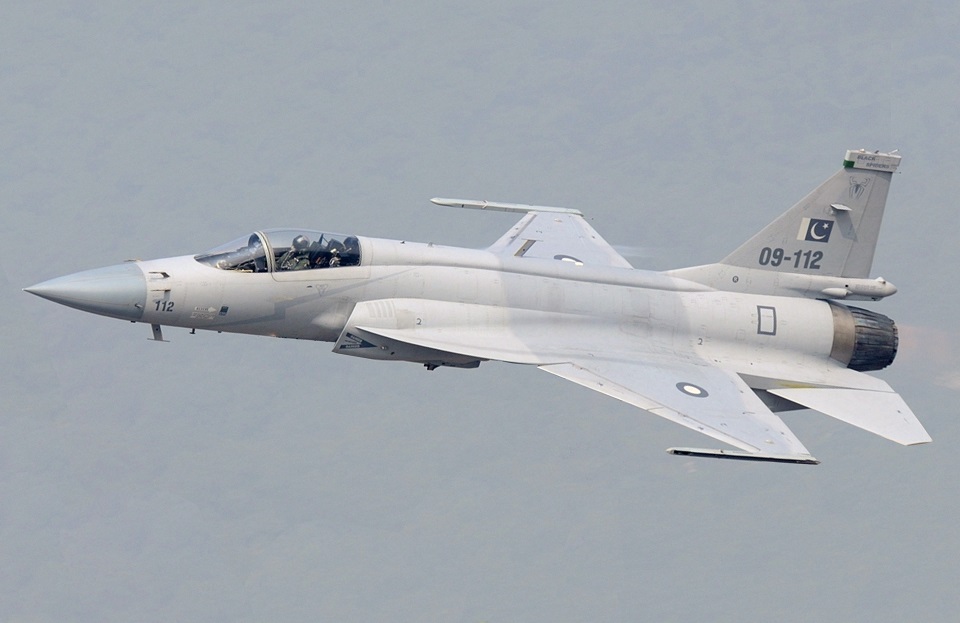
- 16 JF-17 Thunder multi-role fighter jets
- 12 Super Mushshak trainer aircraft for basic pilot training
This deal represents a major boost for Pakistan’s defence export ambitions at a time when the country is struggling economically and relying heavily on IMF support.
The JF-17: Cornerstone of the Deal
The JF-17 Thunder is central to the Pakistan–Libya agreement. A fourth-generation, single-engine, lightweight multi-role fighter, the aircraft is capable of air combat, ground attack, naval strike, and reconnaissance missions. It has been in service with the Pakistan Air Force since 2010 and has already been exported to several countries.
What makes the JF-17 particularly attractive to buyers like Libya is its cost-effectiveness, with an estimated unit price of around $25 million, significantly lower than Western alternatives such as the F-16.
China’s Role in the Bilateral Supply Chain
Although marketed and exported by Pakistan, the JF-17 is fundamentally a joint Pakistan–China product. Developed by the Pakistan Aeronautical Complex (PAC) in partnership with China’s Chengdu Aircraft Industry Group, the jet relies heavily on Chinese technology.
Key systems sourced from China include:
- AESA radar
- Avionics and cockpit systems
- Electronic warfare suites
- Beyond-visual-range (BVR) missiles and other munitions
Pakistan largely handles airframe manufacturing, final assembly, and export negotiations, but the supply chain remains deeply dependent on China.
Export Clearances and Chinese Oversight
Because the JF-17 incorporates sensitive Chinese technology, all export deals require Beijing’s approval. Any sale must be cleared by China’s Central Military Commission, followed by export licensing from the Ministry of Commerce (MOFCOM). This ensures that while Pakistan acts as the seller, China maintains strategic oversight of where its defence technologies ultimately end up.
Why the Deal Benefits China
For China, the Pakistan–Libya arms deal represents a strategic win without direct involvement. According to SIPRI, China ranks as the world’s fourth-largest arms exporter, and it has steadily expanded its footprint across Africa, Asia, and South America.
By enabling Pakistan to export platforms like the JF-17, China:
- Expands its defence technology presence indirectly
- Avoids political backlash associated with direct arms sales
- Showcases Chinese systems as affordable, capable alternatives to Western weapons
Pakistan effectively acts as a broker and multiplier for Chinese defence products, particularly in regions where Western suppliers face legal, political, or diplomatic constraints.
Geopolitical Sensitivities
The deal also unfolds against the backdrop of a UN arms embargo on Libya, in place since 2011.
Although widely described as ineffective due to repeated violations, arms transfers to Libya remain controversial—especially since the deal reportedly involves the eastern-based LNA rather than the UN-recognized government in Tripoli. This raises concerns about potential escalation of internal tensions.
A Calculated Partnership
Ultimately, the Pakistan–Libya arms deal highlights a three-layer dynamic: Libya’s need for affordable military hardware, Pakistan’s push to revive its economy through defence exports, and China’s long-term strategy of expanding its global arms influence via trusted partners.
While official confirmation from Islamabad remains limited, the reported agreement underscores how China’s bilateral supply chain with Pakistan has become a powerful enabler—allowing Beijing’s defence technology to reach new markets, quietly and efficiently, through Pakistan’s growing role as an international arms exporter.
For more aerospace news, check out JetlineIntel.
Want to buy aviation merchandise? VisitJetshop.in.
To read Jetlinemarvel’s updates on Google News, head over to Google News.
