
Aviation
How Rolls-Royce Protects Jet Engines from Extreme Weather Hazards
Discover how Rolls-Royce studies cold, ash, ice, sand, and even jungle tree-sap to create tougher jet engines that can withstand the planet’s most unpredictable conditions.

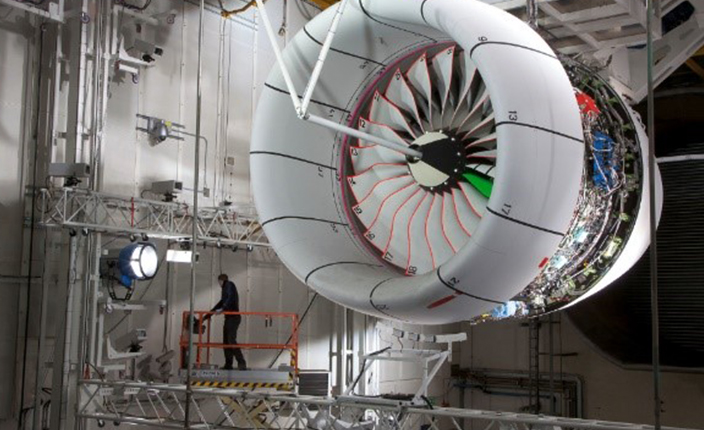
Jet engines are among the toughest machines ever built, yet they operate in some of the harshest conditions on Earth.
From scorching desert sand to freezing temperatures at 40,000 feet, engines face constant threats that can reduce efficiency and increase maintenance.
Rolls-Royce, one of the world’s leading engine manufacturers, is now testing new technologies — both in Derby and across global test sites — to make its engines stronger, cleaner, and more durable than ever.
This article explores how Rolls-Royce studies extreme weather hazards and develops innovative solutions to protect its modern jet engines.
Protecting Engines from Sand and Dust in the Middle East
The Middle East is one of Rolls-Royce’s biggest aviation markets — and one of the most challenging. Aircraft taking off from desert regions often ingest sand and fine dust. These particles can:
- Reach the hottest parts of the engine
- Block coolant holes
- Make components run hotter
- Corrode metal parts
- Wear down protective coatings faster
While this doesn’t threaten flight safety, it reduces efficiency and means engines need more frequent maintenance.
Rolls-Royce’s New Solution
At its Testbed 80 facility in Derby, Rolls-Royce is running a phased testing programme to combat sand and dust damage. Engineers have:
- Changed the metal alloys used in hot-section parts to resist corrosion
- Relocated coolant holes so they are harder to block
- Improved temperature resistance in engines like the Trent XWB-97, the company’s most powerful engine
Engines tested in earlier phases are already flying 60% longer between overhauls, and Rolls-Royce expects key components to last twice as long by 2028 — equivalent to flying around the world 1,000 times before needing replacement.
Cold-Weather Testing at the Edge of the World
Jet engines experience temperatures as low as –60°C at cruise altitude. To prepare for this, Rolls-Royce conducts intense cold-weather tests at its GLACIER facility in Manitoba, Canada. Here, engines are exposed to extreme winter conditions to ensure they can start, run, and perform reliably in freezing environments.
How Volcanic Ash Changed Global Aviation
The 2010 eruption of Iceland’s Eyjafjallajökull volcano disrupted travel worldwide, costing airlines nearly £130 million per day. At the time, the only rule was simple:
Avoid all ash — no matter what.
Rory Clarkson, head of Rolls-Royce’s Engine Environmental Protection team, led a major breakthrough. By analysing huge datasets from airlines and the UK Meteorological Office, his team developed a new computer model that identifies:
- How much volcanic ash an aircraft can safely fly through
- How long it can remain in such conditions
This transformed aviation policy by allowing flights to continue safely instead of grounding entire fleets.
The Hidden Threat of High-Altitude Ice Crystals
One of the most fascinating hazards is high-altitude ice crystals, tiny particles formed when air cools as it rises and expands. These crystals:
- Enter the engine frozen
- Melt briefly
- Refreeze inside the compressor
- Form fist-sized chunks of ice
- Break off and damage internal engine parts
Even though Rolls-Royce’s Trent engines have logged over 130 million flight hours handling such conditions, the team continues to refine engine designs to prevent internal icing and ensure safe performance.
Unexpected Hazards: Tree Sap in the Sky
One incident surprised even experienced engineers:
Aircraft flying over the Amazon rainforest landed coated in a sticky layer of tree sap.
Strong convection currents had lifted microscopic sap droplets high into the atmosphere — high enough for cruising aircraft to fly through them. While it didn’t cause serious damage, it showed just how unpredictable natural hazards can be.
Designing Engines for a Changing Planet
As weather patterns shift and new industrial pollutants appear, Rolls-Royce gathers data from:
- Real airline flights
- Weather agencies
- Engine sensors
- Laboratory simulations
This research influences the next generation of Rolls-Royce engines, which will feature:
- Sand-resistant thermal barrier coatings to prevent particles from melting into corrosive glass
- Hot corrosion-resistant metal alloys to withstand pollutants
- Optimised cooling systems that keep contaminants away from critical parts
These improvements are part of a wider £1 billion durability programme aimed at extending engine life and reducing maintenance for airlines.
The Future of Jet Engine Protection
Rory’s Engine Environmental Protection team is still just getting started. Their discoveries are already changing how Rolls-Royce designs its next generation of engines.
By studying everything — from volcanic ash to microscopic ice crystals — the team ensures that modern aircraft can continue flying safely in an unpredictable world.
This research is helping shape what many call the second era of civil aviation — smarter, safer, and more resilient than ever.
For more aerospace news, check out JetlineIntel.
Want to buy aviation merchandise? Visit Jetshop.in.
To read Jetlinemarvel’s updates on Google News, head over to Google News.

You must be logged in to post a comment Login