
Aviation
Second MC-21 Aircraft Takes to the Skies for Certification Tests
The second MC-21 completes its first certification sortie, showcasing Russian-made components and marking a milestone in domestic aircraft development.

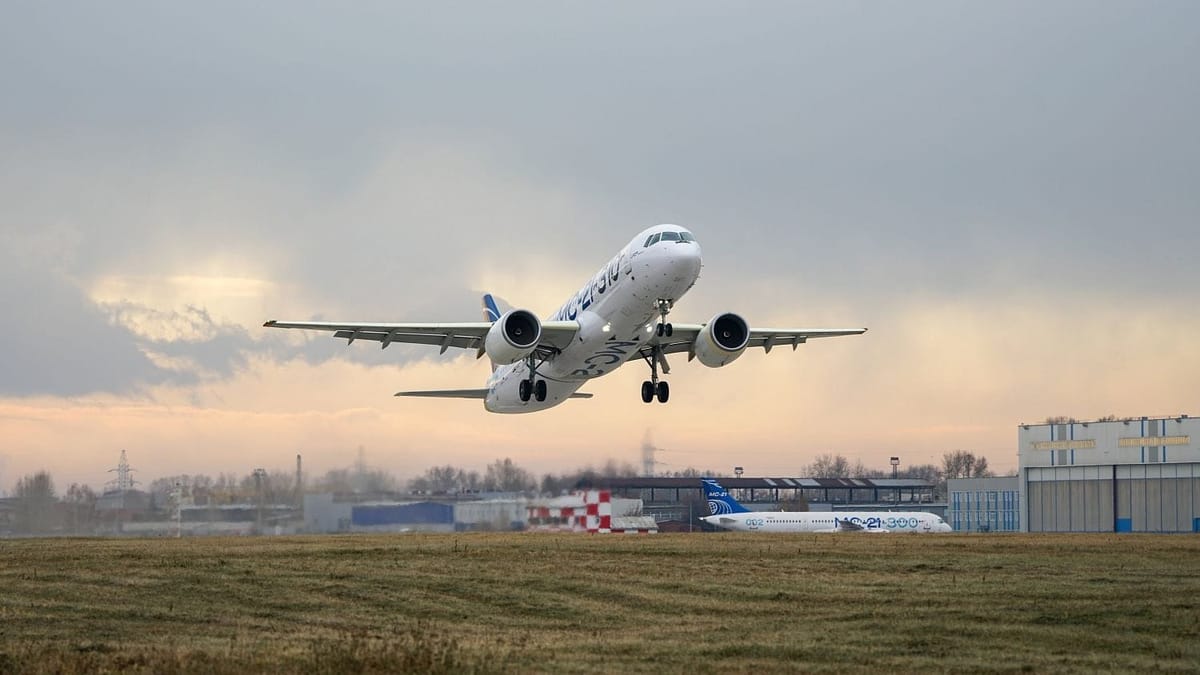
In a bold stride toward self-reliance, Russia has launched the certification flight campaign for its second MC-21 aircraft equipped with domestically produced systems.
Amid heavy sanctions and growing global isolation, this achievement underscores the country’s determination to advance its aviation sector and compete with Western aerospace giants.
Certification Flight Campaign Underway
The second MC-21 test aircraft, serial number 73057, completed its first certification sortie on November 25, 2025, at the Yakovlev Flight Test and Development Center in Zhukovsky.
Following its return from Irkutsk, the flight focused on evaluating longitudinal and lateral stability, as well as control response throughout the aircraft’s initial certification phase.
The aircraft had previously conducted a non-stop flight from Irkutsk to Gromov Airfield on November 13, preceded by successful factory development tests.
Rostec confirmed that the addition of this second aircraft will accelerate the overall certification program. Another MC-21 prototype, partially equipped with new Russian-made systems, is already undergoing testing at Zhukovsky.
Domestic Components Replace Western Systems
This MC-21 variant features a comprehensive replacement of foreign-made components with fully Russian-manufactured systems. Key replacements include:
- Cockpit controls and avionics suite
- Control system actuators
- Wing high-lift system and stabilizer trim mechanism
- Integrated air conditioning system
- Flight data collection, monitoring, and recording systems
- Wheel braking, fuel, cruise, and auxiliary power units
- Wheels and tires
Certification of this import-substituted MC-21 is targeted for completion by late 2026. Chief Designer Vitaly Naryshkin estimates that approximately 220–230 certification flights will be required to validate the safety and performance of the modified configuration.
Flight Testing Locations
Ramenskoye Airfield remains the primary site for test flights, while specific campaigns—such as icing-protection evaluations—will be conducted in Arkhangelsk, where cold-soak conditions provide optimal testing environments.
During the initial certification flight, the MC-21 reached a maximum altitude of 11,000 meters (36,000 feet), with the sortie lasting over six hours.
Unique Features of the MC-21
The MC-21, Russia’s next-generation narrow-body airliner, boasts impressive specifications that make it competitive with Western aircraft:
- Speed: Maximum cruise speed of approximately 870 km/h (Mach 0.78–0.79)
- Range: Up to 6,000 km, suitable for domestic and regional routes
- Payload: Carries 150–211 passengers, depending on variant configuration
- Engines: Equipped with Russian-made PD-14 turbofan engines, offering enhanced fuel efficiency and lower emissions
- Advanced Aerodynamics: Composite wings and lightweight structures reduce weight while improving performance and efficiency
- Avionics & Systems: Modern Russian avionics suite enables full digital flight management, monitoring, and safety systems
These features highlight Russia’s ambition to field a modern, reliable airliner capable of challenging Airbus A320neo and Boeing 737 MAX family aircraft on both performance and efficiency.
Looking Ahead
The MC-21 program represents a significant step toward import substitution and domestic aviation independence. With ongoing certification flights, Russia aims to validate all safety and performance parameters by 2026, ensuring the aircraft is ready for commercial deployment.
The MC-21 not only strengthens Russia’s civil aviation capabilities but also signals the nation’s resilience in developing high-performance, domestically-produced airliners despite international sanctions.
