
Aviation
Korean Air confirms; Air India plans massive widebody orders with A350 and B777X
Korean Air confirms a major fleet expansion with Boeing and GE Aerospace, while Air India is in advanced talks to acquire 30-50 widebody jets

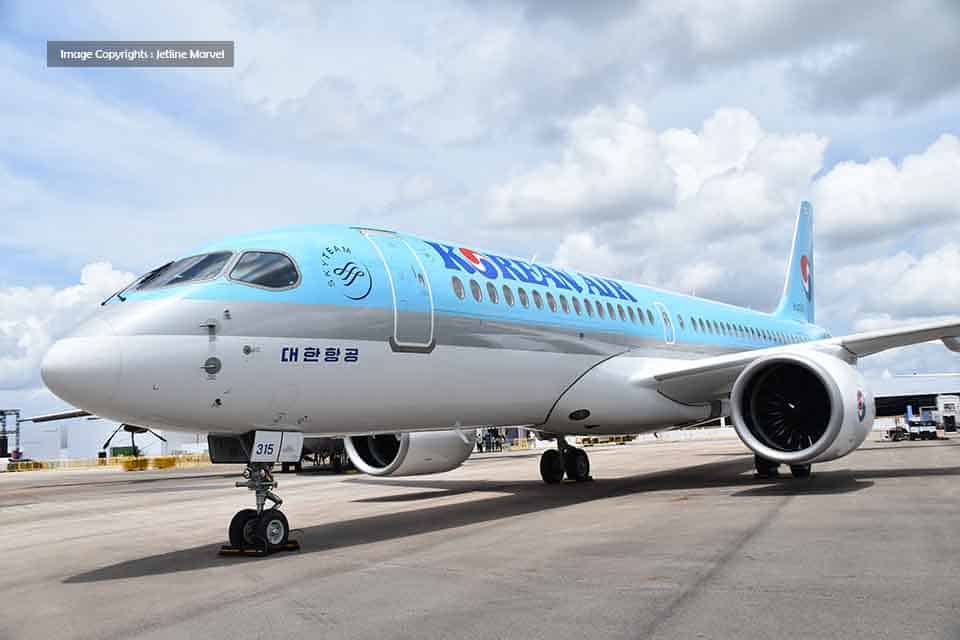
Both Korean Air and Air India are making headlines with their ambitious fleet expansion plans, securing significant orders from aviation giants Airbus and Boeing.
While Korean Air has finalized its multi-billion-dollar deals, Air India is in advanced negotiations to place a massive widebody order, signaling a new era of growth for both carriers.
Korean Air Finalizes $32.7 Billion Fleet Expansion
Korean Air has officially confirmed its massive procurement agreements with Boeing and GE Aerospace, totaling 32.7billion. Thedeal includes 24.9 billion for new aircraft and $7.8 billion for jet engines and maintenance services.
Under the agreement, Korean Air will acquire 50 new aircraft by 2033, including 20 Boeing 777-9s and 20 Boeing 787-10s. These state-of-the-art jets will enhance the airline’s long-haul capabilities, supporting its global expansion strategy and improving operational efficiency.
Additionally, the partnership with GE Aerospace includes the purchase of eight advanced aircraft engines, along with comprehensive maintenance and support services. This ensures optimal performance and reliability for Korean Air’s growing fleet.
Air India Plans Multi-Billion-Dollar Widebody Order
Air India, owned by Tata Group, is in advanced discussions to place a significant order for 30-40 widebody aircraft, with the potential to exceed 50 jets. This marks a strategic shift from its previous focus on single-aisle planes for domestic and regional routes.
The airline is expected to split its order between Airbus A350s and Boeing 777X jets. This dual-aircraft approach will allow Air India to compete more effectively with global carriers like Emirates, Lufthansa, and Turkish Airlines, which have long dominated the long-haul market.
India’s Booming Aviation Market
India’s aviation sector is experiencing rapid growth, with international air travel projected to increase by 15-20% this financial year. Domestic travel, on the other hand, is expected to grow at a more modest 7-10%, according to ICRA, a leading ratings agency.
Currently, Indian airlines capture only 43-44% of outbound international traffic, with foreign carriers dominating the remaining share. Air India’s fleet expansion aims to close this gap, enabling the airline to reclaim its position as a leader in the global aviation market.
Boeing 777X vs. Airbus A350: A Strategic Choice
Air India’s decision to acquire both Boeing 777X and Airbus A350 jets highlights its focus on balancing performance, efficiency, and passenger experience.
- Boeing 777X: This next-generation widebody jet combines the best features of the 787 Dreamliner with enhanced fuel efficiency and cutting-edge technology. Powered by GE Aerospace’s GE9X engines, the 777X is one of the most advanced and efficient commercial aircraft in the world.
- Airbus A350-1000: Known for its superior fuel efficiency, advanced aerodynamics, and passenger comfort, the A350-1000 is a favorite among leading global carriers. Its spacious cabin and long-range capabilities make it ideal for Air India’s international expansion plans.
By incorporating both aircraft into its fleet, Air India ensures operational flexibility and route optimization, key factors in its long-term growth strategy.



