
Aviation
Why India Halted Mi-26 Helicopter Operations
India’s legendary Mi-26 helicopters, once the backbone of heavy-lift missions, were grounded over aging and cost issues

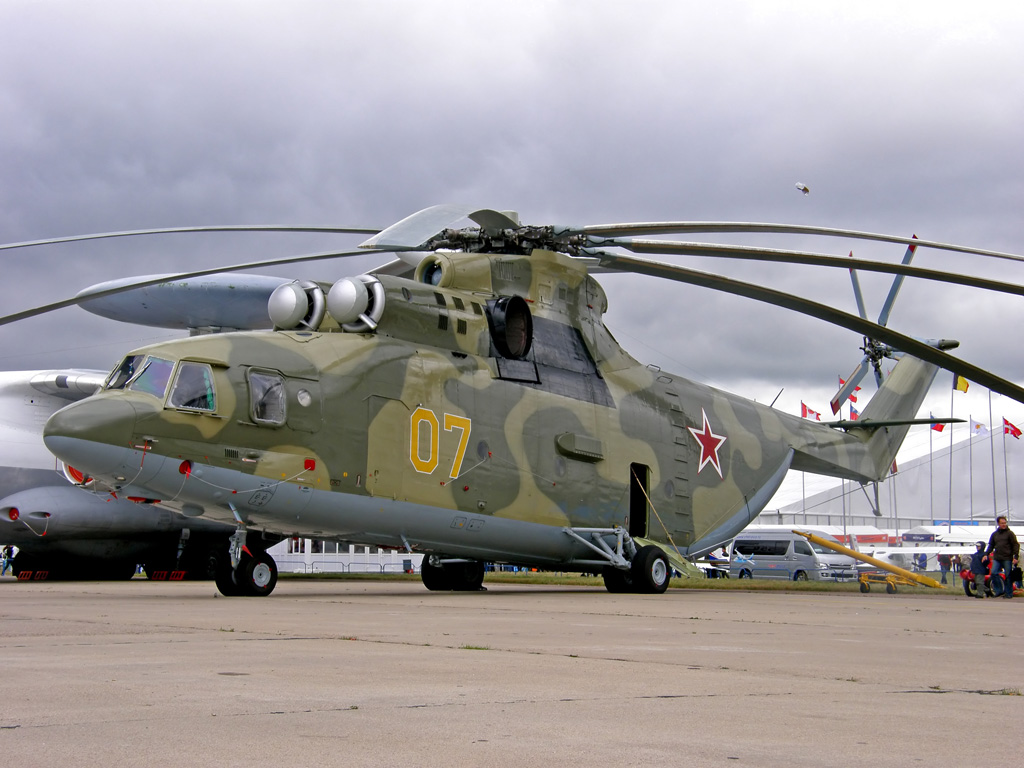
The Mil Mi-26, the world’s largest production helicopter, can lift up to 20 tonnes of cargo—equivalent to heavy artillery like a Bofors gun—or transport 82 fully equipped troops.
The Indian Air Force (IAF) inducted four Mi-26 helicopters between 1986 and 1989, operating them under No. 126 Helicopter Unit (“Featherweights”) based in Chandigarh. These helicopters were crucial for heavy-lift missions in challenging terrains such as the Himalayas, supporting operations like:
- The 1999 Kargil War, transporting equipment and supplies to high-altitude posts.
- Disaster relief missions, notably Operation Rahat (2013) during Uttarakhand floods.
Reasons for Grounding
1. Aging Fleet and Maintenance Issues
Operational since the mid-1980s, the Mi-26 fleet gradually reached the end of its technical lifespan.
- One helicopter was grounded in 2013, another in 2014, and the last in 2017.
- Regular overhauls and component replacements were required due to structural fatigue.
- Sending helicopters to Russia for repairs proved expensive and logistically complex, leading to delays and downtime.
2. Impact of the 2010 Crash
On December 14, 2010, Mi-26 (tail number Z3076) crashed in Jammu shortly after takeoff while transporting railway equipment.
- All nine personnel onboard were injured.
- The investigation found that improperly secured cargo led to the accident.
- This incident prompted safety inspections and accelerated the decision to ground the remaining fleet for thorough evaluation.
3. Shift to Modern Alternatives
To replace the aging Mi-26 fleet, India procured 15 Boeing CH-47F(I) Chinook heavy-lift helicopters in 2015, which were inducted from 2019.
- The Chinook can lift up to 10 tonnes externally, about half of the Mi-26’s capacity, but offers modern avionics, ease of maintenance, and readily available spares.
- The Mi-17V5 fleet also took over medium-lift roles, reducing reliance on the Mi-26.
4. Bureaucratic and Supply Challenges
Efforts to refurbish the Mi-26s faced hurdles due to:
- Delays within the Ministry of Defence,
- High overhaul costs, and
- Dependence on Russian spares, which became harder to source amid geopolitical tensions.
Their grounding became especially noticeable during the 2020 India–China border standoff, where a heavy-lift platform like the Mi-26 could have greatly aided logistics in high-altitude zones.
Current Status and Revival Efforts
The Mi-26s are not retired—they remain grounded but are now undergoing revival.
In January 2024, the IAF signed a contract with JSC Russian Helicopters for a localized overhaul at No. 3 Base Repair Depot, Chandigarh.
- Russian engineers are assisting Indian teams in airframe inspection, engine refurbishment, and avionics modernization.
- The overhaul aims to extend service life by 10–15 years, at a fraction of the cost of sending them to Russia.
By mid-2025, the first refurbished Mi-26 is expected to undergo flight trials, with full operational return by late 2025 or early 2026. Further discussions between the IAF and Russian officials in November 2024 focused on finalizing technical details of the upgrade program.
Strategic Importance
Once restored, the Mi-26 fleet will complement the Chinooks, offering India a unique dual heavy-lift capability.
- The Chinooks provide flexibility and modern efficiency for medium-heavy operations.
- The Mi-26s, with their unmatched payload, will be invaluable for border logistics, infrastructure deployment, and disaster relief missions.
Conclusion
India’s Mi-26 helicopters were grounded due to aging airframes, a crash-related safety overhaul, and a transition to newer systems. However, the current refurbishment program underscores their continuing strategic value.
Once back in service, the Mi-26 will once again bolster India’s ability to conduct large-scale airlift operations in some of the world’s most demanding environments.
For more aerospace news, check out JetlineIntel.
Want to buy aviation merchandise? Visit Jetshop.in.
To read Jetlinemarvel’s updates on Google News, head over to Google News.
