
Aviation
The engine ban on COMAC C919 was lifted to resume aerospace Cooperation
COMAC’s C919 gains momentum as U.S. lifts engine ban, supporting China’s aviation ambitions and challenging Airbus and Boeing in the regional jet market.

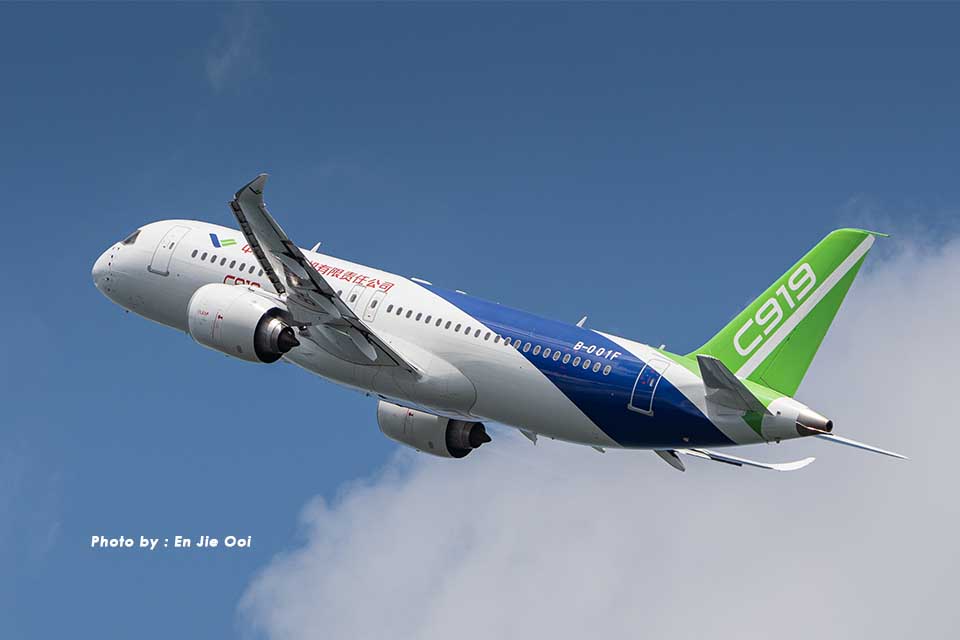
In a significant development, the United States has resumed the supply of aircraft engines to China’s state-owned Commercial Aircraft Corporation of China (COMAC). This move marks a turning point for China’s aviation industry, particularly for its domestically developed narrow-body jet, the COMAC C919—China’s ambitious answer to the Airbus A320 and Boeing 737.
Although the C919 is a Chinese-made aircraft, it incorporates several critical Western components, including engines. The jet relies on LEAP-1C engines jointly developed by GE Aerospace and Safran. These components are essential for meeting international safety standards and gaining access to global airspace, which in turn supports the aircraft’s commercial viability and appeal to both domestic and international airlines.
China has been steadily working towards self-reliance in aircraft manufacturing, with the aim of reducing dependency on Western technology. Narrow-body and wide-body aircraft development has become a cornerstone of this strategy, especially as domestic airlines continue placing large-scale orders.
After years of research and investment, China officially launched the C919, signaling its readiness to compete on the global stage. The aircraft has already secured over 1,200 orders—primarily from Chinese carriers—and is now attracting international interest due to its affordability, quicker availability, and operational convenience compared to its Western rivals.
However, the journey has not been without obstacles. During the Trump administration, the U.S. imposed export restrictions that halted the supply of LEAP-1C engines, significantly slowing COMAC’s production. This disruption was part of broader U.S.-China trade tensions and had a direct impact on the pace of China’s civil aviation ambitions.
A key turning point came when China agreed to ease restrictions on its export of rare-earth materials—critical elements used in high-tech manufacturing, including aerospace, semiconductors, and electric vehicles.
In response, the U.S. Department of Commerce lifted the suspension of export licenses for GE Aerospace, announced on July 4, 2025. This allowed the resumption of engine shipments for both the C919 and the smaller C929 regional jet, which uses the CF34 engine.
This exchange highlights the complex interdependence between the U.S. and China. On one hand, China needs high-performance components to meet aviation standards; on the other, the U.S. relies on China’s rare-earth supply chains, which are vital to multiple strategic industries.
China, meanwhile, is aggressively developing its own jet engines to break free from foreign reliance. But until these become viable alternatives, Western technology remains critical for the success of aircraft like the C919.
Operationally, the C919 is proving itself. Since its entry into service, it has logged over 15 million flight hours and flown more than 15 billion miles—without major reported quality or safety issues. Several Chinese airlines are now actively using the aircraft, and its growing track record is boosting global confidence in COMAC’s capabilities.
A recent milestone further strengthened this momentum: COMAC’s C929 regional jet began its first international operations from Mongolia. This expansion into foreign airspace not only showcases the aircraft’s performance but also marks a symbolic victory for China’s aviation industry as it gains trust from international markets.
Restoring engine exports benefits both sides. It supports COMAC’s production goals for the C919 and C929 while allowing the U.S. to maintain influence in the global aerospace market through strategic technological exports. As the global aviation landscape shifts, both economic pragmatism and geopolitical strategy appear to be guiding U.S.-China cooperation in this vital sector.
What do you think about the U.S. lifting the engine export ban to China? How critical is this move for the future of COMAC’s C919 program and China’s push for aviation independence? Let us know your thoughts in the comment section below.

You must be logged in to post a comment Login