
Defence
Malaysia and Vietnam Show Interest in Su-30 Fighters Armed with India’s BrahMos Missile
From India’s Su-30MKIs to Vietnam and Malaysia’s Su-30MKMs, the BrahMos missile is set to redefine air power across Southeast Asia.

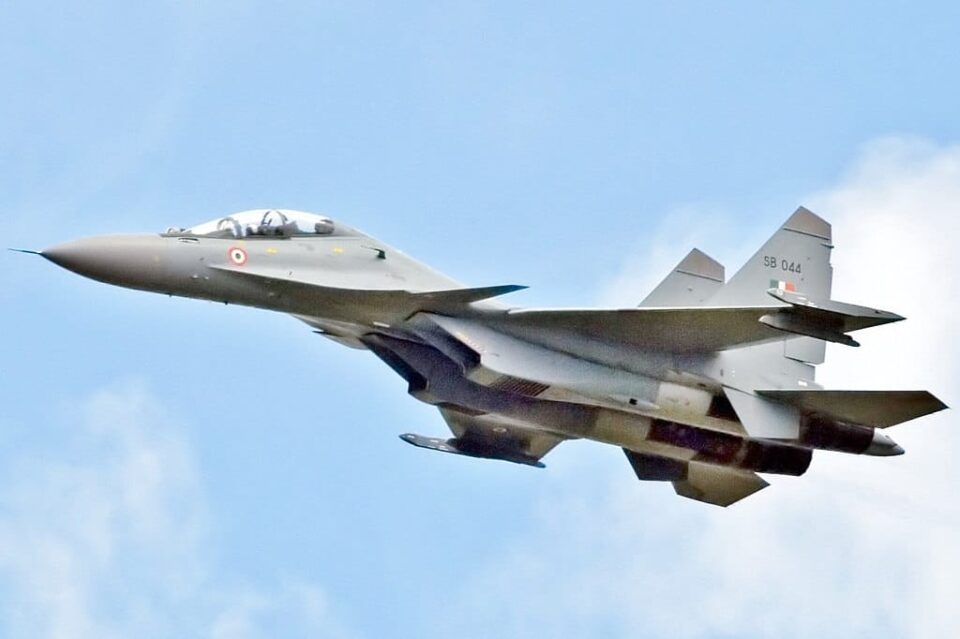
In recent years, India’s BrahMos supersonic cruise missile has become a game-changer in the global defense market, attracting attention far beyond its borders.
Known for its blistering speed, pinpoint precision, and versatility, the missile has already been integrated into India’s Su-30MKI fighter jets. Now, two key Southeast Asian nations — Malaysia and Vietnam — are looking to take this powerful combination to the skies.
According to defense sources, Vietnam is exploring the purchase of 36 Su-30MKM fighter jets armed with the BrahMos-A air-launched variant, while Malaysia has already shown serious interest in integrating the missile into its existing fleet of 18 Su-30MKM aircraft.
If finalized, these moves would mark the first time that BrahMos missiles are exported for use on foreign fighter jets, signaling a major milestone in India’s defense exports.
Su-30MKM and BrahMos Compatibility
The Su-30MKM, customized for both Vietnam and Malaysia, shares a common design lineage with India’s Su-30MKI. This structural similarity makes the integration of BrahMos technically feasible. However, the process is far from straightforward.
When India integrated BrahMos-A onto its Su-30MKI fleet, Hindustan Aeronautics Limited (HAL) had to perform extensive structural reinforcements. The 2.5-ton missile required modifications to the aircraft’s fuselage and hardpoints to withstand the immense forces generated during launch. Malaysia’s and Vietnam’s Su-30s would need similar upgrades, making HAL’s proven expertise vital to the success of these projects.
The BrahMos Advantage
Jointly developed by India’s DRDO and Russia’s NPO Mashinostroyenia, the BrahMos missile takes its name from the Brahmaputra and Moskva rivers. It is one of the world’s fastest operational cruise missiles, traveling at Mach 2.8 to Mach 3.0, and is exceptionally hard to intercept.
The air-launched variant, BrahMos-A, is specially designed with a lighter frame — about 500 kg less than its land and sea counterparts — making it suitable for airborne operations. Originally limited to 290 km, its range has now extended to 450–800 km after India’s entry into the Missile Technology Control Regime (MTCR). A hypersonic successor, BrahMos-II, is also under development.
By equipping Su-30MKMs with BrahMos-A, Vietnam and Malaysia would gain the capability to strike high-value targets from long distances, enhancing deterrence and boosting their regional air power.
Strategic Implications and Challenges
Should Vietnam and Malaysia move forward, HAL will play a central role in engineering and integrating BrahMos with their Su-30 fleets. While the advantages are clear, challenges remain — including costs, timelines, technical complexities, and geopolitical considerations.
If successful, both nations would become the first foreign operators of BrahMos-A, reinforcing their air force capabilities while elevating India’s profile as a trusted defense exporter.
A New Chapter in Defense Relations
The growing interest from Vietnam and Malaysia reflects a broader trend: India’s defense industry is stepping onto the global stage. What was once a domestic program has now transformed into an export-driven partnership, strengthening India’s defense ties in Southeast Asia.
For Vietnam and Malaysia, equipping their Su-30MKMs with BrahMos-A isn’t just about firepower — it’s about securing a technological edge in a region where air superiority could define future conflicts.
With negotiations underway, the supersonic missile that has redefined India’s own air power may soon be flying under the flags of its Southeast Asian partners — ushering in a new era of regional defense cooperation.
For more aerospace news, check out JetlineIntel.
Want to buy aviation merchandise? Visit Jetshop.in.
To read Jetlinemarvel’s updates on Google News, head over to Google News.
