
Defence
Canada Explores Eurofighter Typhoon Following Concerns Over F-35 Deal ?
Amid growing concerns over dependency on U.S. defense infrastructure, Canada is re-evaluating its F-35 fighter jet purchase.

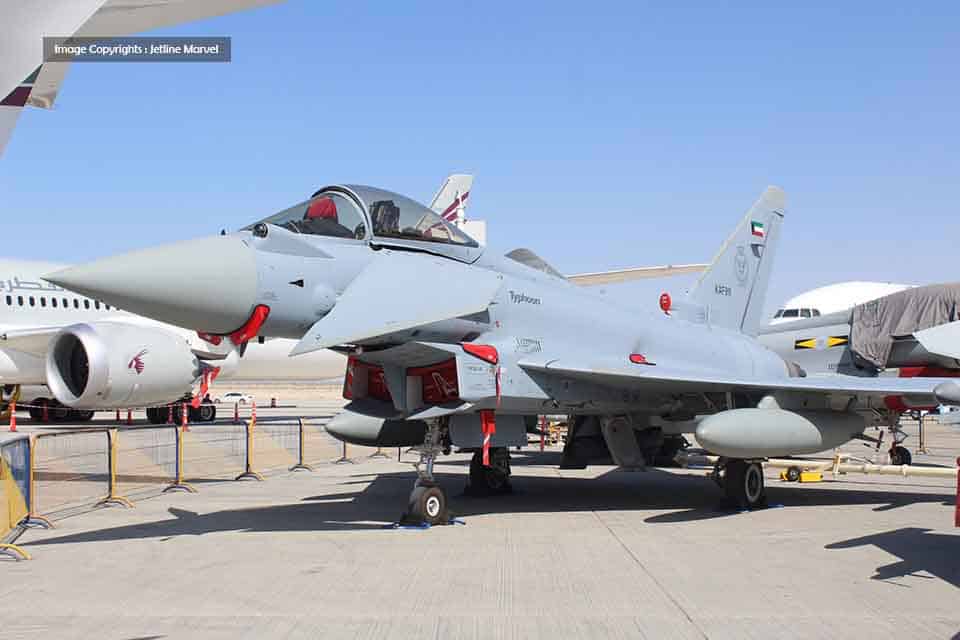
Canada is in the midst of modernizing its air force, with a major focus on replacing its aging CF-18 Hornet fleet. Originally, Canada committed to purchasing 88 F-35 Lightning II fighter jets from Lockheed Martin in the United States, with a contract for the first 16 already in place.
But now, as geopolitical tensions rise and concerns over operational control grow, Canada is rethinking its plans.
The F-35 is widely regarded as the most advanced fifth-generation fighter jet, with over 1,000 units sold globally, making it the most successful fighter in its class. In comparison, Russia’s Su-57 and China’s J-20 have been produced in much smaller numbers.
The F-35 offers unmatched stealth capabilities, advanced avionics, and superior networked warfare features. But its dominance comes with a catch: increasing reports suggest that the U.S. might have the ability to disable the F-35 remotely, through a so-called “kill switch,” raising fears about operational autonomy.
Canada’s reliance on the United States for software updates, spare parts, and ongoing maintenance adds another layer of concern. With these dependencies, Canada is now exploring alternatives. One of the frontrunners is the Eurofighter Typhoon, a fourth-generation-plus multi-role fighter developed by a European consortium that includes Airbus, BAE Systems, and Leonardo.
The Typhoon is equipped with cutting-edge technology, including the Captor-E AESA radar, offering superior target detection, and a Defensive Aids Subsystem to protect against missile threats.
It can carry a wide range of weapons, from beyond-visual-range air-to-air missiles to precision-guided bombs. Its agility and air-to-air combat performance make it a strong contender, especially given Canada’s concerns about Russian incursions into its airspace. In February 2025, NORAD tracked Russian Su-35 jets near Canadian airspace, highlighting the need for a capable interceptor.
The Typhoon also boasts supercruise capability, allowing it to fly at supersonic speeds without using afterburners. However, like other fourth-generation fighters, the Typhoon lacks the stealth features of the F-35, making it more vulnerable to advanced air defense systems like Russia’s S-400 and China’s HQ-9.
Alongside the Typhoon, Canada is considering the French Dassault Rafale and the Swedish Saab Gripen. The Rafale is known for its operational independence, as it contains fewer foreign components, reducing exposure to export restrictions. The Gripen, while cost-effective and highly versatile, is also a non-stealth fourth-generation jet.
While the Typhoon has been delivered to nine countries, including Saudi Arabia and Qatar, it’s important to note that even these European jets often use American-made components, meaning U.S. export controls could still impact future sales and maintenance.
So, what does this all mean for Canada’s decision? If the United States can address concerns about autonomy, reliability, and support, the F-35 could remain the top choice. But if these concerns remain unresolved, Canada may choose to diversify its fleet with European aircraft that offer more independence.
Ultimately, Canada’s decision will have far-reaching implications, not only for its air force but also for its strategic relationships with the U.S. and its role within NATO. It’s a critical moment, where military capability, industrial strategy, and diplomatic considerations will all play a part in shaping Canada’s defense future.
For more aerospace news, check out JetlineIntel.
Want to buy aviation merchandise? Visit Jetshop.in.
To read Jetlinemarvel’s updates on Google News, head over to Google News.



