
Aviation
Automation vs Pilot: The Alaska F-35 Crash Investigation
In January 2025, a U.S. Air Force F-35A crashed near Eielson Air Force Base, Alaska, after automation misinterpreted frozen landing gear sensors.

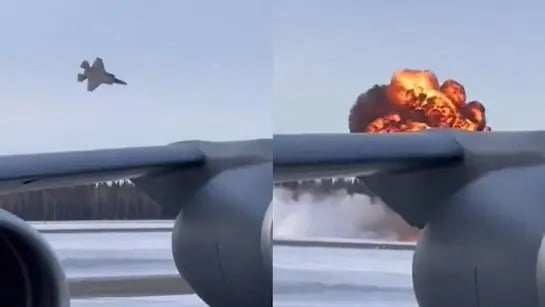
The F-35 Lightning II, one of the most advanced fifth-generation fighter jets in the world, has once again made headlines — this time for a tragic mishap in Alaska.
On January 28, 2025, an F-35A belonging to the U.S. Air Force’s 354th Fighter Wing crashed near Eielson Air Force Base, about 25 miles southwest of Fairbanks. The aircraft, valued at nearly $195.5 million USD, was destroyed.
The pilot managed to eject safely, but suffered minor injuries, including a spinal compression fracture and neck trauma. Dramatic footage captured the jet tumbling vertically with its landing gear extended before slamming into the ground and exploding into a massive fireball.
The aircraft, tail number 195535, was assigned to the 355th Fighter Squadron and was flying as part of a four-ship formation acting as “Red Air” aggressors in a training exercise.
What Happened in the Air
On that frigid morning, temperatures hovered around 1.4°F. The F-35 had undergone extended ground operations before takeoff — a routine that, in such extreme cold, would later prove critical.
At 11:22 a.m. local time, the jet lifted off without immediate issues. But shortly after departure, the wingman pilot noticed the nose landing gear door was ajar. When the pilot attempted to cycle the landing gear, the NLG wheel was misaligned, turned 17 degrees to the left.
An overspeed gear warning soon followed as the aircraft accelerated past 275 knots calibrated airspeed, a reading common in extreme cold but also a sign of potential gear malfunction.
The pilot declared an in-flight emergency and, with the help of Lockheed Martin engineers via conference call, attempted several troubleshooting procedures. These included a touch-and-go maneuver to realign the landing gear — but the right main landing gear failed to fully extend.
For over an hour, the pilot and support team tried to resolve the issue. But as time passed, ice built up inside the hydraulic system, causing water contamination in the fluid to freeze. This failure cascaded, disabling the up-lock hook mechanism that keeps the gear properly locked.
System Misinterpretation
This freezing also disrupted critical sensors. The F-35’s avionics rely on strut sensors to detect “weight on wheels.” But with ice altering the compression data, the system was fooled into believing the aircraft was already on the ground.
As a result, the jet prematurely entered ground mode while still airborne, overriding flight controls and creating a dangerous conflict. Despite the pilot’s efforts, the automation continued processing commands as if the aircraft were taxiing on the runway — not flying at altitude.
At 12:49 p.m., while preparing to land, the malfunction escalated. The jet entered an uncontrolled vertical spin with its gear extended but not properly locked. The pilot ejected seconds before impact, parachuting safely to the ground. The aircraft crashed within the base perimeter, creating a debris field and igniting a massive fireball, which was quickly extinguished by emergency crews.
The Investigation
An Interim Safety Board was convened within 24 hours. A senior officer from Kirtland Air Force Base, New Mexico, led the inquiry. Investigators interviewed witnesses, analyzed wreckage, and reviewed the pilot’s 72-hour activity history — including rest cycles and medical records — to rule out human error.
On August 26, 2025, the official Air Force report concluded that the primary cause was ice buildup in the landing gear due to water-contaminated hydraulic fluid. The contamination most likely occurred during the extended cold-weather ground operations before takeoff.
Contributing Factors
The report also noted that cold-weather operations in Alaska pose unique risks to the F-35. Predictive alerts, like overspeed gear warnings, are more frequent in such conditions, adding stress during emergencies.
Critically, no pilot error was found. The pilot executed emergency procedures exactly as trained, but the aircraft’s systems were effectively misled by frozen sensors, making the jet uncontrollable.
Lessons Learned
The crash underscored the challenges of operating high-tech fighters in extreme Arctic conditions. While no fleet-wide grounding was ordered for Eielson’s 54 F-35s, the Air Force issued procedural updates to prevent similar incidents.
But the case has sparked debate among engineers and defense analysts worldwide. The F-35 is often praised as one of the most advanced fighter jets ever built, yet its reliance on autonomous systems raises serious questions. In this crash, the pilot was still in the cockpit, trying to solve the problem — but the jet’s automation overrode human input, sealing its fate.
This has left experts puzzled: how can future combat aircraft balance automation with human control, especially in unforgiving environments like the Arctic?
For more aerospace news, check out JetlineIntel.
Want to buy aviation merchandise? Visit Jetshop.in.
To read Jetlinemarvel’s updates on Google News, head over to Google News.
