
Aviation
Boeing 777X Gets Major Range Upgrade, Challenging Airbus A350-1000ULR
Boeing has quietly increased the 777X’s range by more than 700 nautical miles, strengthening its position in the ultra-long-haul market while attracting strong airline demand with over 500 orders worldwide.

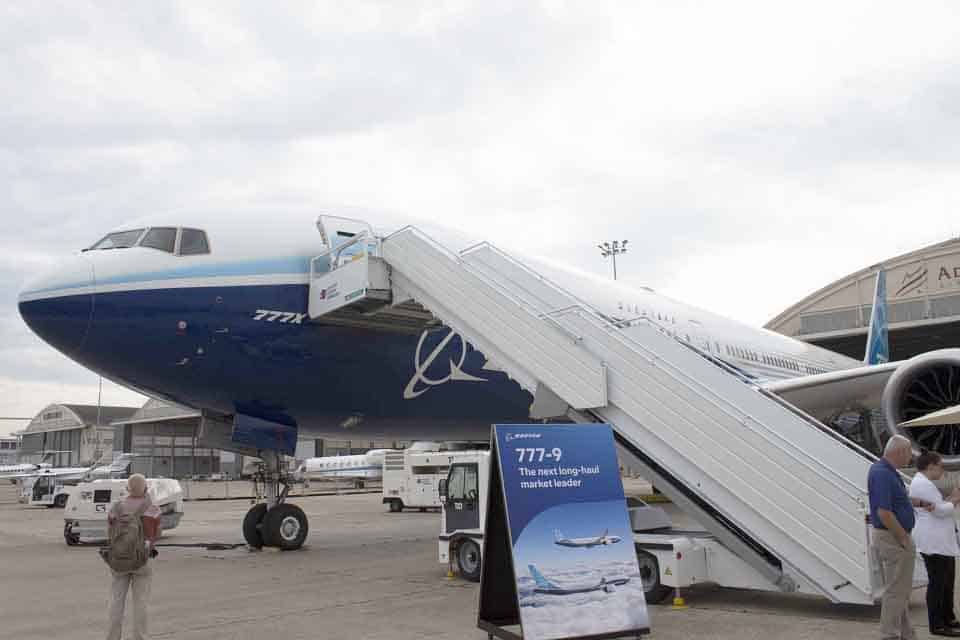
Boeing has made one of the biggest upgrades to its next-generation widebody aircraft. The company has quietly increased the advertised range of both the Boeing 777-8 and 777-9, giving airlines even greater flexibility for ultra-long-haul routes.
The updated figures strengthen Boeing’s position in the growing long-range market and could reshape future airline fleet decisions as carriers look to operate more nonstop flights between distant cities.
Boeing Quietly Updates 777X Performance
A recent update on Boeing’s official website revealed significantly improved range figures for the 777X family.
The Boeing 777-8 is now listed with a maximum range of 9,500 nautical miles (17,594 km), an increase of 755 nautical miles over its previous published range of 8,745 nautical miles.
Meanwhile, the larger Boeing 777-9 now offers a range of 8,000 nautical miles (14,816 km), up 715 nautical miles from its earlier figure of 7,285 nautical miles.
While Boeing has not publicly explained the changes, the revised specifications suggest improvements in the aircraft’s overall efficiency, performance, or weight optimization as the flight-test program continues.
Closing the Gap in the Ultra-Long-Haul Market
The new range places the Boeing 777-8 among the world’s longest-range commercial airliners. It now comes much closer to the Airbus A350-1000ULR, which is expected to offer a range approaching 10,000 nautical miles.
Demand for ultra-long-haul aircraft has been growing rapidly as airlines seek to connect major cities with nonstop flights. These aircraft allow carriers to eliminate layovers, reduce total travel time, and open routes that were previously not commercially viable.
For airlines planning future services between destinations such as Australia, Europe, North America, and the Middle East, every additional nautical mile can make a significant operational difference.
Seating Capacity Also Revised
Boeing has also updated the passenger capacity figures for both aircraft.
- Boeing 777-8: 350 to 425 passengers
- Boeing 777-9: 375 to 450 passengers
Both variants retain the signature folding composite wingtips, allowing the wingspan to extend from 64.8 metres on the ground to 71.8 metres in flight. This unique feature improves aerodynamic efficiency while allowing the aircraft to operate from existing airport gates.
Airlines Continue to Show Confidence in the 777X
Although the 777X program has experienced certification delays, airlines continue to place their confidence in the aircraft.
The family has accumulated more than 500 orders and commitments from airlines around the world. Major customers include Emirates, Qatar Airways, Lufthansa, Singapore Airlines, All Nippon Airways (ANA), British Airways, Cathay Pacific, and Korean Air.
In recent months, Boeing has also secured fresh commitments for the 777X as global airlines continue investing in fuel-efficient, long-range widebody aircraft to support future international growth.
Looking Ahead
The latest range improvements make the Boeing 777X an even more attractive option for airlines planning the next generation of long-haul operations. With longer range, increased seating flexibility, and improved fuel efficiency, the aircraft is positioned to compete strongly in one of aviation’s fastest-growing segments.
As Boeing moves closer to certification and entry into service, these quiet but significant updates show that the 777X continues to evolve—and could become one of the most capable long-range passenger aircraft ever built.
