
Aviation
Airbus A380 Returns to the Skies: Testing Innovations for a Sustainable Future
Airbus Revives Iconic A380 for Cutting-Edge Flight Tests, Paving the Way for Sustainable Aviation

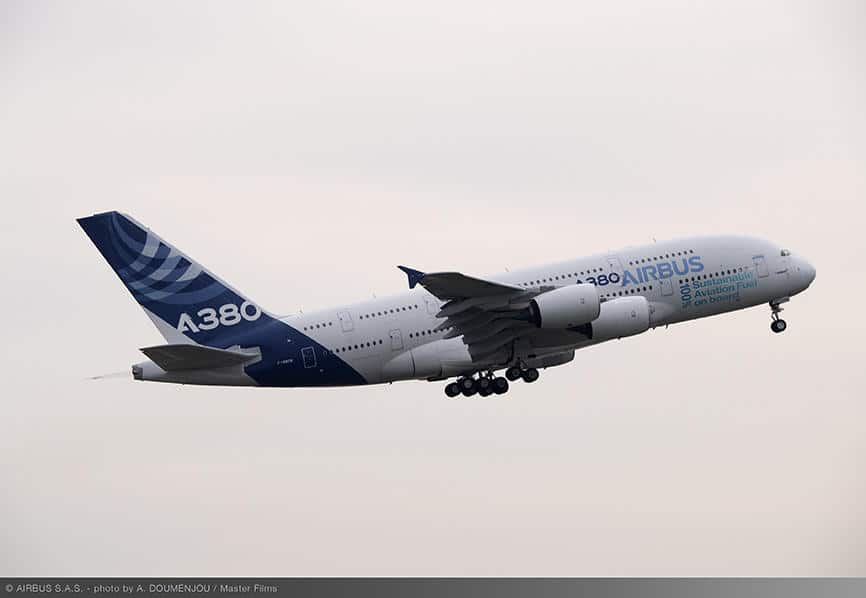
Airbus Revives Iconic A380 for Cutting-Edge Flight Tests, Paving the Way for Sustainable Aviation
Airbus has successfully returned its legendary first A380 (MSN001, F-WWOW) to the skies, marking a major milestone in aviation innovation.
After months of preparation, system upgrades, and modernization of its testing infrastructure, Airbus has launched a series of flight tests to certify the latest advancements for the A380 fleet.
These tests ensure the aircraft continues to operate at the highest standards of safety and reliability, delighting aviation enthusiasts worldwide.
The A380, which had been grounded for three years, is now back in action, supporting critical flight tests for new developments.
This iconic aircraft, the first a380 prototype, made its maiden flight on April 27, 2005, and has since been a cornerstone of Airbus’s testing programs.
Recently restored with advanced technology, the A380-841 (F-WWOW, MSN0001) will play a key role in certifying innovations that enhance the safety and performance of the A380 fleet.
A380’s Role in Sustainable Aviation
The A380 is not just a testbed for current technologies but also a pioneer for the future of sustainable aviation. Airbus plans to use the A380 to test hydrogen-powered engines as part of its ZEROe program, aiming to develop zero-emission commercial aircraft.
Flight tests for hydrogen technologies are expected to begin in 2026/27, positioning the A380 as a vital platform for advancing eco-friendly aviation solutions.
In addition to hydrogen, the A380 is being used to test Sustainable Aviation Fuel (SAF), further solidifying its role in reducing the aviation industry’s carbon footprint.
Its four-engine configuration makes it an ideal candidate for testing, as it can operate efficiently with just two engines under reduced payload conditions.
A Legacy of Safety and Innovation
The A380 has an impeccable safety record, with the global fleet completing over 800,000 flights and 7.3 million block hours as of December 2021—without a single fatality or hull loss. This legacy of reliability has made the A380 a favorite among airlines and passengers alike.
Emirates President Sir Tim Clark has even called for Airbus to reintroduce the superjumbo with next-generation technology, often referred to as the A380 Neo.
Such advancements could redefine the future of long-haul travel, combining the A380’s proven performance with cutting-edge innovations.
Why the A380 Remains an Engineering Marvel
Since its first flight, the A380 has been celebrated for its structural strength, spacious design, and unmatched passenger comfort. Its ability to adapt to new technologies, from SAF to hydrogen propulsion, highlights its enduring relevance in the aviation industry.
As Airbus continues to push the boundaries of innovation, the A380 remains a symbol of engineering excellence and a key player in shaping the future of sustainable air travel.
Stay tuned as Airbus leverages the A380 to pioneer groundbreaking advancements, ensuring the aircraft remains at the forefront of aviation innovation for years to come.



