
Aviation
Why India Picked Rafale F4 Despite Its High Cost
India’s Rafale F4 decision shows a strategic choice for unmatched combat cloud capability, advanced weapons, and long-term modernization over price.

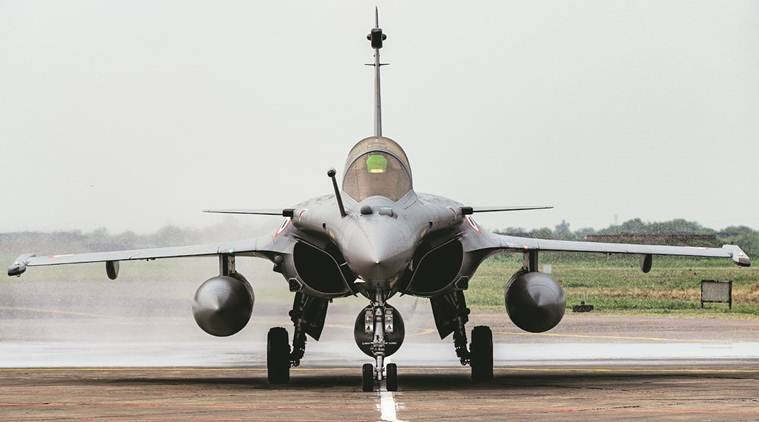
The Dassault Rafale F4 is the cutting-edge evolution of one of the world’s most versatile multirole fighters, turning it into a true networked warrior ready for tomorrow’s battles.
Let’s break it down!The F4 standard kicked off with F4.1, qualified back in March 2023 and now the backbone for French Air & Space Force and Navy squadrons.
By 2026, nearly the entire French fleet is upgraded or delivered in this config, and exports like the UAE got their first F4s in 2025, with Indonesia starting deliveries early this year.What makes F4 so revolutionary compared to the earlier F3R?
First up: networked and collaborative combat. The Rafale F4 gets a massive connectivity boost—new satellite datalinks, intra-patrol links, a dedicated communication server, and software-defined radios like the CONTACT system.
This turns every Rafale into a node in a bigger “combat cloud,” sharing real-time data with other jets, drones, ships, or ground units for true team-based warfare.Sensors get a serious upgrade too. The RBE2 AESA radar and OSF frontal optronics are enhanced for longer-range detection, especially against stealthy or low-observable threats.
Passive IRST tracking is way better for silent day-or-night ops without giving away your position.In the cockpit: pilots now rock the Thales SCORPION helmet-mounted display for lightning-fast target cueing—just look and lock. Larger, high-res side displays give insane situational awareness.
Weapons? Fire control is optimized for the Meteor BVR missile with off-board targeting, heavier AASM precision-guided bombs (including 1,000 kg variants), and the upgraded TALIOS targeting pod with smarter functions—some AI-assisted target recognition coming in later increments.
Electronic warfare stays legendary with evolutions to the SPECTRA suite—better passive detection, jamming resistance, and even cyber defenses.Maintenance gets smarter: a new prognosis and diagnostic system uses predictive analytics (think Big Data and AI) to cut downtime and boost availability. Engine tweaks on the M88 improve reliability.
Now, the increments in 2026:F4.1 is the current workhorse—fully operational and rolling out to exports. F4.2 (qualified around 2025, entering service now) adds hardware like refined predictive maintenance tools and upgraded engine computers—mostly for new-builds but retrofittable.
F4.3 is in testing—focusing on maturing the combat cloud, full MICA NG missile integration (new-gen short-range AAM with longer range and better seeker), further SPECTRA digital upgrades, and AI-enhanced TALIOS. This bridges straight to the F5 around 2030.
Production is booming—Dassault delivered 26 Rafales in 2025 (up from 21 in 2024), with a backlog of 220 aircraft. France is pushing toward 225-288 total in service, mixing F4 and upcoming F5.Big news in 2026: India is closing in on a massive 114-jet deal (90 firm F4 variants, option for 24 F5), with custom “F4*” or “F4 Star” tweaks like upgraded Spectra, indigenous secure data links, and integration of Indian weapons like Astra.
Existing IAF F3R jets get upgraded too. First Made-in-India Rafales could roll out in 2026-27, with assembly in Nagpur and heavy local involvement from Tata, Mahindra, and others.The Rafale F4 keeps proving why it’s a top-tier export success—versatile, upgradeable, and ready for contested skies. F5 will take it further with AI, drone teaming, hypersonic missiles, and even more thrust from the M88 T-REX engine.
For more aerospace news, check out JetlineIntel.
Want to buy aviation merchandise? VisitJetshop.in.
To read Jetlinemarvel’s updates on Google News, head over to Google News.
