
Defence
Who Will Co-Develop AMCA’s 110kN Jet Engine? GTRE Offers Clues
India is set to revolutionize its air combat prowess with the AMCA program. GTRE is in talks with Rolls-Royce and Safran to co-develop a 110kN engine,

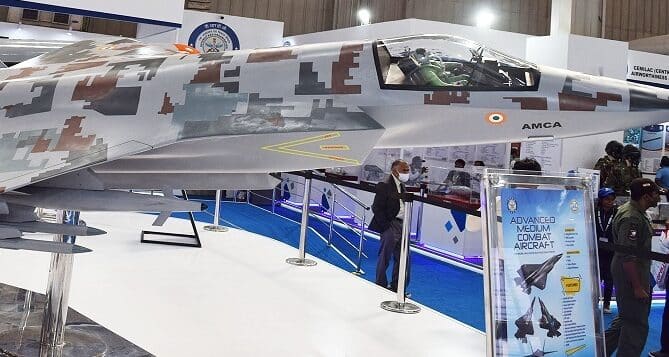
India is on the verge of a major breakthrough in its air combat capabilities. The Gas Turbine Research Establishment (GTRE) has dropped significant hints about its potential partner for co-developing a next-generation 110kN engine for the country’s Advanced Medium Combat Aircraft (AMCA) — a 5.5-generation stealth fighter.
This collaboration promises to position India among the elite nations with advanced fighter jet technology, ensuring superior performance and greater strategic autonomy.
The Race for the 110kN Engine: Rolls-Royce vs. Safran
GTRE has confirmed ongoing discussions with two global aerospace giants — Rolls-Royce from the UK and Safran from France. The decision, expected soon, will determine India’s engine development partner for the AMCA program. Here’s a closer look at the contenders:
1. Rolls-Royce’s Proposal: Full IPR Transfer
The British engineering giant has proposed a complete transfer of Intellectual Property Rights (IPR) for the engine design and technology.
This would give India full ownership and unrestricted access to crucial engine technology. Such a move aligns with India’s long-term goal of achieving self-reliance in defense manufacturing.
2. Safran’s Offer: A New Core with Cutting-Edge Tech
The French aerospace firm has promised a brand-new engine core, distinct from its existing M-88 engines used in Rafale jets.
Safran’s engine will incorporate advanced materials, improved propulsion efficiency, and cutting-edge engine control systems—features often seen in 6th-generation fighters. However, the IPR transfer remains partial, with some core elements retained by Safran.
Key Factors Influencing the Decision
The selection of a development partner goes beyond technical capabilities. Here are some factors influencing GTRE’s decision:
- Technological Transfer: Rolls-Royce’s full IPR transfer is a significant advantage.
- Innovation & Performance: Safran’s promise of a new engine core tailored for AMCA.
- Strategic Partnerships: India’s geopolitical ties with the UK and France could impact the final call.
- Domestic Production: Both contenders have committed to setting up production and testing facilities in India.
The Safran Advantage: Engine Core Innovation
Safran has revealed that the new engine core will leverage groundbreaking technologies in propulsion efficiency, materials science, and electronic engine control.
The engine’s design will also have no export restrictions, granting India greater operational flexibility. Furthermore, GTRE will retain IPR for future upgrades, ensuring India’s long-term strategic advantage.
Production and Future Prospects
The chosen partner is expected to manufacture more than 1,000 engines over the next few decades. These engines will not only power the amca aircraft but could also be adapted for other future fighter jet programs.
