
Defence
IAF Set to Get Missile Upgrade with R-37M and R-77M for Su-30MKI Fleet
At Aero India 2025, Russia offered India the R-37M and R-77M missiles with possible ‘Make in India’ production, aiming to boost Su-30MKI strike range

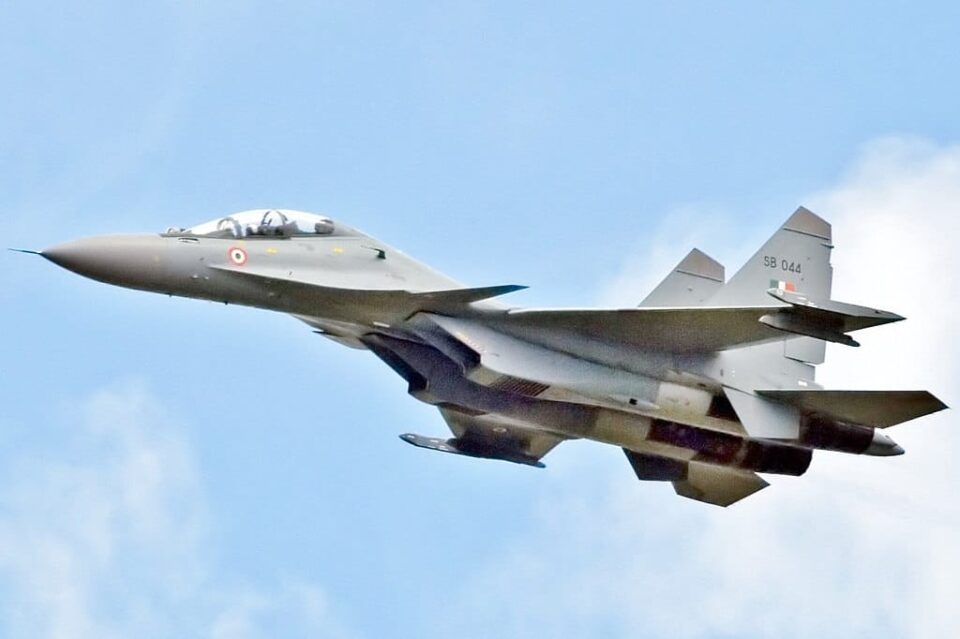
In modern air combat, the battle is often decided long before opposing pilots can even see each other. The ability to strike first — and from further away — can mean the difference between victory and loss. With rising regional threats and the rapid induction of advanced weapons by its adversaries, India is now moving to bridge its own long-range capability gap.
India-Russia Negotiations Begin
India and Russia are in advanced talks to equip the IAF’s Su-30MKI fighters with R-37M and R-77M missiles, boosting the force’s long-range air combat power.
The proposal, formally presented by Russia at Aero India 2025, includes not only the sale of these missiles but also the possibility of local ‘Make in India’ production, potentially paving the way for exports to friendly nations.
This step could dramatically boost the IAF’s beyond-visual-range (BVR) strike capabilities and complement ongoing indigenous missile development programs.
Why the R-37M Matters
The R-37M, known in its export form as RVV-BD and by NATO as the AA-13 Axehead, is one of the fastest and most powerful air-to-air missiles in the world. Designed by Russia’s Vympel Design Bureau, it can hit high-value targets — such as AWACS, tankers, and frontline fighters — at ranges of 300–400 km, travelling at speeds of up to Mach 6.
Its sophisticated guidance system uses inertial navigation, mid-course updates, and active radar homing, allowing for “fire-and-forget” engagements that keep the launch aircraft well outside enemy detection and missile range. The export variant has a 200 km range, still formidable enough to tilt the BVR balance in India’s favour.
The R-77M Upgrade
Alongside the R-37M, Russia is also offering the R-77M (Izdeliye 180) — a major upgrade over the R-77-1 currently in IAF service. With a range of about 190 km, an AESA radar seeker, and a dual-pulse solid-fuel motor, the R-77M is built to counter next-generation threats like China’s PL-15 and Pakistan’s PL-15E.
When paired with the Su-30MKI’s Irbis-E radar, capable of detecting targets up to 400 km away, the R-77M significantly extends the aircraft’s engagement envelope, allowing it to take the fight to the enemy without entering their danger zone.
The Indigenous Path and Interim Needs
India’s DRDO Astra missile program has made strong progress. The Astra Mk-I (100 km) is already in service, while the Astra Mk-II (140–160 km) is set for production clearance by 2026. However, full operational induction may not occur until 2029–2030, with the Astra Mk-III (Gandiva) — boasting a planned range of 340 km — still at least five years away.
This timeline leaves a capability gap in the near term, prompting India to consider the R-37M and R-77M as stopgap solutions that can immediately bolster IAF readiness while indigenous systems mature.
A Deeper Strategic Partnership
The talks over these advanced missile systems also highlight the continuing depth of the India-Russia defence partnership. With provisions for local co-production, the deal would not only strengthen IAF capabilities but also align with the country’s broader Atmanirbhar Bharat (self-reliant India) vision in defence manufacturing.
For the IAF’s frontline Su-30MKI fleet — over 260 aircraft strong — these missiles could be the decisive factor in future air battles, ensuring that India’s pilots have the range, speed, and precision to control the skies.
For more aerospace news, check out JetlineIntel.
Want to buy aviation merchandise? Visit Jetshop.in.
To read Jetlinemarvel’s updates on Google News, head over to Google News.
