
Aviation
F-35 Detected Over Iran? What Really Happened
Did Iran really detect the world’s most advanced stealth jet? This video breaks down the technology, claims, and reality behind the reported F-35 incident.

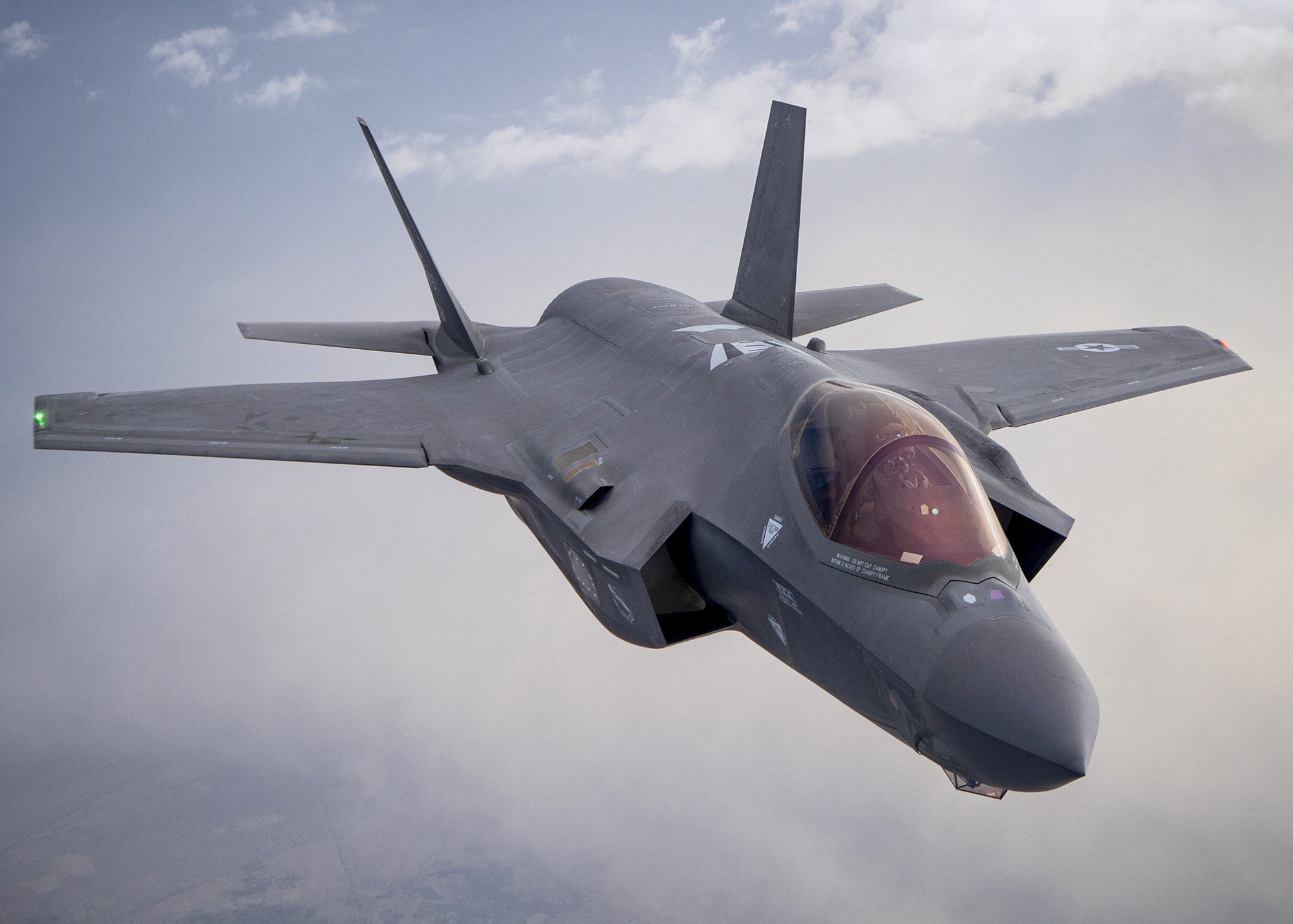
Imagine one of the most advanced aircraft ever built — the F-35 stealth fighter — suddenly being detected and possibly hit inside hostile airspace. Sounds impossible, right? Yet this is exactly the debate now spreading across the world.
The F-35 is widely considered a fifth-generation fighter jet designed to evade almost every modern radar system. Its stealth shaping, advanced coatings, and electronic warfare systems make it extremely difficult to detect, track, or engage.
But during the recent tensions involving Israel, Iran, and the United States, a dramatic claim emerged. Iranian sources stated that their air-defense network had detected — and possibly engaged — an F-35 operating over Iranian territory.
So the big question is: Is it actually possible to detect or even hit an F-35?
For years, analysts have discussed the possibility that certain radar systems could spot stealth aircraft under specific conditions. Russian sources previously claimed that the Rezonans-NE low-frequency radar could track low-radar-cross-section targets by using longer wavelengths that interact differently with stealth designs. Reports in 2020 even suggested such systems monitored an F-35 near Iranian airspace, although these claims were never independently verified.
Iran also developed its indigenous Bavar-373 air-defense system, often compared to the Russian S-300 or even S-400. Iranian officials claim the system can track low-RCS targets and intercept threats at long ranges, citing tests involving small aerial targets detected hundreds of kilometers away.
Now, in March 2026, amid rising regional conflict, Iranian statements claim their defenses detected and engaged an F-35 during a mission over central Iran. Reports suggest the aircraft may have taken damage and later performed an emergency landing at a nearby U.S. base, with the pilot reported safe. However, exact details remain unclear and under investigation.
According to Iranian-linked sources, detection may have relied not only on radar but on passive detection systems — technologies that do not emit signals but instead observe the aircraft itself.
Here’s how such detection could theoretically work:
First — Passive Infrared and Electro-Optical Tracking.
Even stealth aircraft produce heat. Engine exhaust, airframe friction, and atmospheric interaction create infrared signatures that advanced IR sensors can detect without emitting radar signals. Because these systems are passive, the aircraft receives no warning.
Second — Low-Frequency Radar Bands.
VHF and UHF radars use longer wavelengths that may detect stealth aircraft at longer ranges, though with lower precision. These systems can provide early warning but usually struggle to guide missiles accurately without additional sensors.
Third — Passive Electronic Surveillance (ESM).
If an aircraft transmits data links, communications signals, or radar emissions, passive receivers can detect those signals and estimate location without revealing their own position.
Finally — Integrated Sensor Networks.
Modern air defense increasingly combines radar, infrared sensors, and passive detection into a single tracking network, improving overall targeting capability.
Despite these claims, there is still no independently verified evidence — no confirmed wreckage, no official technical disclosure, and no detailed confirmation from U.S. authorities beyond reports of an incident under investigation.
Even if detection occurred, successfully engaging an F-35 remains extremely challenging. The aircraft’s stealth, electronic jamming, advanced sensors, and maneuverability make missile interception far from guaranteed.
However, if Iran truly managed to track or damage an F-35, it would represent a significant milestone for its defense industry — and potentially a major shift in how stealth aircraft are countered worldwide.
Stealth fighters like the F-35 are often used to scout targets, guide strike missions, and support bomber operations deep inside defended airspace. Any breakthrough in detecting them would have serious implications for future air warfare.
For more aerospace news, check out JetlineIntel.
Want to buy aviation merchandise? VisitJetshop.in.
To read Jetlinemarvel’s updates on Google News, head over to Google News.
