
Aviation
Comparison of S-400 Triumph vs THAAD — Which Missile Shield is Stronger?

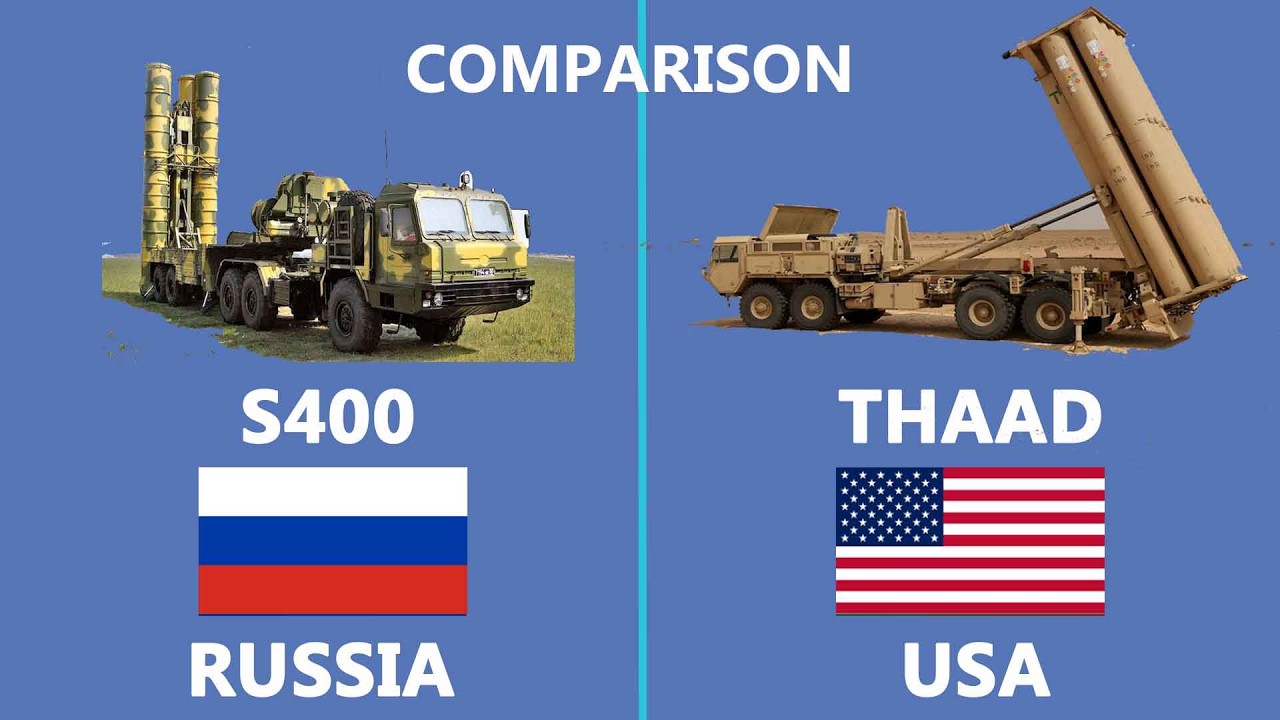
S-400 Triumph (Russia) vs. THAAD (USA) is a common comparison in air and missile defense discussions, but these systems serve different primary roles, so a direct “which is better” depends heavily on the threat scenario and mission requirements.
Key Purpose and Role
- S-400 Triumph — A versatile, multi-role long-range air defense system. It excels at defending against a wide variety of aerial threats, including aircraft, cruise missiles, drones, helicopters, and some ballistic missiles. It’s designed for comprehensive layered air defense.
- THAAD (Terminal High Altitude Area Defense) — A specialized anti-ballistic missile (ABM) system focused on intercepting short-, medium-, and limited intermediate-range ballistic missiles during their terminal phase (final descent), often at high altitudes inside or outside the atmosphere (exo-atmospheric capability). It is not designed to engage aerodynamic targets like aircraft.
In short: S-400 is a broad-spectrum air defense platform with secondary ABM capability; THAAD is a dedicated high-altitude ballistic missile interceptor.Specifications Comparison
| Feature | S-400 Triumph (Russia) | THAAD (USA) |
|---|---|---|
| Primary Role | Long-range air defense + limited ABM | Terminal-phase ballistic missile defense |
| Max Range | Up to 400 km (with 40N6 missile); typically 250 km for standard missiles | ~200 km (operational intercept range) |
| Max Altitude | ~30 km for aerodynamic targets; ~25-30 km for ballistic | Up to 150 km (exo-atmospheric intercepts possible) |
| Interceptor Speed | Varies by missile; targets up to ~Mach 14-15 | Interceptor ~Mach 8+ |
| Target Types | Aircraft, cruise missiles, drones, ballistic missiles (SRBM/MRBM/IRBM limited), some hypersonic | Short/medium/limited IRBM ballistic missiles (terminal phase) |
| Interception Method | Explosive warhead (blast-fragmentation) | Hit-to-kill (kinetic energy, no warhead) |
| Mobility/Deployment | Highly mobile; quick setup (~5 minutes claimed in some sources) | Mobile but longer setup time (~20+ minutes reported) |
| Simultaneous Targets | Up to 36-80 targets tracked/engaged (depending on configuration) | Focused on ballistic threats; fewer simultaneous engagements |
| Radar | Multiple radars (e.g., 91N6E detection up to hundreds of km) | AN/TPY-2 X-band radar (very long detection range, high precision) |
| Cost per Battery | Generally lower (estimates vary widely) | Higher (~$1-2 billion per battery) |
Strengths and WeaknessesS-400 Strengths:
- Much more versatile — engages fighters, bombers, cruise missiles, and low-altitude threats that THAAD cannot.
- Longer maximum range against many targets.
- Multiple missile types for layered defense (short/medium/long-range interceptors).
- Potentially faster deployment and more flexible in integrated air defense networks.
S-400 Weaknesses:
- Less specialized/experienced against high-altitude, high-speed ballistic missiles (especially exo-atmospheric).
- Ballistic missile defense is secondary and limited compared to dedicated systems.
THAAD Strengths:
- Superior for high-altitude terminal intercepts of ballistic missiles (can engage outside the atmosphere).
- Proven high success rate in tests (near 100% in many intercepts).
- Hit-to-kill technology offers precise, debris-minimizing destruction.
- Excellent integration with other U.S./allied systems (e.g., Patriot, Aegis, satellites).
THAAD Weaknesses:
- Narrow focus — ineffective against aircraft, cruise missiles, or low-flying threats.
- Shorter range and no broad air defense role.
- More expensive and potentially slower to deploy.
Overall Verdict
- If the threat is primarily ballistic missiles (especially medium-range in terminal phase), THAAD is generally superior due to its specialization, high-altitude capability, and proven hit-to-kill accuracy.
- If the threat includes mixed aerial attacks (fighters, drones, cruise missiles + some ballistic), S-400 provides broader, more comprehensive protection and is often seen as more “all-around” versatile.
- Russia’s more advanced S-500 (not S-400) is closer to a true THAAD counterpart for high-altitude/exo-atmospheric defense.
These systems are often layered together in real-world defenses (e.g., THAAD + Patriot in U.S. networks, or S-400 integrated with other Russian systems). Neither is universally “better”—it depends on the operational context. Recent real-world uses (e.g., in Middle East conflicts) highlight vulnerabilities to saturation attacks for both, but also their value in layered setups.
For more aerospace news, check out JetlineIntel.
Want to buy aviation merchandise? VisitJetshop.in.
To read Jetlinemarvel’s updates on Google News, head over to Google News.
