
Aviation
Ever Noticed Flight Attendants Sitting on Their Hands? Here’s Why
Flight attendants follow strict safety protocols during takeoff and landing, and one of the lesser-known yet vital practices is sitting on their hands.

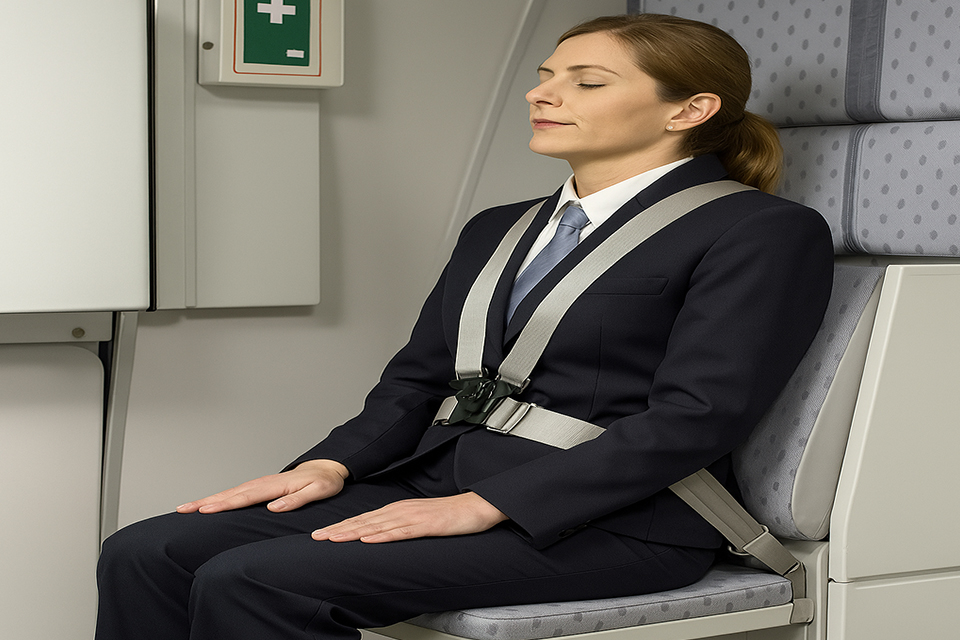
Have you ever noticed that flight attendants sit on their hands during takeoff and landing? While it may seem like an unusual habit, this practice is actually a crucial safety measure.
Every movement on an aircraft is carefully planned for passenger and crew safety, and sitting on their hands is a key part of the brace position designed to minimize injuries in the event of an unexpected impact.
The Science Behind the Brace Position
During takeoff and landing, which are considered the most critical phases of a flight, cabin crew are required to assume the brace position. This position involves:
- Sitting upright with their back and neck firmly against the jump seat.
- Keeping their feet flat on the floor and knees together.
- Sitting on their hands with palms facing up or placing hands under their thighs.
- Keeping arms relaxed yet positioned to restrict excessive movement.
This posture ensures that their body remains rigid, reducing the risk of injury during sudden turbulence or an emergency landing.
Why Sit on Their Hands?
Sitting on their hands serves multiple purposes. According to aviation safety experts, this practice:
- Prevents Reflexive Movements – In the event of a sudden impact, the body’s natural reaction is to reach out and brace against the force. This can lead to fractures or sprains. By keeping their hands under their thighs, flight attendants prevent unintentional movements that could cause injury.
- Maintains a Stable Position – The brace position ensures that their body remains as rigid as possible, helping to absorb shock while minimizing movement that could lead to injury.
- Prepares Them for Quick Action – Flight attendants are responsible for assisting passengers in emergencies. By sitting on their hands, they ensure that their arms are not injured, allowing them to act swiftly if evacuation is necessary.
Different Brace Positions Across Airlines
Not all airlines follow the exact same brace position protocol. Factors such as aircraft type, seat design, and airline regulations influence the specific posture required.
Some airlines instruct crew members to place their hands on their knees instead, while others use a variation of the position depending on the aircraft’s configuration. Regardless of these differences, the objective remains the same: to enhance safety and preparedness.
Silent Review: A Crucial Safety Practice
As part of their safety procedures, flight attendants conduct a “silent review” while assuming the brace position. This involves mentally preparing for possible emergency scenarios by reviewing:
- The location of emergency exits.
- The nearest fire extinguishers and emergency equipment.
- The number of passengers in their area who may need assistance.
- Standard procedures for different types of emergencies.
This silent review ensures that the crew is ready to respond efficiently, keeping passengers safe in case of an unexpected situation.
More Than Just a Routine Practice
While it may look like a minor detail, the act of sitting on their hands is an integral part of aviation safety. Flight attendants are not just onboard to serve drinks and provide a comfortable journey—they are highly trained safety professionals ready to handle emergencies at a moment’s notice. The next time you board a flight and see the crew in their jump seats, you’ll know that they are actively preparing to keep everyone onboard safe.
In aviation, every small action contributes to a larger system of safety, and this simple yet effective practice is just one of many precautions that make flying one of the safest modes of transportation.
