
Defence
Chinese Chief Designer Envisions AI-Driven Fighter Jets Built Like Smartphones
In a bold vision, China’s leading aircraft designer urges the nation to produce next-gen fighter jets like mobile phones — rapidly, intelligently, and with plug-and-play capabilities.

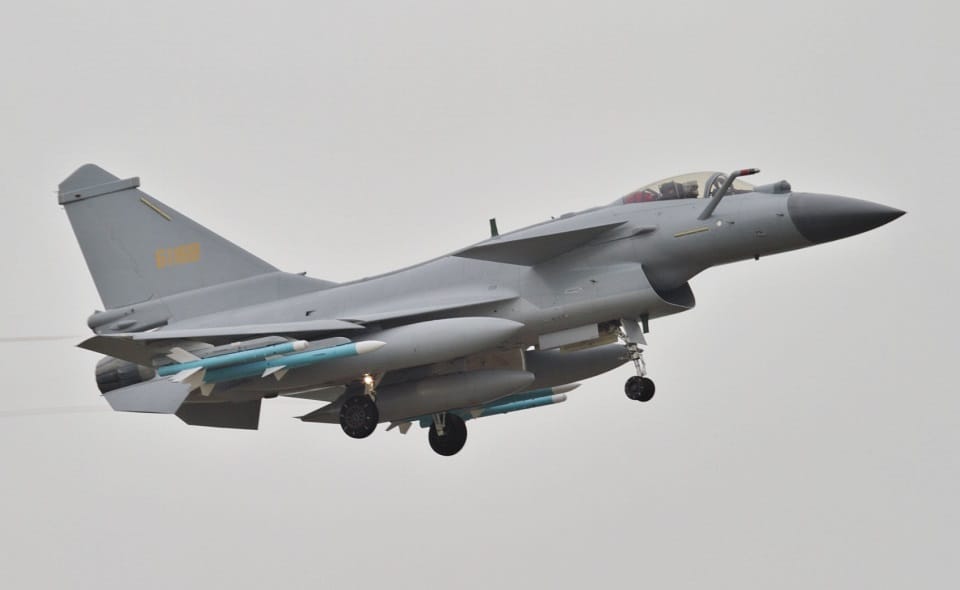
Imagine a future where fighter jets evolve as fast as smartphones — upgraded every few years, enhanced by artificial intelligence, and ready to plug in new capabilities with a simple software update.
This is not science fiction, but a bold vision laid out by one of China’s top military aircraft designers. As global powers race toward next-generation warfare, China is now calling for a revolutionary transformation in how combat aircraft are designed, developed, and deployed.
China Eyes Fighter Jet Innovation on a Smartphone-Like Scale
As China rapidly advances in aviation and defense technology, a leading voice in the country’s aerospace community is advocating a radical shift: future fighter jets should be developed and upgraded like mobile phones — fast, flexible, and software-driven.
This transformative vision was outlined by Sun Cong, a prominent academician of the Chinese Academy of Engineering and the chief designer of the J-15 carrier-based fighter jet, during an exclusive interview with CCTV’s military channel.
Sun, who played a pivotal role in shaping China’s naval aviation capabilities, stressed that unmanned systems, artificial intelligence (AI), and other high-end technologies must become integral components of future combat jets.
AI and Modular Design: The New Standard
“Unmanned operations and AI will certainly be applied to fighter jets,” Sun emphasized, noting the growing global momentum toward automation and intelligent warfare. He explained that aircraft design should shift toward a modular approach — with independent platforms and software-driven functions — allowing for faster upgrades and innovation.
Much like smartphones that receive regular updates and hardware improvements, future jets could be equipped with open-architecture systems and standardized plug-and-play interfaces, enabling seamless integration of new tech without overhauling the entire platform.
The Need for Speed in Military Aviation
Sun also issued a stark warning: China’s current development cycle of 15 to 20 years per aircraft is not sustainable in a world where rival nations might roll out new systems every five years. “If other countries start introducing new innovations that frequently, we’ll quickly fall behind,” he cautioned.
This push for rapid development was echoed during the recent visit of the PLA Navy’s aircraft carrier Shandong to Hong Kong, where the upgraded J-15T fighter made its public debut. The new variant drew widespread attention as a symbol of China’s growing carrier aviation prowess and hinted at the incorporation of next-gen technologies.
Expert Support for Forward-Looking Vision
Wang Ya’nan, chief editor of Aerospace Knowledge magazine, supported Sun’s remarks, describing them as highly strategic and forward-looking. He highlighted that such a shift would require future aircraft to feature backward and forward compatibility, enabling long-term viability through incremental upgrades — a concept already proven in the tech world.
From Aircraft to Smart Combat Platforms
This evolution would mark a significant shift in how military aircraft are perceived and used — from fixed-function war machines to adaptive, smart platforms that evolve continuously through software and modular components. With AI, cloud integration, and unmanned capabilities at the forefront, China aims to lead the next phase of aerial combat innovation.
Conclusion
As China eyes a future where fighter jets are developed and upgraded with the speed and flexibility of smartphones, the nation’s defense sector is preparing for a new era of software-defined warfare. If realized, this approach could redefine the global standards for military aviation and cement China’s position in the high-tech arms race of the 21st century.
For more aerospace news, check out JetlineIntel.
Want to buy aviation merchandise? Visit Jetshop.in.
To read Jetlinemarvel’s updates on Google News, head over to Google News.
