
Aerospace
Israel Establishes New Space Warfare Division, Eyes Military Operations Beyond Earth
Countries including the United States, Russia, China and India have developed or explored capabilities that could threaten satellites, adding to concerns about the security of orbital infrastructure.

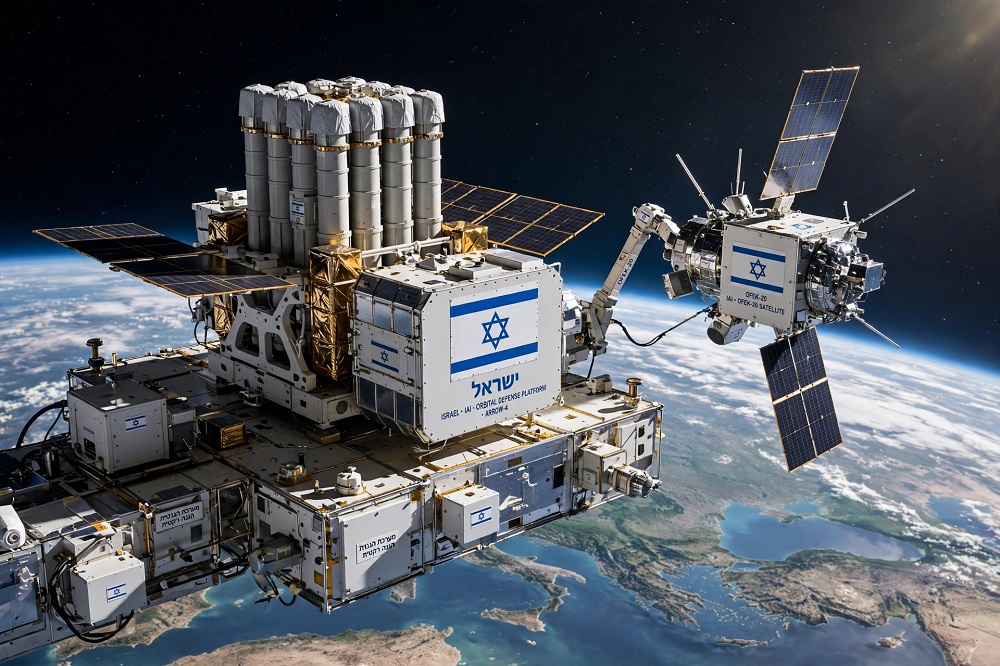
Israel is strengthening its military ambitions in space after the Israel Defense Forces (IDF) appointed the first commander of a newly established Space Division. The move reflects the country’s growing focus on satellite-based intelligence, orbital surveillance and future space warfare capabilities.
The IDF announced the appointment on October 19, 2026, as part of a broader round of senior military leadership changes. Brigadier General “Shin,” identified publicly only by the first letter of his name in Hebrew, was selected to lead the new division.
The unit will operate under the IDF’s Planning Directorate and will oversee the development of military capabilities in space, operational planning, specialised training and the consolidation of expertise. According to the military, space has become an active domain of conflict and is expected to grow in strategic importance in the coming years.
Israel’s “Star Wars” Ambition
Israeli Defense Minister Israel Katz welcomed the establishment of the division, describing the initiative as “Star Wars, made in Israel.” He said the country’s objective is to become one of the world’s leading military space powers.
Katz outlined a long-term vision in which Israel could monitor threats, defend its assets and potentially strike targets from space. He argued that these capabilities would strengthen national security, deter potential adversaries and expand Israel’s technological capabilities.
However, these statements describe strategic ambitions rather than a confirmed deployment of operational space-based strike weapons. The IDF has not publicly detailed which offensive systems it intends to develop or when such capabilities might become operational.
Satellites and Space-Based Intelligence
Israel already operates military reconnaissance satellites that support intelligence gathering and surveillance. Its Ofek satellite programme is an important part of these capabilities, providing imagery and information that can support military planning.
Until now, space-related military responsibilities have been distributed across existing organisations. The Israeli Air Force has handled activities including satellite launches and ballistic missile defence, while Unit 9900 of the Military Intelligence Directorate controls reconnaissance satellites after they enter orbit.
The IDF has not yet clarified precisely which responsibilities will transfer to the new Space Division.
Over the past year, the military has also approved projects involving sensors operating from space to observe Earth, alongside technologies associated with space warfare. These initiatives point to a broader effort to coordinate satellite intelligence, space security and future military operations.
Space Is Becoming a New Military Frontier
Military competition in space is not new. Since the beginning of the space race in the 1950s, major powers have explored ways to protect their satellites and disrupt those belonging to potential adversaries.
Today, satellites are essential to military communications, navigation, surveillance, missile warning and precision operations. Disabling these systems could affect a country’s ability to coordinate forces and respond to threats.
International law also places limits on military activities in space. The 1967 Outer Space Treaty prohibits placing nuclear weapons or other weapons of mass destruction in orbit, as well as installing such weapons on celestial bodies. It does not impose a blanket ban on every form of military activity or conventional weapon in space.
Countries including the United States, Russia, China and India have developed or explored capabilities that could threaten satellites, adding to concerns about the security of orbital infrastructure.
Israel Also Expands Robotics and Ground Forces
The new Space Division is part of a wider series of military organisational changes announced by IDF Chief of Staff Lieutenant General Eyal Zamir.
The military also selected Brigadier General “Yud” to lead a new Robotics Division under the Depth Corps, which is responsible for specialised operations beyond Israel’s borders.
Separately, the IDF plans to revive the 500th Armored Brigade, which was disbanded in 2003. These changes reflect efforts to develop additional capabilities across space operations, robotics and conventional ground forces.
What Happens Next?
Israel’s new Space Division establishes a dedicated organisational structure for military activities beyond Earth. Its effectiveness will depend on the technologies developed, the responsibilities assigned to the unit and the extent to which its capabilities can be integrated into existing military operations.
For now, the clearest focus is on coordinating space-related operations, strengthening surveillance and developing future capabilities. Although Israel’s defence minister has spoken openly about the possibility of striking targets from space, the country has not announced that it has deployed operational orbital strike weapons.
The establishment of the division nevertheless highlights the growing strategic importance of space, where satellites and space-based systems are becoming increasingly important to intelligence, defence and modern warfare.

You must be logged in to post a comment Login