
Aviation
Boeing 777X Can’t Match Airbus A350’s 24-Hour Flight Power – Here’s Why

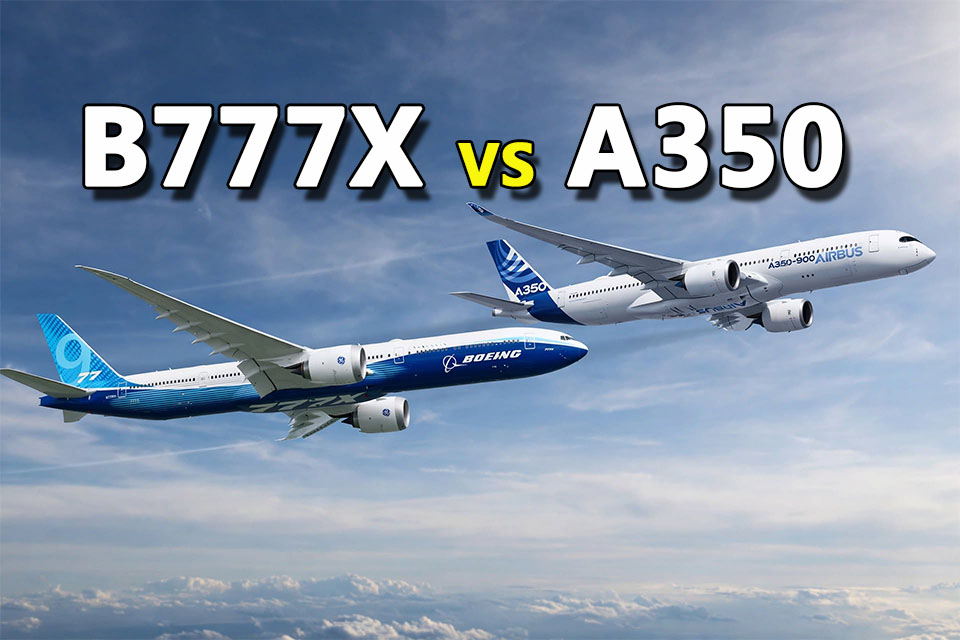
Boeing 777x vs Airbus A350: Can the 777X Fly Nonstop for 24 Hours?
The Boeing 777-9, also known as the 777-9X, is one of the world’s largest and most advanced twin-engine passenger aircraft. Designed to carry more passengers over long distances, the aircraft promises impressive range, fuel efficiency and long-haul performance. However, when it comes to ultra-long-haul flights lasting 20 to 24 hours, can the Boeing 777-9 compete with Airbus‘s specialised A350 Ultra Long Range (ULR) aircraft?
The short answer is no. Although the 777-9 is a highly capable long-haul aircraft, it was not specifically designed for extreme endurance flights lasting an entire day. In this category, Airbus’s A350 ULR family has a clear advantage.
Boeing 777-9: Impressive Range, But Not a 24-Hour Aircraft
The Boeing 777-9 has a published maximum range of approximately 8,000 nautical miles (14,820 kilometres). Its typical cruising speed is around Mach 0.84, or approximately 480–490 knots, depending on operating conditions.

Based on these figures, the aircraft’s theoretical flight endurance could approach 16–17 hours under ideal conditions. However, actual commercial flight times depend on several factors, including passenger and cargo loads, wind conditions, routing, fuel reserves and operational requirements.
The 777-9 is primarily designed for high-capacity international operations, with a typical seating configuration of around 375–400 passengers, depending on the airline.
Rather than targeting 24-hour nonstop flights, Boeing has focused on making the 777X family more efficient while carrying large passenger loads across long-haul international routes.
The aircraft has yet to enter commercial service, with its first deliveries expected in 2027.
Airbus A350-900: A Strong Competitor to the Boeing 777-9
The Airbus A350-900 is already a proven long-haul aircraft, offering a published range of approximately 8,100–8,600 nautical miles, depending on the configuration and specifications.
This puts it in a similar range category to the Boeing 777-9, with some A350-900 configurations offering a modest range advantage.
The aircraft is widely used on long-distance international routes, with typical nonstop flight durations reaching 15–17 hours.
However, Airbus has developed an even more specialised version of the aircraft to serve airlines operating some of the world’s longest commercial flights: the A350-900ULR.

Airbus A350-900ULR: Built for Ultra-Long-Haul Flights
The Airbus A350-900ULR (Ultra Long Range) takes long-distance flying to another level.
With a maximum range of approximately 9,700 nautical miles (17,964 kilometres), the aircraft is specifically configured for ultra-long-haul operations.
Singapore Airlines operates the A350-900ULR on some of the world’s longest scheduled commercial routes, including Singapore–New York and Singapore–Newark.
These flights regularly take around 18–19 hours, depending on weather conditions and routing.
The A350-900ULR achieves this capability through specialised fuel-system provisions and configuration changes that allow it to carry additional fuel for extended nonstop operations.
This makes it significantly more suitable for ultra-long-haul missions than the standard Boeing 777-9.

Airbus A350-1000ULR: Pushing the Limits of 24-Hour Flights
Airbus is also taking ultra-long-haul flying further with the specialised A350-1000 developed for Qantas’ Project Sunrise programme.
The aircraft is designed to operate extremely long nonstop routes connecting Australia’s east coast with destinations such as London and New York.
During a 2026 development test flight, the aircraft reportedly remained airborne for an extraordinary 24 hours and 24 minutes, covering more than 12,500 nautical miles.
However, it is important to understand that this was a specialised test flight with a minimal payload, rather than a normal commercial passenger operation.
Nevertheless, the achievement demonstrates the potential of the A350 platform when configured for extreme endurance, with additional fuel capacity and specialised operating provisions.
Boeing 777-9 vs Airbus A350: Range Comparison
Here is how the aircraft compare in terms of their published range and ultra-long-haul capabilities.
| Aircraft | Approximate range | Primary role |
|---|---|---|
| Boeing 777-9 | 8,000 nm | High-capacity long-haul |
| Airbus A350-900 | 8,100–8,600 nm | Long-haul operations |
| Airbus A350-900ULR | 9,700 nm | Ultra-long-haul flights |
| Boeing 777-8 | 9,500 nm | Extended-range long-haul |
| Airbus A350-1000ULR | Specialised configuration | Extreme ultra-long-haul |
Note: These are approximate published or programme-specific range figures, not directly comparable guarantees of commercial flight endurance. Actual performance depends on payload, fuel reserves, weather and aircraft configuration.
Can the Boeing 777-9 Ever Fly for 24 Hours Nonstop?
Technically, the Boeing 777-9 has the performance and range required for some of the world’s longest commercial routes. However, its published range of approximately 8,000 nautical miles does not make it suitable for routine 24-hour nonstop passenger operations.
Even the longer-range Boeing 777-8, with a targeted range of approximately 9,500 nautical miles, is designed for extended long-haul operations rather than the specialised 24-hour endurance demonstrated by the A350-1000ULR test programme.

The difference is not simply about cruising speed or engine performance. It comes down to fuel capacity, aircraft configuration, payload requirements and the ability to maintain sufficient fuel reserves over extremely long distances.
Final Verdict: Airbus A350 Has the Edge in Ultra-Long-Haul Flying
The Boeing 777-9 is an impressive aircraft that will play an important role in the future of high-capacity long-haul aviation. However, it is not designed to challenge the specialised endurance capabilities of Airbus’s A350 ULR family.
While the standard A350-900 and Boeing 777-9 compete closely in the long-haul market, the A350-900ULR offers significantly greater range, and the specialised A350-1000ULR programme demonstrates even more extreme endurance potential.
For airlines planning 18–24-hour nonstop passenger flights, Airbus currently has the more specialised solution.

You must be logged in to post a comment Login